Quick Answer
Before buying curtains for a sunny room, ask about lightfastness evidence for the exact fabric and color, the proposed lining, and the written warranty terms. Curtain sun fading needs a different conversation from choosing a color you like today. The Canadian Conservation Institute explains that light intensity and exposure time can cause cumulative, irreversible textile damage, including fading. Describe when sun reaches your window and how you plan to use the curtains. Then ask the seller what the available evidence covers and what remains unconfirmed. Do not turn a test rating, blackout description or warranty heading into a promise of unchanged color for years.
Understand Curtain Sun Fading Before You Choose
Treat sunlight durability as a separate purchase question from the curtain’s initial appearance. Liking a physical sample does not answer what evidence the seller has for prolonged light exposure.
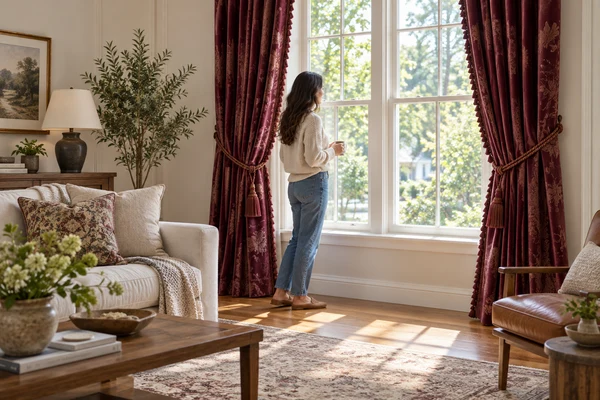
This guide is for U.S. and Canadian homeowners choosing custom curtains for a sunny room. Perhaps your old panels lost color, or you are planning drapery beside a large window. You want a useful answer before ordering, rather than reassurance that a fabric is simply “high quality.”
Keep the wider choice of material, texture and lining with the curtain fabric selection guide. Here, the task is narrower: describe the exposure, understand the evidence offered, and decide which questions need a written answer.
A photo of a fabric under one lamp is an appearance reference. A question about gradual color loss needs a durability discussion. Avoid diagnosing an old curtain from a photograph alone; use your experience to explain why light exposure matters for the next order.
Describe the Sun Exposure in Your Room
Send a short description of the actual window and your intended curtain use. You do not need to guess a technical exposure category to start the conversation.
Use this room checklist:
- Name the room and window you are buying for.
- Note when direct sun reaches the window, based on what you have observed.
- Say whether the curtain will usually be open, closed or moved during that period.
- Describe the proposed layers, including any existing shade you plan to keep.
- Include known window or glazing information, but mark anything uncertain as unknown.
- Identify the fabric and color you are considering.
- Explain your concern, such as replacing a curtain that has visibly lost color.
For example: “This is our living-room window. We see direct afternoon sun on clear days. We normally leave the curtains open and would keep our existing shade. The window specification is unknown. Can you review the proposed fabric and lining for this use?”
That note gives the seller something specific to discuss. If you have only observed the room during one season, say that too. A description of what you know is more useful than an invented year-round exposure estimate.
Ask What the Lightfastness Evidence Actually Covers
Ask for the fabric identity, test method, exposure conditions and reported result together. A number without that context leaves the main purchase question unanswered.
Ask specifically about colorfastness to light. AATCC’s public methods catalogue lists separate methods for light, rubbing and laundering. Its TM16.3 method concerns xenon-arc light exposure. A seller’s washing or rubbing result should therefore prompt a separate question about lightfastness, not an assumption that every kind of colorfastness has been covered.
When a report is available, ask the seller to identify which fabric and color it represents. Keep the report date, method designation, exposure details and result with the product reference. Also ask the seller to explain any limitation relevant to your proposed curtain.
You do not need to prescribe a laboratory procedure. The practical question is simpler: “Does this evidence apply to the fabric and color in my quotation, and what does it tell us about my intended use?”
If the evidence covers something different, record that difference. Do not quietly replace the missing answer with a result for another product.
Compare the Claim With the Question It Leaves Open
Match the next question to the statement you received. This keeps a purchase discussion focused instead of repeatedly asking whether the curtain is “good enough.”
Use this proposed comparison record:
| What the seller provides | What still needs clarification | A useful next question |
|---|---|---|
| “Fade resistant” without supporting details | The meaning and product scope of the claim | Which fabric, color and evidence support that description? |
| A washing or rubbing result | The separate sunlight concern | What lightfastness information is available for this option? |
| A lightfastness report | Its relationship to your quotation | Does this cover the proposed fabric and color, and what are its limitations? |
| A blackout or lining description | The evidence for color durability | What is confirmed about light control, and what is confirmed about fading? |
| A promise expressed as years of unchanged color | The written basis and conditions | Where is that promise documented, and what conditions or exclusions apply? |
| A warranty heading or badge | The actual written coverage | Can I read the terms that apply to this order before I decide? |
The table is a buyer conversation tool, not a pass/fail standard. Mark a question as pending when the seller has not answered it. This makes it easier to compare two proposals without pretending that missing evidence is a favorable result.
Keep Test Hours, Blackout and Service Life Separate
A laboratory exposure result is not a direct calendar-life prediction for your home. The Association for Contract Textiles’ woven-fabric guidance describes laboratory conditions and cautions against directly converting test hours into service hours. That document is voluntary contract-textile guidance, not a universal household purchase requirement.
For curtain sun fading, ask the seller to explain the result without translating it into an unsupported number of years. Keep a test result and a separate written product promise in different fields of your purchase notes.
Apply the same discipline to blackout and lining. Record the intended light-control result and the proposed construction, then ask separately about fading evidence. Do not use the word “blackout” as your answer to every fabric-performance question.
Dimensions need their own check as well. ShadeCort’s measuring introduction below can help you start that discussion. Follow the instructions for the exact product and mounting arrangement; the video is not a lightfastness demonstration.
Open the ShadeCort measuring guide on YouTube if the player is unavailable.
Check Written Coverage Before Approving the Order
Read the actual terms and keep unresolved questions visible before placing the order. A warranty title alone is not enough to settle your concern about sunlight.
ShadeCort’s current published warranty terms exclude discoloration and fading caused by prolonged direct sunlight. Ask for the terms applicable to your exact order. This guide describes the published wording; it does not determine coverage for an individual claim.
Keep a short purchase record:
- Proposed fabric and color: identify the quoted option.
- Room exposure: attach your description and note unknown details.
- Lightfastness information: name the report or record that none has been provided.
- Proposed lining and construction: identify what the quotation includes.
- Written coverage: retain the applicable terms and any clarification you requested.
- Decision still open: state what you need answered before choosing.
You might write: “I like this color, but I have not yet settled the sunlight question. Please confirm which evidence applies to this option and explain the written coverage for the proposed use.”
If the response does not answer your concern, pause. You can request another option or further clarification rather than treating a preferred color as approval of every performance detail.

Discuss the Whole Curtain With ShadeCort
Bring the room description and pending questions into the same conversation as the fabric and construction. That is more useful than asking for a “sun-proof” curtain without explaining the window.
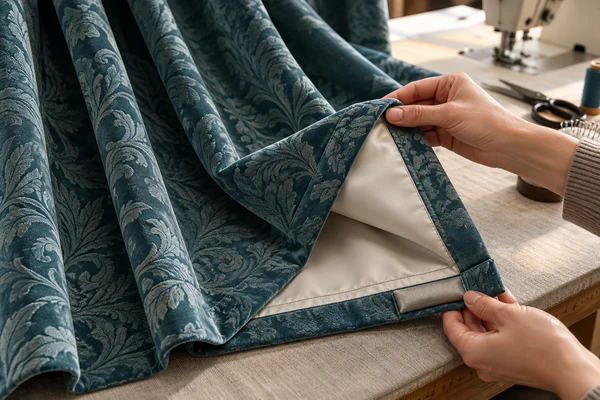
ShadeCort Resources is a window-treatment manufacturer and retail supplier for commercial and individual buyers, as described in its manufacturer and retail-supplier overview. Its custom fabric drapery page lists double-turned hems, sewn-in liners and bottom weights. Those details give you specific construction questions to discuss alongside the fabric choice. They are not a lightfastness rating or a guarantee against fading.
For your curtain sun fading inquiry, send the room, candidate fabric and color, intended layers, and the question still open. Ask what documentation and construction options can be confirmed for that proposal.
Discuss your sunny-room curtain questions on WhatsApp: +86 18926693786, or use the ShadeCort contact form for the same inquiry.
Sources and further reading
- Canadian Conservation Institute, Basic care – Textiles: general textile light-damage guidance, not a curtain lifetime estimate.
- AATCC, Standard Test Methods and Procedures: public method identities, not paid testing instructions or a ShadeCort product result.
- Association for Contract Textiles, Colorfastness to Light: Woven Fabrics: February 2020 guidance cited for the limit on translating test exposure into field service, not a universal household rating.
- ShadeCort’s company overview, custom fabric drapery page and published warranty, linked at their relevant statements above.
FAQ
Can I send a room photo if I do not know the window direction?
Yes. Use the photo to explain the window and intended curtain arrangement, and mark the direction as unknown. Add what you have observed about direct sun and when you normally use the curtains. Ask the seller whether any further window information is needed; do not invent missing details to complete the inquiry.
Should I reject a fabric if no lightfastness report is available?
Treat the missing report as an unanswered question, not an automatic pass or failure. Ask what information the seller can provide for that fabric and color. If sunlight durability is central to your decision, you can pause or request another option rather than accepting reassurance that does not address your concern.
Can I compare reports that use different methods?
Ask the seller to explain whether the results support the same purchase decision before comparing the numbers. Keep each method, exposure condition, result and product reference together. If the relationship remains unclear, leave the comparison unresolved. This guide does not supply a conversion between different test methods or rating scales.
How should I record advice given on a phone call?
Send a brief written recap naming the product, room exposure and advice you understood. Ask the seller to correct or confirm that recap and identify any relevant written terms. Keep unanswered points separate from confirmed details. This is a communication aid, not a statement about the legal effect of the conversation.