Quick Answer
Energy-efficient window shades can make rooms near glass feel more comfortable and may reduce heating or cooling demand, but the right choice depends on the problem. Cellular shades add an insulating air layer. Solar shades manage glare and summer sun while preserving some view. Blackout roller shades suit rooms that need strong light control, especially when fitted with the right cassette and side channels. Measure first, match the product to the window’s orientation and condition, and treat published savings figures as study results rather than a promise for your home.
The Expensive Mistake Is Solving the Wrong Window Problem
A bedroom that feels cold in January and an office that overheats in July can both point to the window. They are not necessarily the same problem.
Heat may be moving through the glass and frame. Sunlight may be entering through a west-facing window late in the day. Air may be leaking around an old sash. A failed insulated glass seal may have left condensation between the panes. Each condition calls for a different response.
An interior shade can improve comfort by adding resistance near the glass or controlling solar gain. It cannot reseal a failed glazing unit, repair rotten framing, or stop air that is moving through gaps around the window. Before ordering, check for drafts, water damage, fogging between panes, hardware problems, and visible gaps. If one of those is the real culprit, address it with a window professional first.
The useful lesson from the U.S. Department of Energy’s window attachment program examples is not that one attachment works everywhere. It is that shades, storm windows, inserts, and screens can be practical upgrades when full window replacement is unnecessary or out of budget. Product choice and operation still matter.
What the Research Can and Cannot Tell You
Government and laboratory studies give homeowners a better starting point than a broad claim such as “saves up to 30%.” They also need to be read in context.
An Oak Ridge National Laboratory residential cellular-shade study compared five cellular constructions with generic horizontal blinds in two nearly identical east-facing rooms during the heating season. The researchers observed daily energy savings of 9% to 23% between 6 p.m. and 6 a.m. That is useful evidence that construction, side channels, and nighttime use can affect performance. It is not a forecast of a household’s annual utility bill.
Your result may differ because of window area, glazing, frame condition, HVAC efficiency, thermostat settings, local weather, shade fit, and how often the shade is actually closed. A well-fitted shade that stays open at the wrong time cannot do its intended job.
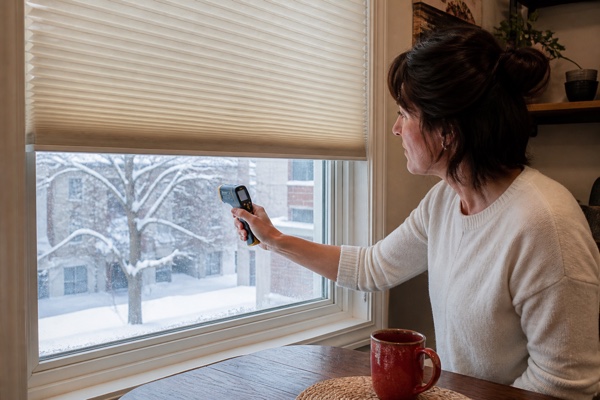
Which Window Attachment Fits Your Problem?
Start with the room, not the product name. Decide whether the priority is winter comfort, summer heat, glare, darkness, privacy, view, or a mix of several needs. Then compare the tradeoffs.
| Option | Best starting use | What it can help with | Main tradeoff | What to ask before buying |
|---|---|---|---|---|
| Cellular shade | Cold or mixed climates; rooms that feel chilly near glass | Adds an insulating pocket of air and can reduce heat transfer when closed | View is mostly lost when lowered; performance varies by cell design and fit | Is the exact product independently rated? Are side channels available? |
| Blackout roller shade | Bedrooms, nurseries, media rooms | Strong light control; a cassette and side channels can reduce edge light | Blackout fabric alone does not guarantee a blackout room or a stated thermal result | Which components cover the top, sides, and bottom? |
| Solar roller shade | Sunny offices and living rooms | Reduces glare and solar exposure while retaining some daytime view | It is not a privacy product at night and is not designed for full darkness | What is the openness factor, fabric color, and view-through level? |
| Lined curtain or drape | Large windows and rooms that need a softer finish | Can add a layer between the room and glass and improve light control | Gaps around the perimeter and frequent opening reduce the effect | What fullness, lining, return, overlap, and floor clearance are needed? |
| Interior storm insert | Drafty or low-performing existing windows | Adds another air space and can address comfort without replacing the whole window | Seasonal removal, storage, condensation, and fit need planning | Is it designed for this frame and local moisture conditions? |
| Exterior solar screen or shade | Strong summer sun, especially before it reaches the glass | Intercepts solar energy outside the window | Exterior exposure, wind, maintenance, and local rules may limit use | Is it suitable for the elevation, wind conditions, and window operation? |
The AERC rating and certification program, developed with DOE support, covers categories such as cellular shades, blinds, roller shades, storm windows, solar screens, and pleated shades. Its residential label guide explains warm-climate and cool-climate ratings and relevant measures. If energy performance is central to your purchase, ask for the rating of the exact product rather than assuming every item in a category performs alike.
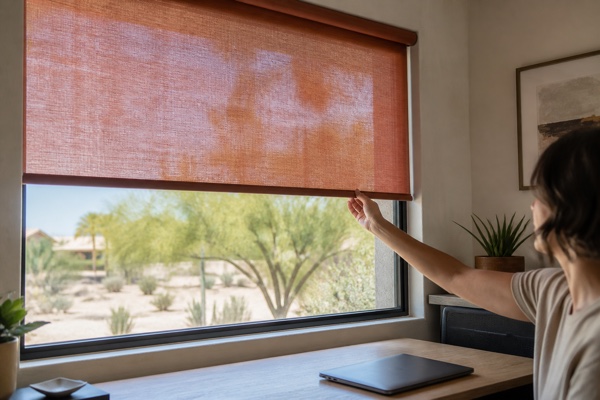
Choose by Climate, Orientation, and Room Use
Canada and the northern United States have long heating seasons, but a south- or west-facing room can still overheat on a clear day. Hotter U.S. regions may be dominated by cooling demand, yet privacy and nighttime insulation still matter. A single whole-house rule is too crude.
Natural Resources Canada explains that solar heat gain depends on climate, window orientation, available shading, and the home’s ability to regulate temperature in its guidance on solar heat gain and glazing. Its broader guide to upgrading windows and exterior doors notes that curtains and blinds can reduce radiant heat loss during the heating season and solar gain in summer.
For a cold, sunny winter day, you may want to open a south-facing shade when the sun is useful, then close it before the glass becomes a cold surface at night. In summer, an east-facing breakfast area may need early-morning control, while a west-facing office may need protection in late afternoon. A north-facing room gets less direct sun but can still benefit from an insulating treatment in winter.
Room use changes the choice too. A solar shade may suit a daytime office because it keeps some view. A bedroom may need a blackout roller shade or a layered combination. In a living room, a cellular shade can handle insulation while a separate decorative treatment changes the look.

Fit Matters as Much as Fabric
Made-to-measure window coverings depend on accurate dimensions. A narrow inside-mounted shade may leave a visible strip at each side. An oversized product may rub, fail to sit square, or interfere with handles and screens. A side channel cannot compensate for a frame that is badly out of square unless the system is designed around that condition.
Measure the top, middle, and bottom width, then the left, center, and right height. Record the narrowest or largest figure only according to the supplier’s instructions; deduction rules differ. Check mounting depth, trim, crank handles, locks, tile, radiators, vents, and any obstacle in the travel path. Photograph the whole window and the corners. Label every opening separately, even when two windows look identical.
For an inside mount, ask how much depth is needed for the headrail or cassette to sit fully recessed. For an outside mount, agree on the overlap beyond the opening. If darkness is the goal, discuss side channels, cassette coverage, sill condition, and the bottom bar instead of relying on fabric opacity alone.
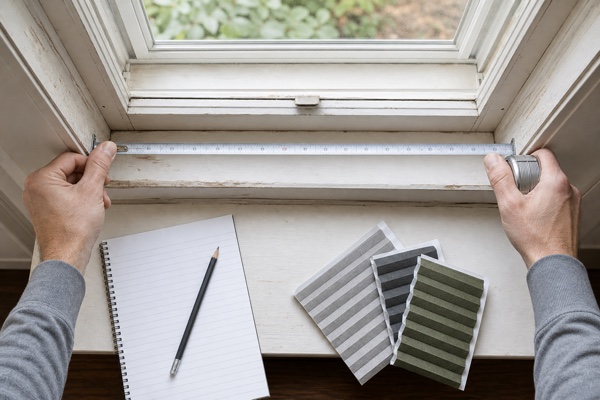
Watch: Measure Before You Order
This ShadeCort measuring guide shows the basic checks to make before you submit custom dimensions. Always compare the video with the instructions for your exact product and mount type.
Open the ShadeCort measuring guide on YouTube if the embedded player is unavailable.
When Automation Is Worth Considering
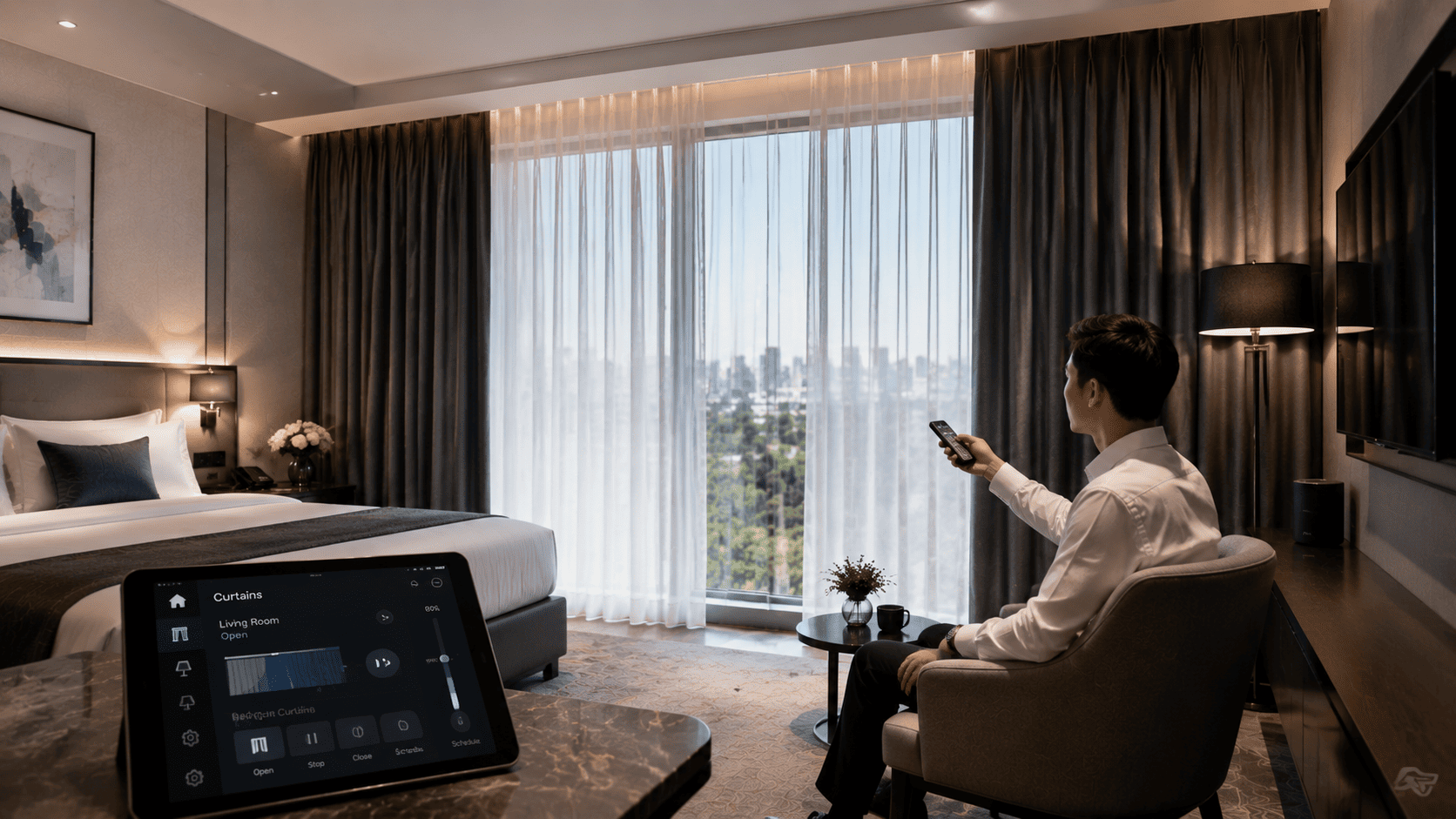
Automation does not make a weak shade construction stronger. Its value is consistency. A motorized shade can follow a schedule when a high window is difficult to reach, when several windows need to move together, or when household routines make manual operation unreliable.
The DOE program article describes a small Baltimore Gas and Electric pilot in which automated shades were scheduled on south- and west-facing windows. Some participating homes reported bill reductions, but a 15-home pilot is not a universal savings guarantee. The more transferable idea is behavioral: a shade only manages sun or nighttime heat transfer when it is in the useful position.
If you are comparing motorized window treatments, ask about power source, charging access, control method, grouping, noise, hub requirements, limit-setting, manual operation, replacement parts, and what happens after a power or network interruption. For hardwired work, use a qualified electrician and settle the wiring plan before finishes are complete.
A Seven-Step Buying Checklist
- Name the problem. Is the room cold near glass, overheated by direct sun, too bright, too exposed, or too dark with the current treatment?
- Inspect the window. Check drafts, seals, glazing fog, moisture, frame condition, locks, and operability before blaming the covering.
- Map sun and routine. Note window orientation and the times when discomfort occurs. A photo taken at 9 a.m. and another at 4 p.m. can be revealing.
- Choose a product family. Compare insulating cellular designs, roller shade options, solar fabrics, curtains, or a window repair rather than shopping by color first.
- Request evidence for the exact construction. An AERC label, test report, openness factor, material specification, or component drawing should match what you are ordering.
- Confirm dimensions and details. Agree on mount type, deductions, overlap, control side, cassette, channels, hem bar, obstacles, and installation responsibility.
- Plan how you will use it. Set a simple summer and winter routine. Automation is useful when it solves a real access or consistency problem.
How ShadeCort Can Help You Compare the Options
ShadeCort manufactures made-to-measure window treatments and can review a brief that includes room use, window photos, dimensions, mount preference, light-control goal, and manual or motorized operation. The ShadeCort shade range lets a homeowner compare cellular, roller, solar, pleated, and other formats without pretending that one construction is right for every opening.
For a blackout roller shade, that review can include fabric opacity, cassette style, side channels, hem-bar treatment, and the mounting surface. For cellular or solar options, the useful questions shift to cell construction, openness, color, view, and operating schedule. Availability and performance documentation should be confirmed for the exact configuration and destination before ordering.
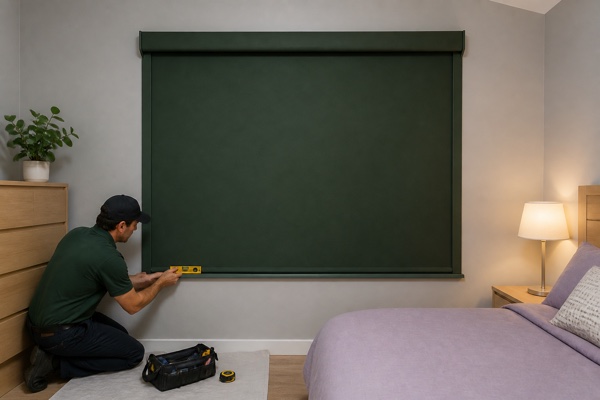
Send ShadeCort a photo of each window, your measurements, city or climate, room use, and the problem you want to solve. The team can help narrow the product and control options before you commit to a custom size. Contact ShadeCort for a configuration review, or browse the ShadeCort blog for more window-treatment planning guides.
Sources and further reading
- U.S. Department of Energy: DOE Recognizes 10 Storm Window and Window Attachment Programs for Their Impact
- Oak Ridge National Laboratory: Evaluation of Interior Cellular Shades in a Residential Building
- Attachments Energy Rating Council: AERC Rating and Certification
- AERC: Reading the Residential Label
- Natural Resources Canada: Low-Solar and High-Solar Gain Glazings
- Natural Resources Canada: Keeping the Heat In: Upgrading Windows and Exterior Doors
- U.S. Department of Energy: Window Types and Technologies
FAQ
Do energy-efficient window shades really lower energy bills?
They can reduce heat transfer or solar gain, which may lower HVAC demand. The result depends on climate, glass and frame performance, window area, product construction, fit, thermostat settings, and operating schedule. Treat percentages from a study as evidence under specific test conditions, not as a guarantee for your bill.
Are cellular shades always the most energy-efficient choice?
Cellular shades are a strong interior option when insulation is the main goal, but “most efficient” requires a defined product and climate. Cell design, fabric, side channels, fit, and use all affect performance. For strong summer sun, an exterior attachment or solar-control strategy may address the problem more directly.
Should shades stay closed all day in winter?
Not necessarily. In a heating-dominated climate, useful sunlight through a well-oriented window can warm a room during the day. Closing an insulating shade after the sun has passed may be more sensible. Cloud cover, orientation, glazing, privacy, and overheating risk should guide the routine.
Will a blackout roller shade insulate as well as a cellular shade?
Blackout describes light transmission, not a standard level of insulation. A blackout roller shade can help create a darker room and add a layer at the window, but a cellular construction is specifically designed with air pockets. Ask for exact performance information if insulation is the buying priority.
Can a window shade fix drafts or condensation?
A shade may make the area beside glass feel more comfortable, but it does not repair air leakage, failed seals, water entry, or damaged frames. Persistent fog between panes, heavy condensation, or a noticeable draft should be assessed before a custom covering is ordered.
Is motorization worth the extra cost?
It is most useful for high or hard-to-reach windows, coordinated groups, accessibility needs, or households that want repeatable schedules. It may help the treatment operate when needed, but it does not guarantee energy savings. Compare power, controls, compatibility, service access, and replacement support.