Quick Answer
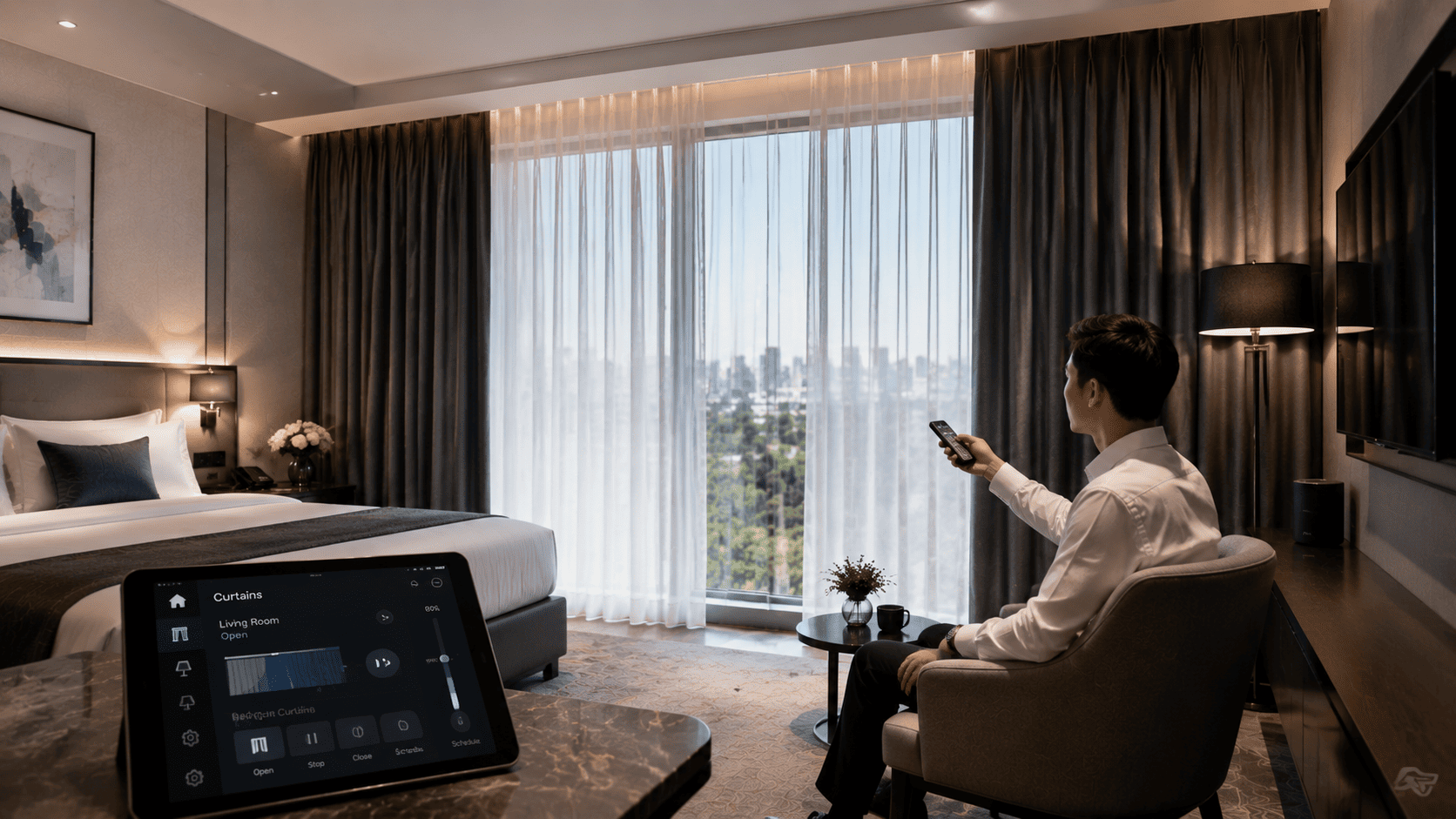
RoHS 3 for motorized window shades matters mainly when a product with electrical or electronic parts is placed on the European Union market. It limits ten substances in homogeneous materials, including lead, cadmium, mercury, several flame retardants, and four phthalates. For a U.S. or Canadian order, an EU RoHS report can still be useful evidence about a motor, controller, cable, remote, charger, or battery assembly. It is not a universal North American product approval. Buyers should match every document to the exact component and model, then check separate FCC, ISED, electrical, battery, chemical, and window-covering requirements that may apply at the destination.

The Buyer Problem: One RoHS PDF Can Create False Confidence
A familiar buying conversation goes like this. You ask whether a motorized shade is compliant. The seller sends a PDF with a laboratory logo and the word “RoHS” on the first page. The motor model is hard to find, the controller is not mentioned, and the finished shade is nowhere in the report. Still, the document gets treated as proof for the whole product.
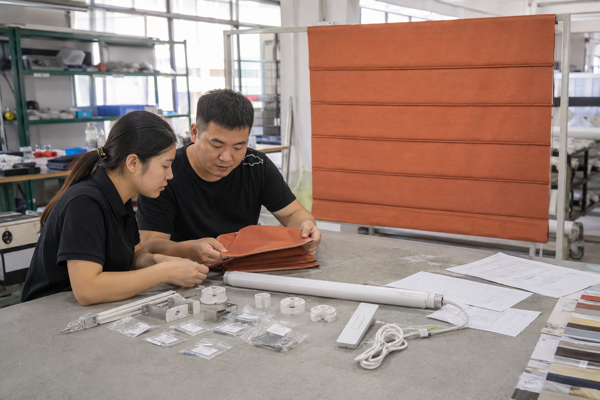
That shortcut can create problems later. A motorized shade is a small system, not one material. It may contain a tubular motor, printed circuit board, cable insulation, plastic housing, remote, radio module, battery, charger, brackets, fabric, adhesives, and packaging. A report for one motor does not automatically cover a different motor, a substituted cable, the remote, or the complete assembled shade.
For a homeowner, the result may be a product that cannot be supported by the seller’s claim. For a designer, dealer, or small importer, the gap may appear during a retailer review, customs query, project handover, or product-change investigation. The practical question is not “Do you have RoHS?” It is “Which exact parts and finished models does this evidence cover?”
Who This Guide Is For
This guide is for U.S. and Canadian homeowners, interior designers, installers, small dealers, and import buyers considering motorized roller shades, cellular shades, Roman shades, or connected blinds. It is most useful before a deposit is paid or a production sample is approved.
It is general purchasing guidance, not a legal determination for a particular product. Product scope changes with the design, power source, radio functions, destination, sales channel, and responsible importer. When a rule clearly applies, confirm the current requirement with the relevant authority, testing laboratory, or qualified adviser.
What Does RoHS 3 Mean?
The European Union’s Restriction of Hazardous Substances Directive applies to electrical and electronic equipment within its scope. The European Commission explains that the current framework restricts ten substances in EEE and is intended to reduce risks to health, the environment, and recycling.
“RoHS 3” is an industry name for the RoHS 2 framework after Commission Delegated Directive (EU) 2015/863 added four phthalates to Annex II. The nickname is convenient, but it is not a separate standalone law with its own universal certificate.
The ten restricted substances and maximum concentration values by weight in homogeneous materials are:
| Restricted substance | Maximum concentration |
|---|---|
| Lead | 0.1% |
| Mercury | 0.1% |
| Cadmium | 0.01% |
| Hexavalent chromium | 0.1% |
| Polybrominated biphenyls (PBB) | 0.1% |
| Polybrominated diphenyl ethers (PBDE) | 0.1% |
| Bis(2-ethylhexyl) phthalate (DEHP) | 0.1% |
| Butyl benzyl phthalate (BBP) | 0.1% |
| Dibutyl phthalate (DBP) | 0.1% |
| Diisobutyl phthalate (DIBP) | 0.1% |
The phrase “homogeneous material” matters. It points to a material that cannot be mechanically separated into different materials. A finished remote may contain solder, a circuit board, a plastic case, cable insulation, and metal contacts. Testing or supplier declarations need enough detail to address the relevant materials, not just the remote’s total weight.
Does RoHS Apply to Manual and Motorized Window Shades in the Same Way?
No. A manual curtain or shade with no electrical or electronic function is generally not the kind of EEE that the EU RoHS Directive is designed to regulate. Other chemical, consumer-product, cord-safety, labeling, and retailer requirements may still apply.
A motorized shade can include EEE. If that product is placed on the EU market, the responsible economic operator needs to determine the applicable scope, exclusions, exemptions, conformity assessment, technical documentation, declaration, and marking duties for the finished model. The analysis should follow the actual bill of materials and product function.
For U.S. and Canadian buyers, EU RoHS evidence can support a material-control conversation even when the finished product is not being sold in Europe. It does not replace destination-specific checks. Start with the exact operating system in ShadeCort’s motorization overview, then ask which motor, power supply, remote, hub, and radio protocol will be used in your order.
What Should a RoHS File Cover in a Motorized Shade?
The table below turns a broad compliance request into component-level questions.
| Product part | Why RoHS evidence may matter | Separate U.S. or Canada check | What to request |
|---|---|---|---|
| Tubular motor and internal PCB | Solder, board materials, wiring, plastic housing, and metal finishes may contain restricted substances | Electrical safety and the exact motor’s installation conditions | Model-specific declaration, report reference, photos, rating label, and component revision |
| Remote, receiver, hub, or app gateway | Radio electronics add boards, housings, batteries, and firmware-linked hardware | FCC equipment authorization in the U.S.; ISED certification and REL listing in Canada when applicable | FCC ID or ISED certification number, hardware version, user label, and integration instructions |
| Cable, connector, and charger | Cable insulation and plasticized parts can be relevant to phthalate restrictions | Electrical listing, plug configuration, voltage, and charger compatibility | Part numbers, supplier declarations, test references, and plug/label photos |
| Rechargeable battery pack | Cells, leads, case materials, and protective circuitry form a separate assembly | Battery safety, transport documents, charger compatibility, and destination rules | Cell and pack model, specification, transport record, and change-control terms |
| Fabric, coating, adhesive, and plastic accessories | A generic electronic-component report may not address these materials | Destination chemical restrictions, flammability needs, and retailer specifications | Material declarations, requested test scope, approved swatches, and supplier lot references |
| Complete finished shade | The finished model combines all components and may introduce new materials or substitutions | Window-covering safety, labeling, radio integration, electrical safety, and installation | Final BOM, drawing, labels, declarations, applicable test records, and approved production sample |
This is also why a custom window shade specification sheet should identify the operating system and component models. A color name and finished size are not enough for a motorized product record.
RoHS 1, RoHS 2, and RoHS 3 in Plain Language
RoHS 1
Directive 2002/95/EC introduced restrictions for six substances in specified categories of EEE. It is the original framework people usually mean when they say RoHS 1.
RoHS 2
Directive 2011/65/EU recast the framework. It expanded and clarified scope, connected RoHS conformity with EU technical documentation and CE marking duties, and replaced the earlier directive.
RoHS 3
Commission Delegated Directive (EU) 2015/863 amended Annex II by adding DEHP, BBP, DBP, and DIBP, each with a 0.1% maximum concentration in homogeneous materials. This produces the current list of ten substances often described as RoHS 3.
The useful buying takeaway is simple. Ask which legal version, substance list, product model, materials, and date the evidence addresses. “RoHS compliant” without those details is too vague to approve a motorized shade.
Is a RoHS Certificate the Same as a Test Report or Declaration?
No. Sellers often use the word “certificate” for several different files. Their purpose and evidentiary value are not the same.
Supplier declaration
A component supplier may state that a named part meets specified RoHS substance limits. Check the issuer, exact part number, covered revision, date, exemptions, and supporting basis.
Laboratory test report
A laboratory report records the sample, methods, results, dates, and tested materials. Read beyond the cover page. Confirm that the sample description and photos match what you are buying. A passed plastic housing does not prove the solder, cable, or finished assembly.
EU Declaration of Conformity and technical file
Where EU product legislation requires it, the manufacturer prepares technical documentation and an EU Declaration of Conformity for the finished product. The European Commission’s guidance places responsibility on the manufacturer to identify applicable rules, keep supporting evidence, and issue the declaration. This is different from receiving a government-issued universal RoHS certificate.
A one-page marketing certificate
Some laboratories or suppliers provide a short certificate that summarizes a longer report. It can be a useful index, but it should not be the only file used to approve a complex product. Ask for the underlying scope and report reference.
What RoHS Means for Buyers in the United States
EU RoHS does not become a general U.S. product approval simply because a seller ships to America. California has a RoHS-style rule, but the California Department of Toxic Substances Control describes it as applying to covered electronic devices. Its current covered-device list is centered on video display products with screens larger than four inches. That is not a general RoHS mandate for every motorized shade.
Wireless controls create a separate question. The Federal Communications Commission states that radio-frequency devices subject to equipment authorization must meet its requirements before marketing or import into the United States. If a shade uses a radio remote, receiver, Wi-Fi hub, Bluetooth control, or other transmitter, request the exact FCC identifier and confirm that the finished host uses the module within its approved conditions.
Other U.S. requirements may also apply to the finished window covering, charger, battery, packaging, cord system, retailer program, or state chemical disclosure. RoHS evidence does not replace those checks.
What RoHS Means for Buyers in Canada
Canada also does not use EU RoHS as a universal approval for motorized shades. Canada has its own chemicals framework. For example, the federal Prohibition of Certain Toxic Substances Regulations, 2025 addresses listed substances and products within its own scope. Its rules, exemptions, dates, and records should be checked directly rather than inferred from an EU report.
Wireless equipment has a separate path. Innovation, Science and Economic Development Canada explains that most radio apparatus in Category I requires certification and appears in the Radio Equipment List. Canadian consumers can search the REL using the certification number and hardware version shown on the product.
For a connected shade, ask whether the exact remote, receiver, hub, or integrated module is certified for use in Canada. A U.S. FCC ID alone does not prove Canadian authorization, and a component’s ISED listing does not automatically settle every host-integration condition.
Seven Steps to Review RoHS Evidence Before Ordering
1. Define the finished product and destination
Write down the shade type, finished dimensions, motor, power method, remote, hub, radio protocol, charger, battery, and sales destination. Treat the U.S., Canada, and EU as separate market reviews.
2. Freeze a model-level bill of materials
Use part numbers, not descriptions such as “standard motor” or “white remote.” Add a version date. The ShadeCort custom shades range can help you identify the product family before the component list is finalized.
3. Build an evidence matrix
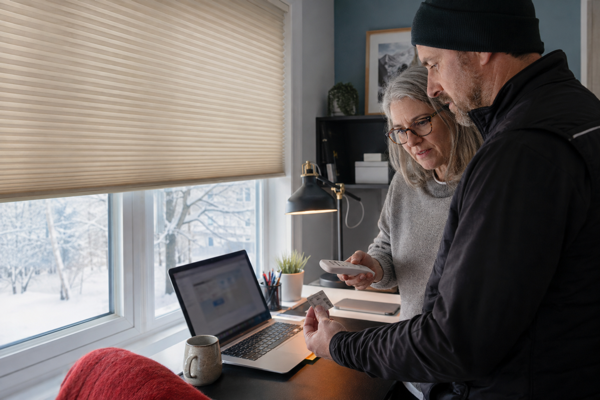
For each electrical, electronic, plasticized, coated, or otherwise relevant part, record the supplier, part number, material declaration, test-report reference, issue date, and known exemption. Mark gaps instead of assuming that one report covers them.
4. Read the report scope
Check sample descriptions, photos, tested materials, methods, limits, dates, and result tables. Confirm whether the report covers all ten substances or only the original six.
5. Check North American radio and electrical files separately
For wireless products, verify the FCC and ISED identifiers against the actual hardware. Also review charger, plug, voltage, battery, and installation requirements for the destination. A RoHS report answers a substance question, not every safety or market-access question.
6. Approve a physical sample against the record
Compare the production sample with the BOM, rating labels, remote, charger, battery, fabric, brackets, and packaging. ShadeCort’s compliance and standards page is a useful starting point, but any public document must still be matched to the exact product and requested market.
7. Control substitutions after approval
State that material or component changes need written review before production. A lower-cost cable or newly available motor can invalidate the evidence map even when the finished shade looks identical.
Common Mistakes That Leave Buyers Exposed
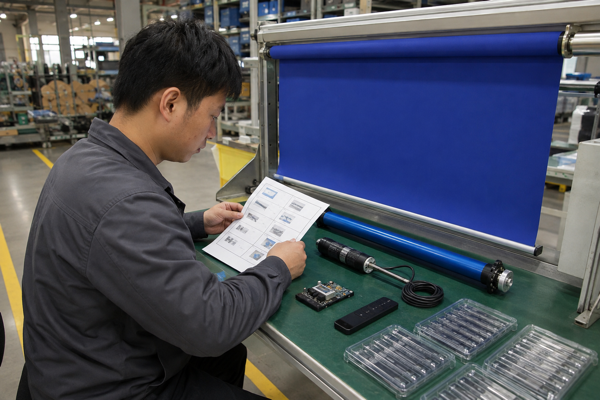
- Asking only, “Is it RoHS certified?” without naming the finished model or destination.
- Accepting a report cover page without checking the sample, photos, and material list.
- Assuming a motor report covers the remote, cable, charger, battery, fabric, and finished assembly.
- Treating EU RoHS as proof of FCC or ISED authorization.
- Approving a sample without recording component part numbers and versions.
- Allowing component substitutions without a new document review.
- Using an old six-substance report for a request that requires all ten RoHS substances.
- Treating a laboratory report as a guarantee that every production batch is identical to the tested sample.
These are good topics to add to your supplier interview. ShadeCort’s guide to questions to ask a window-treatment supplier offers a broader checklist for identity, production scope, quality control, and records.
How ShadeCort Can Support a Document-Ready Order
ShadeCort can help organize the product information that makes a compliance review possible. For a motorized-shade request, that may include:
- A product specification tied to the selected shade, dimensions, fabric, motor, power option, controls, and accessories.
- Component-model confirmation for the motor, remote, receiver, hub, charger, and battery where applicable.
- Available supplier declarations, report references, label images, and technical records connected to named components.
- An approved sample and versioned BOM that can be compared with production.
- Written review of proposed component changes before the order is released.
- Packing and label coordination based on the information provided for the destination and sales channel.
The exact file set depends on the product and market. ShadeCort should not be presented as a substitute for the buyer’s importer, laboratory, retailer compliance team, or legal adviser. The factory’s useful role is to make the selected construction visible and traceable before production, so the responsible parties can review the right product.
Watch: Measure Before You Freeze the Product Record
Dimensions are part of a custom shade’s identity. A complete compliance file cannot fix a shade made for the wrong opening. Watch the ShadeCort measuring guide, then confirm the measurement method for the exact product and mount type before the BOM and labels are frozen.
Watch the ShadeCort Measuring Guide on YouTube
Open the ShadeCort Measuring Guide on YouTube if the player is unavailable.
Buyer Checklist Before Paying a Deposit
- The finished shade model and destination market are written on the order.
- Manual and motorized products are not grouped under one generic compliance claim.
- The motor, controller, remote, hub, charger, cable, and battery have exact part numbers.
- RoHS evidence states whether it covers six or ten substances.
- Reports identify the tested sample, materials, methods, limits, date, and laboratory.
- FCC and ISED details are checked separately for wireless functions.
- Electrical, battery, window-covering, labeling, and retailer requirements are assigned to the responsible party.
- The approved sample, BOM, labels, and packaging share one revision date.
- Component substitutions require written review.
- Copies of the agreed records will be available before shipment.
Request a Product-Specific Document Review
Send ShadeCort the destination country, window dimensions, shade type, motor and control preference, power method, quantity, retailer or project requirements, and any compliance checklist you already have. The team can identify the product details that need to be frozen and show which available records map to the proposed configuration.
Contact ShadeCort for a motorized shade specification and document review.
Sources and Further Reading
- European Commission: Restriction of Hazardous Substances in Electrical and Electronic Equipment
- EUR-Lex: Directive 2011/65/EU
- EUR-Lex: Commission Delegated Directive (EU) 2015/863
- European Commission: Preparing Technical Documentation
- California DTSC: RoHS in Electronic Devices
- U.S. FCC: Equipment Authorization Overview
- ISED Canada: Compliance Information for Radio Equipment
- Environment and Climate Change Canada: Prohibition of Certain Toxic Substances Regulations, 2025
FAQ
Is RoHS 3 mandatory for every motorized window shade sold in the United States?
No. RoHS 3 refers to the EU RoHS substance framework. U.S. buyers may use RoHS documents as supply-chain evidence, but the finished product still needs a separate review of applicable federal, state, radio, electrical, battery, window-covering, labeling, and retailer requirements.
Does a manual curtain or shade need a RoHS report?
A manual product without electrical or electronic functions is generally outside the EEE focus of the EU RoHS Directive. Other chemical, consumer-product, cord-safety, flammability, labeling, or retailer requirements may still apply, so the destination and product design should be reviewed separately.
What is the difference between RoHS 2 and RoHS 3?
RoHS 2 commonly refers to Directive 2011/65/EU. “RoHS 3” is the common name for that framework after Directive (EU) 2015/863 added DEHP, BBP, DBP, and DIBP to the restricted-substance list. The current list contains ten substances.
Is a RoHS certificate enough for a complete smart shade?
Usually not by itself. Check whether the file is a supplier declaration, laboratory report, summary certificate, EU Declaration of Conformity, or another record. Then match its model, materials, revision, and scope to the motor, controls, cables, charger, battery, and finished assembly.
Does RoHS 3 replace FCC approval for a wireless shade remote?
No. RoHS addresses restricted substances in EEE within its scope. FCC equipment authorization addresses radio-frequency devices marketed or imported in the United States. A wireless shade may need both substance evidence and separate radio compliance work.
How can a Canadian consumer check a wireless shade controller?
Ask for the ISED certification number and hardware version identification. Search the Radio Equipment List and confirm that the number, model, and host-integration conditions match the product being supplied. Do not rely only on a U.S. FCC ID.
When should RoHS documents be reviewed for a custom shade order?
Review them after the proposed component list is known and before final sample approval, label printing, or production release. Repeat the review if the motor, controller, cable, charger, battery, plastic part, coating, or other relevant material changes.
What should I send ShadeCort for a document review?
Send the destination, product type, measurements, motor and control preferences, power method, quantity, project or retailer requirements, and any required substance or radio checklist. ShadeCort can then map the proposed components and available records to the specific order for further buyer or laboratory review.