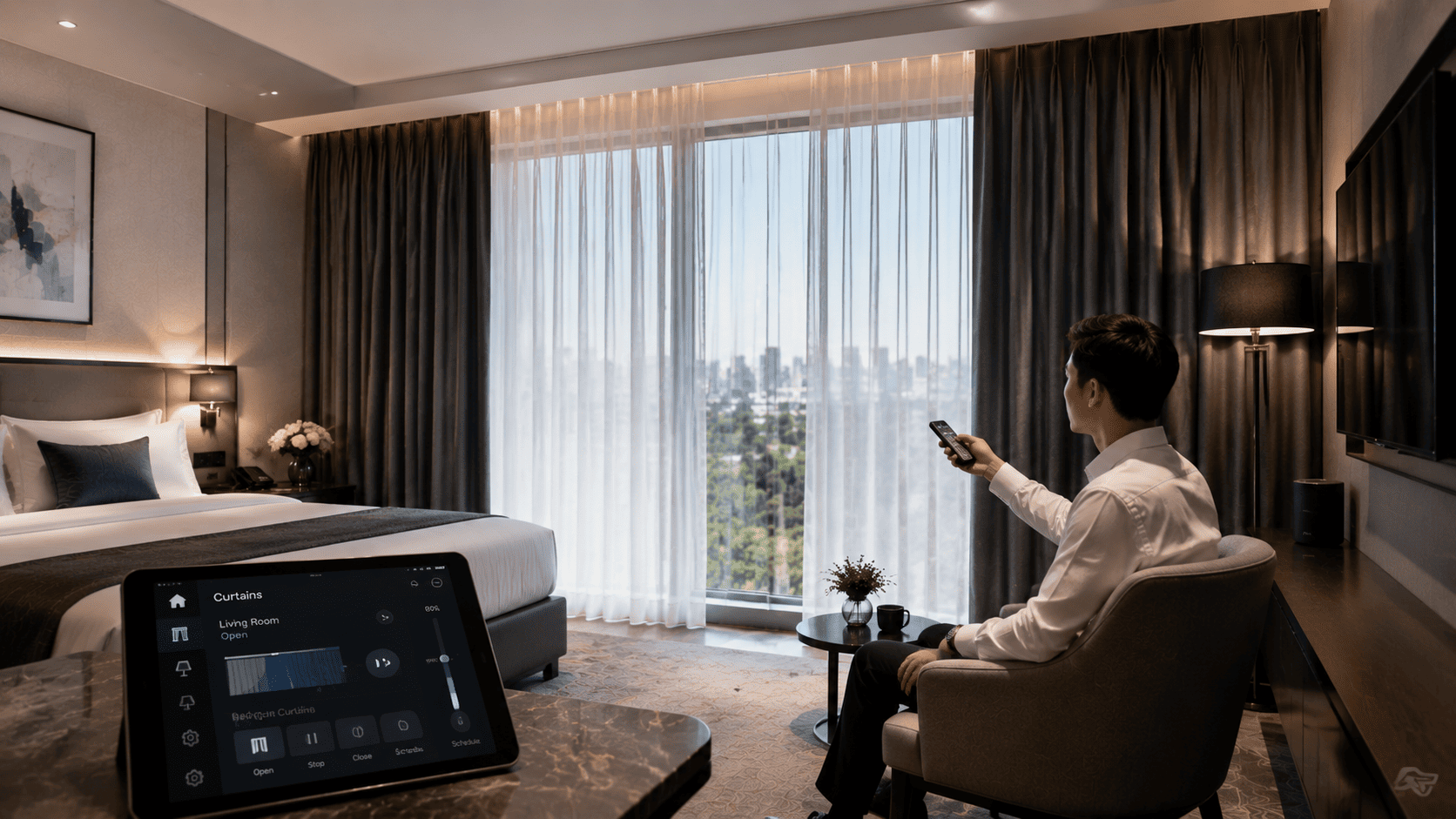
Quick Answer
The safest way to pay for custom blinds online is usually a credit card used through the seller’s official checkout, after you have verified the website, final measurements, product specifications, total price, delivery estimate, and custom-order terms. A card may give you a formal path to dispute certain billing problems, but it cannot correct a measurement mistake or guarantee that a made-to-order product can be returned. PayPal can be convenient, yet its U.S. and Canadian Purchase Protection terms exclude some claims involving wholly or partly custom-made items. Keep screenshots, order confirmations, emails, and delivery records until the order is installed and working as expected.

Who This Guide Is For
This guide is for homeowners and renters in the United States and Canada who are ordering made-to-measure blinds or shades online. It is especially useful for blackout products, whole-room orders, unusually large windows, motorized shades, or any purchase where a sizing error would be expensive.
The goal is not to make online ordering feel frightening. It is to separate the decisions that a payment method can help with from the decisions only you and the seller can settle before production begins.
The Real Risk With Custom Blinds
When you buy a standard household item, you can often return it if the size or color is wrong. A custom blind is different. It may be cut, assembled, programmed, or packed for one specific opening. Once production starts, cancellation and return options can narrow.
That creates three separate risks:
- Transaction risk: the merchant is not genuine, the charge is wrong, or the order never arrives.
- Specification risk: the width, height, mount type, fabric, control side, color, or motor option is not what you intended.
- Expectation risk: you assumed a custom item could be returned for preference or measurement errors, but the current policy says otherwise.
A secure checkout mainly addresses the first category. Careful measurement, a written order summary, and clear policies address the other two.
Before You Pay: Verify the Seller and the Order
Use the official website and a normal checkout
Check the domain carefully, especially if you arrived through an advertisement, social post, or direct message. The U.S. Federal Trade Commission advises online shoppers to research unfamiliar sellers and read shipping, return, and refund policies before buying. The FTC’s online shopping guide also recommends paying by credit card when possible.
In Canada, the Competition Bureau similarly advises shoppers to use a credit card, confirm the total cost and delivery timeline, and read the fine print on returns and refunds. Its merchandise scam guidance is a useful quick check before an unfamiliar purchase.
Do not send money to a personal account, pay through a gift card, or switch to an off-site payment route because a message promises a discount. If the seller asks you to leave its normal checkout, stop and verify the request through a contact method published on the official site.
Confirm the full order, not just the product name
Before checkout, save or request a summary that shows:
- Finished width and height for every blind
- Inside or outside mount
- Product type, fabric, opacity, and color
- Control type and control side
- Motor, remote, charger, hub, or smart-home options, if applicable
- Quantity, room labels, accessories, shipping address, and contact details
- Currency, product price, shipping, estimated tax, duties if applicable, and final total
- Estimated production and delivery timing
If you are still deciding between products, review ShadeCort’s shade product families, roller shade options, and motorization overview before finalizing the configuration.
Which Payment Method Is Safer for Custom Blinds?
No payment method makes a poorly documented order safe. The comparison below shows how common methods usually fit a consumer purchase. Your issuer’s agreement, the seller’s checkout, local law, and the facts of a dispute still control the outcome.
| Payment method | Why a shopper may choose it | Important limitation | Practical use |
|---|---|---|---|
| Credit card | Provides an issuer dispute process for certain billing errors and non-delivery situations | Does not automatically cover buyer measurement mistakes, preference changes, or every quality disagreement | Often the clearest first choice for a higher-value online custom order |
| PayPal funded by a credit card | Keeps card details from the merchant and may provide more than one possible dispute route | PayPal’s Purchase Protection has exclusions for some custom-made-item claims; card issuer rules can differ | Useful when offered at official checkout, after reading current U.S. or Canadian terms |
| Debit card | Uses funds directly from your bank account and may be convenient | Dispute rights, timing, and access to funds may differ from credit cards | Check the bank’s current protections before using it for a large custom order |
| Digital wallet or buy now, pay later service | Can simplify checkout or spread payments | Refund handling and dispute paths depend on the wallet, lender, underlying card, and merchant | Read both the provider’s terms and the seller’s custom-order policy |
| Bank transfer | May be offered for a large or specially arranged order | Consumer recovery options can be more limited once funds are sent | Use only after independently verifying the company and written invoice |
| Gift card, cash app transfer, cryptocurrency, or friends-and-family payment | Fast for the recipient | Often provides little or no purchase protection and is commonly requested in scams | Avoid for a retail custom-blind purchase |

Why PayPal Needs a Closer Look for Made-to-Measure Products
PayPal can be a reasonable checkout option, but the logo alone should not decide the purchase. The current U.S. PayPal Purchase Protection terms and Canadian PayPal Purchase Protection terms distinguish between an item that never arrives and an item claimed to be significantly different from its description. Both versions state that claims involving wholly or partly custom-made items are ineligible under the significantly-not-as-described category.
That does not mean every custom order is unprotected or that every claim will fail. It means you should read the current terms before paying and should not assume the same rules apply to non-delivery, an unauthorized transaction, a measurement error, and a disagreement about color.
Good practice: If you use PayPal, choose a purchase checkout such as Goods and Services when offered. Do not send a retail purchase as a friends-and-family payment. Keep the seller’s product description, order summary, and messages outside the payment app as well.
Watch: Measure Before You Place the Order
A strong payment record cannot repair the wrong dimensions. Watch ShadeCort’s short measuring guide before you confirm the order, then compare your notes with the measurement instructions for the exact product and mount type.
Open the ShadeCort Measuring Guide on YouTube if the embedded player is unavailable.
Seven Checks Before You Click Pay
1. Measure each opening separately
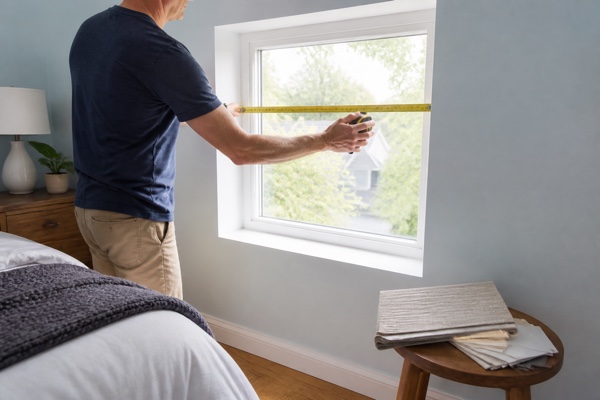
Windows that look identical may differ by a few millimetres or fractions of an inch. Label every opening and record width and height in the unit requested by the seller. Do not convert units in your head at checkout.
2. Confirm inside or outside mount
Mount type changes the sizing logic and the finished appearance. For an inside mount, confirm recess depth and possible obstructions. For an outside mount, confirm the overlap you want around the opening.
3. Request samples when color or texture matters
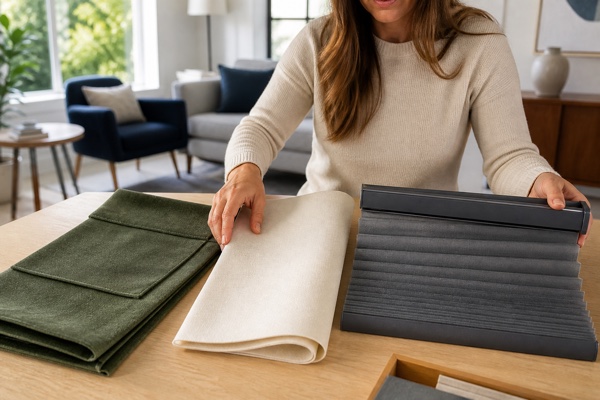
Screens display color differently, and room light changes how fabric looks. Compare the sample in daytime and evening conditions. If you need a darker room, verify the product construction and likely edge conditions, not just the word “blackout.”
4. Read the current custom-order policy
Do this before production begins. Check whether the seller permits changes, cancellations, returns, or remakes for customer measurement errors, color preference, damage, missing parts, or manufacturing defects. ShadeCort shoppers should review the current refund policy and shipping policy shown on the retail website and ask for clarification before ordering if a term is unclear.
5. Confirm the merchant name and currency
The name on your statement may differ slightly from the brand name, but it should still be identifiable. U.S. and Canadian shoppers should also confirm whether checkout is in USD or CAD and whether cross-border, conversion, tax, brokerage, or duty charges may apply.
6. Check the delivery estimate and address
Custom production time and carrier time are not the same. Save the estimate shown at checkout and verify the street address, apartment or unit number, postal or ZIP code, email, and telephone number.
7. Take one final screenshot
Capture the product configuration and total before submitting payment. After checkout, compare the confirmation email with the screenshot. If anything differs, contact the seller promptly and do not wait until the order ships.
What Records Should You Keep?
Create one folder for the purchase and keep:
- Measurement worksheet and room labels
- Product page, sample choice, specifications, and configuration screenshots
- Final cart, currency, taxes, shipping, and order total
- Order confirmation, invoice, and payment receipt
- Emails or chat messages about unusual dimensions or options
- Production and delivery estimates
- Tracking number, delivery photo, packaging labels, and unboxing photos
- Photos or video of any damage, missing parts, or specification difference
These records help the seller investigate and can also matter if you later contact a card issuer or payment provider. The U.S. Consumer Financial Protection Bureau advises consumers to contact the seller first and explains that written billing-error notices generally have a 60-day deadline from the statement containing the charge. Review the full CFPB credit card dispute guidance for the exact process.
If the Order Is Delayed, Damaged, or Wrong
Contact the seller promptly
State the order number, the promised specification, what happened, and the resolution you are requesting. Attach a small set of clear evidence. A concise message is easier to investigate than a long thread with changing details.
Inspect before discarding packaging
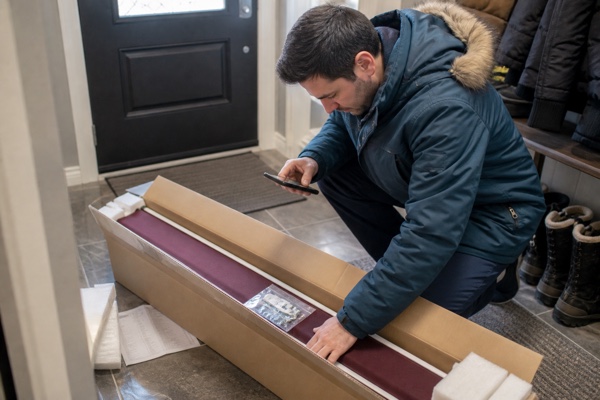
Photograph the carton, shipping label, product label, accessories, and any visible damage. If multiple blinds arrived, match each label to the room and opening before installation.
Use the correct dispute route
If the merchant does not resolve a qualifying billing problem, follow your card issuer’s instructions and deadlines. In Canada, the Financial Consumer Agency of Canada explains that federally regulated financial institutions must investigate disputed unauthorized transactions and advises cardholders to report suspicious transactions immediately. Read the FCAC unauthorized transaction guidance, while remembering that an unauthorized charge is different from a dispute over the quality or fit of a product you ordered.
Do not file two conflicting claims at the same time without checking the rules. PayPal and card issuers may require you to choose one route, and deadlines differ.
How ShadeCort Reduces Preventable Order Problems
ShadeCort’s practical advantage is not a promise that payment disputes never happen. It is the ability to clarify the product before production. As a window treatment manufacturer with direct product knowledge, ShadeCort can help a shopper identify the product family, review the requested configuration, and resolve questions about measurements, fabric, control type, accessories, or motorization before the order enters the factory workflow.
For a custom order, that factory-side clarification matters. A clean written specification gives the customer something useful to review and gives production a clearer target. ShadeCort also provides a consumer measuring guide and an installation guide for planning beyond checkout.
If your opening is unusually wide, shallow, angled, obstructed, or intended for full-room darkening, ask before paying. The ShadeCort contact team can help route product and specification questions. For more background on selecting and maintaining window treatments, visit the ShadeCort resources blog.
Pre-Payment Checklist
- I am using the seller’s official website and normal checkout.
- I measured every opening and confirmed the requested unit.
- I confirmed inside or outside mount and any depth or obstruction limits.
- The order summary lists the correct product, fabric, color, control, options, and quantity.
- I reviewed the current cancellation, return, remake, shipping, and warranty terms.
- I understand the checkout currency and the full estimated cost.
- I chose a payment method whose current protections and exclusions I understand.
- I saved screenshots, emails, the order summary, and the expected timeline.
- I asked the seller about anything unusual before authorizing production.
Ask Before You Order
If a measurement, recess, motor option, fabric choice, or delivery detail is unclear, settle it before payment. Contact ShadeCort with your window dimensions, mount type, room goal, and product questions. A short pre-order review can prevent a long post-delivery problem.
Sources and further reading
- U.S. Federal Trade Commission: Online Shopping
- Consumer Financial Protection Bureau: Credit card refunds and billing disputes
- Competition Bureau Canada: Purchase of merchandise scams
- Financial Consumer Agency of Canada: Protection from unauthorized transactions
- PayPal U.S.: Purchase Protection terms
- PayPal Canada: Purchase Protection terms
FAQ
What is the safest way to pay for custom blinds online?
For many U.S. and Canadian consumers, a credit card used through the seller’s official checkout offers the clearest combination of payment records and a formal dispute path. Protection is not automatic, and it does not cover every custom-order disagreement. Verify the seller, measurements, written specifications, total cost, and current custom-product terms before paying.
Is PayPal safe for made-to-measure blinds?
PayPal can be convenient, particularly when used through the official merchant checkout. However, its current U.S. and Canadian Purchase Protection terms exclude some significantly-not-as-described claims for wholly or partly custom-made items. Read the terms that apply to your country and payment source before ordering.
Can I charge back custom blinds if I measured incorrectly?
Do not assume so. A card dispute is not a replacement for accurate measurements or the seller’s custom-order policy. If the seller supplied exactly what you approved, a buyer measurement error may not qualify for a refund or billing dispute. Ask about measurement support and remake terms before production.
Should I pay for custom blinds by bank transfer?
A bank transfer may be legitimate for a verified special order, but it can offer fewer practical recovery options than a card purchase. Consumers should independently verify the business, invoice, account name, product specification, and written terms. Avoid a transfer requested through an unexpected message or to a personal account.
What should I do if my custom blinds never arrive?
Contact the seller with the order number and saved delivery estimate. If the seller does not resolve the issue, follow the dispute process and deadline for your card issuer or payment provider. Keep the order confirmation, promised timeline, tracking history, and correspondence.
What should I photograph when the delivery arrives?
Photograph the unopened carton, shipping label, product labels, contents, accessories, and any visible damage. If an item appears wrong, also photograph the measured product and the original approved specification before installation or modification.