Quick Answer
The most useful China window treatment trade fairs depend on what you need to buy. R+T Asia is the most focused choice for blinds, shades, motors, controls, and sun-protection systems. Intertextile Shanghai Home Textiles and the Keqiao Curtain Fabric Exhibition are stronger for curtain fabrics, ready-made drapery, and textile sourcing. CIFF Guangzhou and Hotel & Shop Plus suit buyers working on furniture, hospitality, or complete interior packages. The Canton Fair offers breadth, but it requires tighter pre-screening. Use a fair to build a shortlist, then verify samples, specifications, production scope, and factory ownership before placing an order.
The Expensive Mistake Is Attending Without a Sourcing Question
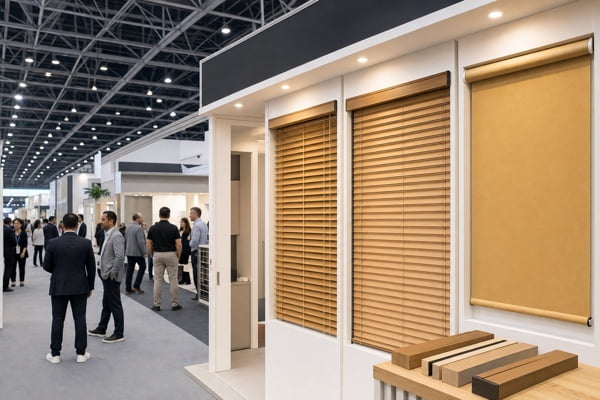
A China trade fair can compress months of supplier discovery into a few days. It can also produce a suitcase full of catalogues and very little usable evidence.
Window treatments sit across several supply chains. A motorized roller shade combines fabric, tube and bracket engineering, a drive system, controls, wiring or batteries, and project-specific dimensions. Custom drapery involves fabric, lining, heading construction, track compatibility, sewing quality, and packing. A general home-furnishing show may reveal design directions, while a specialist shading event is better for operating systems and components. Neither automatically proves that the exhibitor controls production.
The practical question is therefore not, “Which is the biggest fair?” It is, “Which event gives our team the best chance of answering the next purchasing decision?”
That distinction matters because the cost of a poor trip continues after the flight home. Buyers may request samples from companies that cannot reproduce the display, compare quotes based on different constructions, or discover too late that a booth represented a trader, brand, component supplier, or factory with a narrower scope than expected.
Who This Guide Is For
This guide is written for international window-treatment brands, importers, wholesalers, hotel procurement teams, contractors, designers, and developers planning supplier meetings in China.
It is especially useful when you need to:
- add roller, cellular, Roman, zebra, solar, or motorized shades to a range;
- source custom drapery, curtain fabric, tracks, or project hardware;
- compare manual and motorized systems in one buying trip;
- review OEM or ODM options with more than one supplier;
- meet potential suppliers before arranging samples or a factory audit;
- combine a Guangzhou exhibition with a Guangdong factory visit.
If your product brief is still vague, finish it before booking the trip. A fair is much easier to navigate when every team member knows the target product, market, price position, order model, required documentation, and decisions that must be made in person.
Which China Trade Fair Fits a Window-Treatment Buyer?
1. R+T Asia: Best for complete shading systems
R+T Asia is the most directly relevant event in this guide for blinds, shades, shutters, motors, controls, internal shading, and external sun-protection systems. Its official site lists internal sun shading, external sun shading, and doors or gates as core sections. The next edition is scheduled for 26-28 May 2027 at the National Exhibition and Convention Center in Shanghai.
Choose this fair when operating systems matter as much as appearance. It is a logical place to compare tubes, brackets, headrails, tracks, drive options, control methods, and finished products. Motorized-product buyers can also use the visit to ask whether a supplier provides a complete tested assembly or combines components from several sources.
The limitation is specialization. It is excellent for systems and technology, but a buyer seeking a broad decorative drapery collection may need to pair it with a home-textile event or separate fabric meetings.
2. Intertextile Shanghai Home Textiles: Best for fabric and collection development
Intertextile Shanghai Home Textiles – Autumn Edition covers curtains and curtain fabrics, ready-made curtains, sheers, Venetian blinds, roller and panel blinds, upholstery fabrics, wallcoverings, and window accessories. The 2026 autumn edition runs from 18-20 August at the National Exhibition and Convention Center in Shanghai.
This fair suits buyers developing fabric stories, seasonal collections, decorative drapery, sheers, or coordinated soft-furnishing ranges. It can also help a finished-product buyer see which fabrics are commercially available before asking a workroom or window-treatment factory to engineer the final construction.
Be precise about supplier roles. A mill may make fabric but not finished curtains. A converter may handle finishing without weaving the base cloth. A ready-made curtain company may outsource parts of production. Ask what is done in-house, what is subcontracted, and who will be accountable for shade banding, usable width, lot variation, sewing, lining, and final inspection.
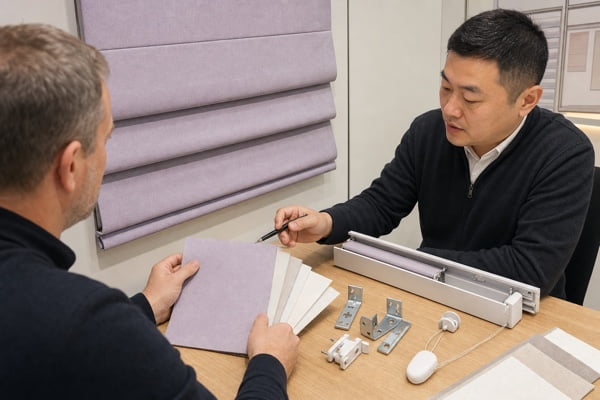
3. Shaoxing Keqiao Curtain Fabric Exhibition: Best for concentrated curtain-fabric sourcing
The Shaoxing Keqiao China Textile City Curtain Fabric Exhibition is more concentrated than a general textile fair. Its official site lists the 18th edition for 12-14 August 2026 at the Shaoxing International Convention and Exhibition Center.
Keqiao is useful when the main task is fabric discovery, price benchmarking, finishing options, or access to the textile trading ecosystem around China Textile City. It is less suitable as a stand-alone trip for buyers who need a fully engineered blind, motorized system, or finished project package.
Bring target specifications, not only mood boards. Ask about finished width, roll length, minimum color quantity, shade variation, backing or coating, repeat size, care method, and how a nominated fabric will be controlled when converted into a finished curtain or shade.
4. CIFF Guangzhou: Best for interiors, furniture channels, and Guangdong follow-up
CIFF Guangzhou covers home furniture, home decor and home textiles, outdoor products, office and commercial furniture, hotel furniture, materials, and machinery. Its next home-furniture and home-textile phase is scheduled for 18-21 March 2027 in Guangzhou.
CIFF is useful for importers and project teams that source window treatments as part of a larger interior package. Buyers can study how blinds, drapery, furniture, wall finishes, lighting, and automation are presented together. It is also a practical event for distributors deciding where a new window-treatment category will sit within an existing home-furnishing range.
Its breadth is also the drawback. Window treatments are only one part of a very large show. Pre-book relevant exhibitors and leave time for supplier meetings outside the hall. Guangzhou is particularly useful when you want to continue the trip with factory visits in Guangdong rather than treating the exhibition booth as the final qualification step.
5. Canton Fair: Best for broad supplier discovery
The Canton Fair is a broad sourcing event with multiple phases. The official 2026 autumn schedule places home textiles and textile raw materials in Phase 3, from 31 October to 4 November. Related electrical, manufacturing, household, and furnishing categories appear in other phases.
The fair can work well for established buyers expanding several categories at once. It may also reveal suppliers that are not present at specialist window-covering events. For a narrow shade or drapery brief, however, the scale can consume valuable time. Search the exhibitor directory before travel, identify the relevant phase, and confirm that shortlisted companies will show the exact product family you need.
A broad catalogue is not evidence of broad in-house capability. Ask the exhibitor to identify its production site, legal company name, core product lines, component sources, and the process used to move from a booth sample to an approved bulk order.
6. Hotel & Shop Plus: Best for hospitality and commercial projects
Hotel & Shop Plus is scheduled for 30 March-2 April 2027 at the Shanghai New International Expo Centre. Its scope includes hotel and commercial design, building materials, smart technologies, lighting, hotel supplies, hotel textiles, and sunshade products.
This event is a good fit for hotel owners, operators, designers, purchasing companies, and contractors who need to evaluate window treatments in the context of a complete guestroom or public-space brief. It can help teams connect blind and curtain decisions with lighting control, room automation, interior finishes, cleaning, and operations.
It is not a substitute for detailed product qualification. A project buyer still needs construction drawings, fabric and hardware samples, control-system responsibilities, destination-market documentation, installation coordination, and an agreed approval process.
China Window Treatment Trade Fairs Compared
| Trade fair | Best for | What you are likely to find | Main limitation | What to verify next |
|---|---|---|---|---|
| R+T Asia, Shanghai | Blind, shade, motor, control, and sun-protection systems | Finished systems, components, automation, internal and external shading | Less focused on broad decorative fabric collections | Complete assembly ownership, motor and control scope, component compatibility, sample testing |
| Intertextile Shanghai Home Textiles | Curtain fabric, ready-made drapery, sheers, and collection development | Mills, converters, fabric collections, accessories, some blinds and finished curtains | Supplier roles vary across the textile chain | In-house process, finishing source, usable width, lot control, finished-product capability |
| Keqiao Curtain Fabric Exhibition | Concentrated curtain-fabric sourcing and price benchmarking | Curtain cloth, decorative textiles, finishing and trading networks | Not a complete window-treatment systems show | Fabric specifications, minimum color quantity, repeatability, conversion into finished goods |
| CIFF Guangzhou | Home-furnishing ranges, distributors, designers, and Guangdong sourcing trips | Furniture, home textiles, decor, hotel and commercial products | Very broad exhibition footprint | Relevant exhibitor appointments, actual window-treatment scope, factory follow-up |
| Canton Fair, Guangzhou | Multi-category supplier discovery | Home textiles, fabrics, manufacturing and related categories across phases | Scale and category spread can dilute a narrow search | Correct phase, legal entity, factory ownership, product focus, post-fair sample plan |
| Hotel & Shop Plus, Shanghai | Hotel, retail, office, and commercial projects | Sunshade, hotel textiles, smart systems, design and operating products | Project context is broad; technical shade depth varies | Drawings, control scope, compliance evidence, installation and handover responsibilities |
Dates and categories can change. Check each event’s official website before booking flights, accommodation, or appointments.
What to Prepare Before Registration
Write a one-page buying brief
Keep it short enough to use during a ten-minute booth conversation. Include:
- target product and application;
- destination market and customer type;
- manual or motorized operation;
- indicative size range and order pattern;
- fabric performance and light-control level;
- color, hardware, logo, labeling, and packaging requirements;
- documents or test reports that must be reviewed;
- target sample decision and commercial next step.
For a broad range, separate the brief by product family. ShadeCort’s shade collection illustrates how different constructions such as roller, cellular, zebra, Roman, and solar shades should be treated as separate sourcing decisions. A supplier that is strong in one system may not control the others equally well.
Build a comparison sheet before you meet anyone
Use the same fields for every supplier. Record legal company name, factory location, sales office, primary product, in-house process, subcontracted work, standard materials, motor and control options, sample terms, indicative MOQ, quotation basis, lead-time assumptions, and requested evidence.
This prevents the most common post-fair problem: ten promising conversations that cannot be compared because each salesperson answered a different question.
Book appointments with evidence requests attached
Ask shortlisted exhibitors to bring or prepare the items you need to see. For example, request a full-size corner sample, bracket set, headrail section, motor and remote, fabric swatches, packaging sample, label example, or a previous anonymized inspection format. Do not ask for confidential customer material.
Questions to Ask at the Booth
The first conversation should establish whether the supplier belongs on the shortlist. Save detailed negotiation for a scheduled meeting.
- What product family do you manufacture most often?
- Which processes are completed at your own facility?
- Is this display sample a standard product, a customer development, or a prototype?
- Which components come from nominated external suppliers?
- Can the sample construction be repeated for bulk production?
- What inputs are required before you quote accurately?
- How do you control dimensions, appearance, operation, and packing during inspection?
- For motorized products, who owns system compatibility and commissioning support?
- Can you support OEM, ODM, or private-label work at the level our brief requires?
- Can we review samples, production scope, and quality records at the manufacturing site?
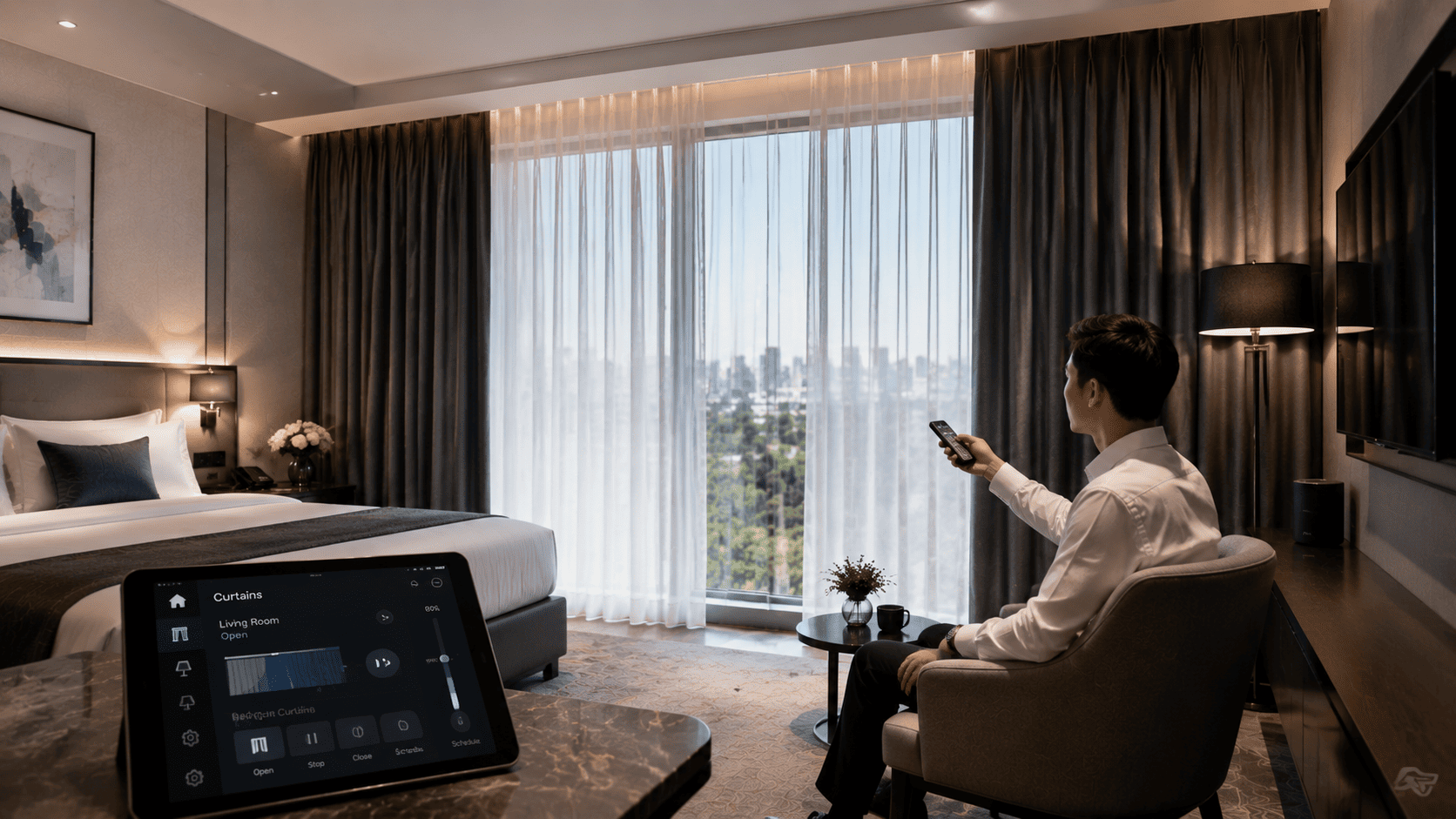
For motorized sourcing, bring a simple architecture diagram. Record the motor, power source, control method, gateway or hub, app or building-control interface, grouping logic, manual override, and commissioning responsibility. ShadeCort’s motorization overview can help buyers map the product choices that require confirmation for a particular project.
A Booth Is a Lead, Not a Factory Audit
Exhibition stands are designed to start conversations. They do not show normal production conditions, incoming material control, work instructions, calibration, in-process checks, nonconforming-product handling, packing flow, or sample retention.
After the fair, ask for evidence that matches the risk of the order. A simple stock blind may need a lighter review than a project-specific motorized package. Depending on the order, the next step may include:
- a video or onsite factory review;
- confirmation of the legal entity and manufacturing address;
- a signed specification sheet;
- approved material and color samples;
- an operational prototype or room mock-up;
- packaging and labeling approval;
- agreed inspection criteria and defect classification;
- confirmation of subcontractors and nominated components.
The purpose is not to make every order bureaucratic. It is to stop a polished booth sample from becoming the only reference for a technically different bulk shipment.
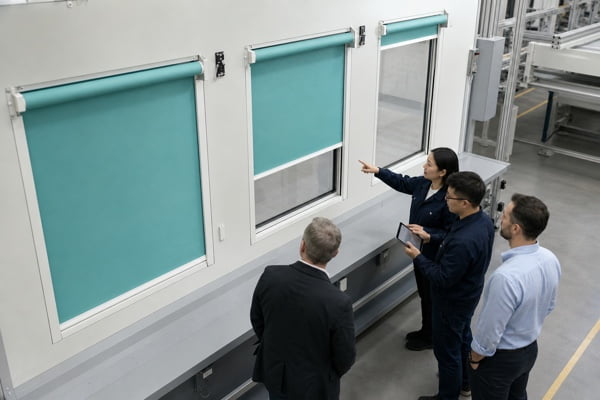
How to Combine a Guangzhou Fair With a ShadeCort Factory Review
ShadeCort is based in Qingyuan, Guangdong. The company’s website describes the location as about 40 minutes from Guangzhou Baiyun International Airport. This makes a pre-arranged visit a practical addition to a Guangzhou sourcing trip, subject to scheduling and the scope of the buyer’s project.
The value of the visit is not a ceremonial factory tour. Buyers should use the time to resolve open decisions from the fair:
- compare relevant manual and motorized constructions;
- review the target fabric, hardware, controls, and accessories together;
- confirm which OEM or ODM changes are realistic for the product;
- discuss sample approval, golden-sample retention, and bulk inspection points;
- review proposed labels, packaging, and shipment protection;
- identify information still needed for a comparable quotation.
ShadeCort presents both manual and intelligent window treatments, custom accessories, and OEM/ODM support on its B2B resources site. Buyers interested in drapery can also review the available drapery categories before the meeting. Product construction, documentation, MOQ, sample cost, and timing still need confirmation against the exact brief.
Contact the factory before travel. Send the one-page specification, target samples, expected attendees, and questions you want answered. That gives the team time to prepare relevant products instead of giving you a generic showroom walk-through.
A Practical Three-Day Guangzhou Plan
Day 1: Fair discovery
Walk only the preselected halls. Meet priority exhibitors first, then use remaining time for discovery. Photograph booth numbers and product details only with permission, and write the supplier role beside each note.
Day 2: Technical follow-up
Hold longer meetings with the strongest candidates. Compare samples against the same brief. Remove companies that cannot explain production scope, quotation assumptions, or the next approval step.
Day 3: Factory and sample review
Visit one or two shortlisted production sites. Focus on evidence that could not be checked at the fair. Leave with an action list that names the required sample, quotation revision, drawing, document, owner, and due date.
Three disciplined days are usually more useful than trying to cover every booth. Add more time if you are sourcing several product families or need to visit factories in different cities.
Common Trade-Fair Sourcing Mistakes
Choosing a fair by size alone
A large event gives you more exhibitors, not necessarily more relevant suppliers. Choose by product system and purchasing decision.
Comparing booth prices
A verbal unit price means little without size, material, mechanism, motor, control, packaging, testing, incoterm, and quantity assumptions. Record the quotation basis or treat the number as a rough signal only.
Assuming every exhibitor is a factory
Factories, trading companies, brands, component makers, and distributors can all be useful. The mistake is assigning the wrong role and expecting capabilities the company does not control.
Requesting too many samples
Samples are useful only when each one answers a decision. Define what you will approve, measure, operate, compare, or test before requesting it.
Leaving follow-up until the trip is over
Send a short meeting recap while the discussion is fresh. Correct misunderstandings before suppliers prepare quotations or samples.
Buyer’s Trade-Fair Checklist
Before booking:
- Confirm the official dates, venue, registration rules, and product categories.
- Define one primary sourcing objective for each event.
- Shortlist exhibitors and request appointments.
- Prepare specifications, drawings, samples, and a supplier comparison sheet.
- Reserve time for technical meetings and factory visits.
At the event:
- Identify the supplier’s role and legal company name.
- Compare the displayed product with your written brief.
- Record in-house and outsourced processes.
- Ask for the next evidence, not only a brochure.
- Agree on the sample or quotation inputs before leaving.
After the event:
- Rank suppliers by evidence and project fit.
- Verify factories and critical subcontractors where appropriate.
- Issue the same RFQ structure to shortlisted suppliers.
- Approve material, construction, operation, labeling, and packaging in stages.
- Keep the fair sample separate from the final approved reference sample.
Turn the Trip Into a Qualified Sourcing Plan
Choose the event that matches your immediate question, then plan the next verification step before you travel. If you are visiting Guangzhou and want to discuss shades, drapery, motorization, OEM/ODM development, samples, or a factory review, contact ShadeCort with your product brief and travel dates. The team can review the request and confirm what can be prepared for a scheduled meeting.
Sources and further reading
- R+T Asia official website
- Intertextile Shanghai Home Textiles – Autumn Edition
- Shaoxing Keqiao China Textile City Curtain Fabric Exhibition
- CIFF Guangzhou official fair information
- Canton Fair exhibit categories and phases
- Hotel & Shop Plus official overview
Event information was checked on 1 August 2026. Confirm current dates, venue details, registration, and categories on the official event website before travel.
FAQ
What is the best China trade fair for blinds and shades?
R+T Asia is the most focused event in this guide for internal and external shading systems, blinds, shades, motors, controls, and related components. Buyers mainly interested in decorative fabrics may get more value from Intertextile Shanghai Home Textiles or the Keqiao Curtain Fabric Exhibition. The best choice depends on whether the next decision concerns the operating system, fabric, finished product, or project package.
Is the Canton Fair good for sourcing window treatments?
It can be, especially for buyers sourcing several categories or exploring a broad supplier base. Home textiles and textile raw materials appear in the fair’s relevant phase, but the event is much broader than a specialist shading exhibition. Search the official exhibitor directory, confirm the correct phase, and pre-book companies that can show the exact product family you need.
Should I visit a factory after meeting a supplier at a trade fair?
Visit or remotely audit the factory when production ownership, subcontracting, technical complexity, order value, or project risk justifies it. A booth is useful for discovery and product comparison, but it does not show normal production and quality-control conditions. The review should focus on the processes and evidence that matter to your order rather than on a generic tour.
What should I bring to a window-treatment trade fair?
Bring a one-page buying brief, target dimensions, product or room drawings, destination market, manual or motorized requirements, color and material direction, packaging and labeling needs, required documents, target order pattern, and a standard supplier comparison sheet. Physical reference samples or component photos can make a short booth conversation much more specific.
Can I negotiate MOQ and price at the fair?
You can discuss indicative ranges, but a reliable quotation normally requires a defined construction, size, material, mechanism, motor or controls, packaging, quantity, incoterm, and documentation scope. Use the fair to identify the variables and responsible supplier. Compare formal written quotations later using the same RFQ assumptions.
Can ShadeCort arrange a factory meeting during a Guangzhou sourcing trip?
Buyers can contact ShadeCort in advance with their travel dates, product brief, sample objectives, and attendee list. The team can review the request and confirm scheduling and what products or materials can be prepared. A visit should be planned around specific sourcing decisions; product scope, samples, documentation, MOQ, cost, and timing remain subject to confirmation for the exact project.