Quick Answer
To assess curtain track load capacity, ask for a rating that applies to the complete proposed system and your finished curtains. Confirm whether the figure is a total load, a load per unit of track length, or a component rating. Record the track model, layout, carriers, brackets and mounting arrangement with it. Have the supplier review the finished panel weight, then ask the qualified site team to confirm the supporting surface and fixings. Approve the named configuration, with unresolved items clearly marked. Recheck that approval if the curtain construction, track layout or hardware changes.
Approve the Configuration, Not a Bare Load Number
A usable quotation identifies the configuration behind its load number. Before comparing prices, ask each supplier to describe the system and the conditions covered by its rating.
For a hotel order, the buyer needs more than a heavy curtain track on a product page. The workroom may be preparing lined drapery while the contractor is pricing a ceiling installation. Put both scopes into the same review so each team can see what the other has assumed.
This guide is for hotel procurement managers, hospitality designers and drapery contractors buying for U.S. or Canadian projects. It is a purchasing checklist, not a structural design or DIY installation guide.
Start a configuration record with the room type, drawing revision, track model and intended opening direction. Add the finished curtain specification and the supplier document used for the rating. Keep pending site approvals visible rather than treating a complete-looking quote as a released order.
Start With the Finished Curtain Weight
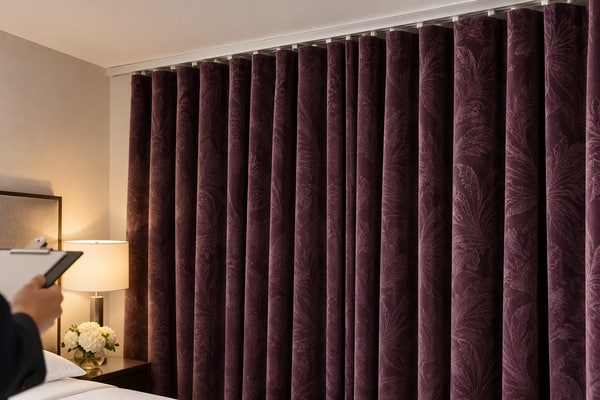
Ask the workroom to identify the finished curtain weight the track supplier should review. Keep the face fabric, lining, heading and attached accessories in the specification, and confirm which items the manufacturer includes in its rating.
Silent Gliss states that its maximum curtain weight figures include fabric and accessories. Its electric curtain-system catalogue is a specific example of why the weight basis needs to be written down. It does not establish the capacity of another manufacturer’s system.
Ask for the mass of each finished panel and identify which panels will share the proposed track. Mark whether the figure comes from a finished sample, a workroom calculation or an estimate that still needs confirmation. Use a consistent unit in the approval record; retain the original unit on the manufacturer’s document as well.
Settle the heading and fabric-quantity decision separately with the hotel curtain fullness guide. Here, the task is to give the track supplier a clearly identified finished construction to review. If the lining or heading changes, send the revised specification instead of reusing the earlier weight entry.
Compare Curtain Track Load Capacity on the Same Basis
Compare curtain track load capacity only after you know what each rating measures. A total-system figure and a linear rating are different entries, even when both use kilograms.
For example, Forest publishes its CS Contract System curtain capacity as up to 15 kg per metre. See the Forest CS product specification. That is a product-specific linear rating, not a general track limit or a ShadeCort specification.
Use this proposed rating-basis record to clarify the quotes before choosing a system:
| Rating shown in the quote | What to ask the supplier | What to put in the approval record |
|---|---|---|
| Total curtain load for a system | Which model, length, layout and hardware does the figure cover? | The complete configuration and the supporting document revision |
| Curtain load per unit of track length | How does the published linear rating apply to the proposed assembly and curtain arrangement? | The original unit and the supplier’s configuration-specific confirmation |
| Carrier, bracket or other component rating | What evidence covers that part within the complete proposed system? | The exact part reference and the assembly it belongs to |
| A load figure without a stated basis | Can the supplier define the unit, included load and application conditions? | An unresolved item until the basis and evidence are supplied |
Do not fill a missing system rating by adding component ratings together or multiplying a linear figure by the room width yourself. Ask the supplier to confirm the complete proposal against its documentation. The record should show that confirmation, not an undocumented purchasing calculation.
If a document leaves your layout outside its stated scope, keep the item pending. Ask for an applicable system selection or other suitable documented review before releasing that part of the order.
Keep the Track Hardware and Site Fixings in One Review
Review the supplied track hardware and the site mounting arrangement together, while keeping their approval responsibilities clear. Ask the supplier to identify its assembly; ask the qualified site team to confirm the interface with the building.
Silent Gliss says fixing-point selection depends on the surface, system weight, fabric make-up, fixing type and obstacles, and assigns suitable fixing selection to a qualified fitter. This guidance appears in its electric curtain-system technical catalogue. It is manufacturer guidance, not a statement of U.S. or Canadian building law.
Use the following proposed interface checklist for the project review:
- Ask the supplier to name the profile, carriers, brackets, joints and end components in its proposal.
- Match the proposed assembly to the room drawing, including the mounting position and opening direction.
- Ask the supplier to identify the mounting instructions and conditions associated with its rating.
- Ask the site team to identify the supporting surface and any reinforcement or backing still awaiting confirmation.
- Assign the suitable-fixing and installation review to the qualified project team; request its documented decision.
- Record who supplies each mounting item and who confirms substitutions.
- Mark unresolved interfaces in the order record, with a named person responsible for closing each one.
Keep a supplier’s product selection separate from acceptance of the site’s supporting structure. The purchasing team should be able to locate both decisions before authorizing the relevant work. This checklist deliberately gives no generic bracket spacing, fixing size or safety margin.

Recheck Curves, Motorization and Configuration Changes
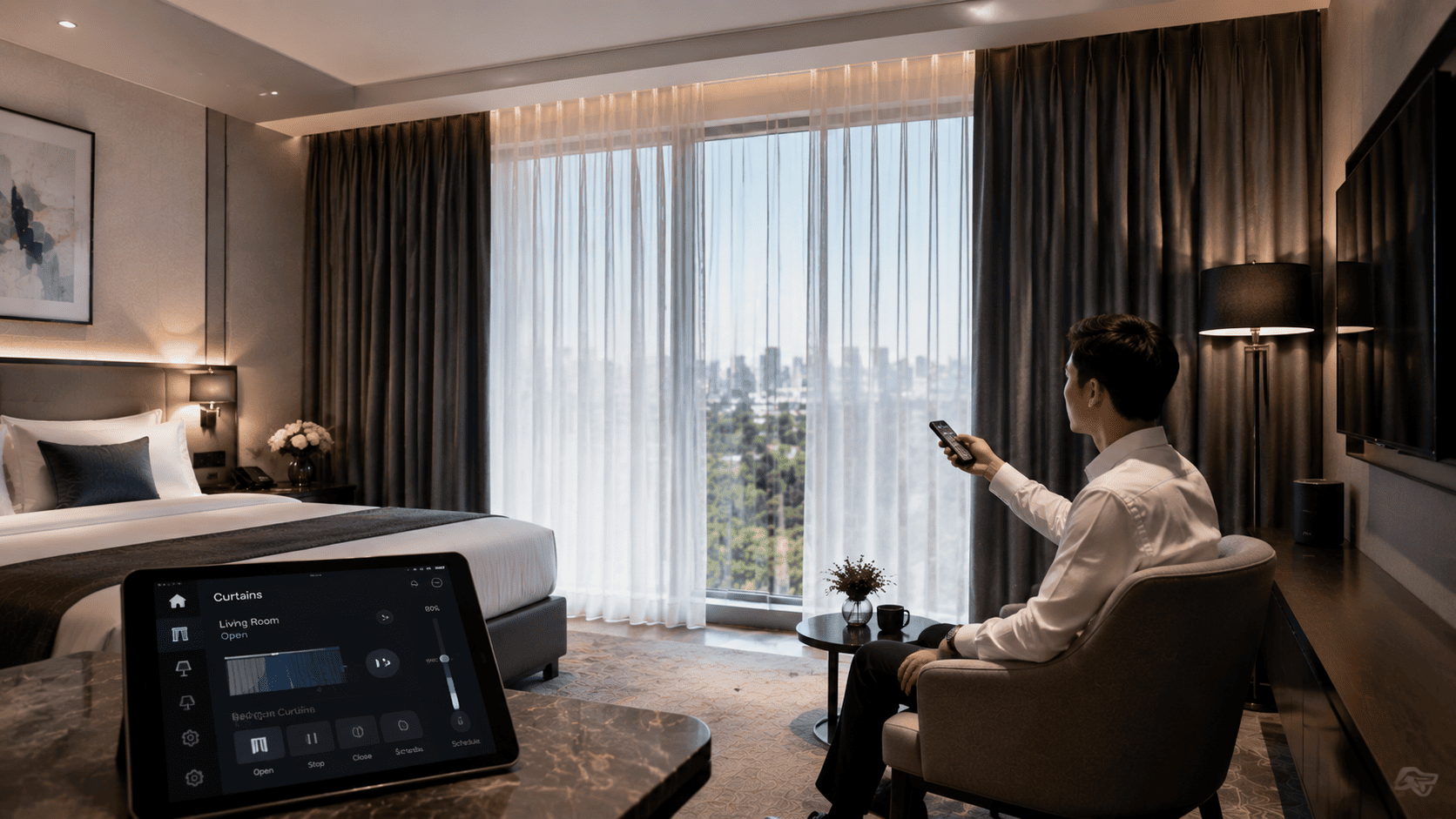
Submit the actual operating layout for review, including bends or curves, rather than carrying a straight-track approval into a different room. Include the opening direction, stacking arrangement and proposed motorized or manual operation on the drawing.
Somfy’s North American Drapery Databook separates straight, bent and continuously curved layouts in its track selection chart, with different entries by system and length. The selection chart on printed page 30 shows why a model name alone does not finish the selection. These are Somfy-specific examples; they do not establish compatibility with a ShadeCort proposal.
When requesting a sample or mock-up, define what you want to review. For example, ask the responsible team to agree on the opening and closing checks for the specified curtain and layout. Keep that review separate from the documented capacity evidence. A demonstration is not a substitute for the manufacturer’s applicable rating.
Use a configuration-change record before releasing a revised order. Identify the changed input, the new drawing or specification revision, the supplier’s renewed system confirmation, and any site approval affected by the change. Name the person accepting the revision and the room types it covers.
Reopen that record when the proposed curtain construction, finished weight, track geometry, carriers, brackets, joints or operating system changes. This is a proposed purchasing control, not a universal engineering rule. Ask the responsible supplier and site team which parts of the earlier review remain valid.
Link the accepted configuration to the wider custom curtain quality-control checklist. Production and receiving checks should refer to the released specification rather than an earlier quotation.

Send ShadeCort a Track-and-Curtain Brief
Send ShadeCort a brief that connects the finished curtain with the proposed track and installation scope. Include the room drawing, panel specification, confirmed or pending finished weight, opening arrangement, destination and any hardware already selected by your contractor.
ShadeCort’s custom fabric drapery page describes double-turned hems, sewn-in liners and bottom weights. Review the custom fabric drapery options when defining the finished construction. ShadeCort’s motorization page also lists motorized track systems for heavy drapes. These options give the discussion a product starting point; confirm the exact proposed assembly and its documented limits in the individual quotation.
For curtain track load capacity, ask the quotation to distinguish the selected system, the evidence that supports it and the site items still awaiting review. That makes the open purchasing questions specific.
Send your hotel track-and-curtain brief to ShadeCort on WhatsApp: +86 18926693786, or submit the same information through the ShadeCort contact form. Include the document revision so the response relates to the configuration you intend to order.
Sources and further reading
- Forest Group: CS Contract System. Product-specific example of a curtain load rating expressed per metre.
- Silent Gliss: Electric Curtain Systems technical catalogue. Weight basis and installation responsibilities; see the general information near the start of the catalogue.
- Somfy Systems: North American Drapery Databook. Configuration-dependent selection chart on printed page 30.
ShadeCort product information is linked in the inquiry section. The comparison record, interface checklist and change record are proposed buyer tools. The cited manufacturers’ specifications are not ShadeCort ratings or evidence of a partnership.
FAQ
Can I use the same approval for every room type?
Ask the supplier and site team to define which room templates the approval covers. A repeat order should identify the same released configuration and relevant site conditions. Keep a separate pending entry for any room with a different layout, curtain construction or mounting interface, rather than extending the approval across the hotel without review.
Is a sample operation check the same as a load test?
No. Record the purpose and agreed scope of the sample check. An opening and closing demonstration answers a different question from documented load capacity. Ask for the applicable manufacturer’s evidence and any project-specific review the responsible team considers necessary. Do not describe a sample as load-tested unless the relevant test and result are documented.
Who should approve a substituted bracket or carrier?
Ask the supplier to confirm the proposed substitute within the complete assembly and identify any changed documentation. If the substitute affects the site mounting interface, obtain the qualified site team’s review too. Record the accepted part reference and the configuration revision; do not let a purchasing substitution silently become an installation instruction.
What if the workroom cannot confirm the finished weight yet?
Ask the supplier to state the assumptions behind its provisional selection. Mark the final weight and related system approval as pending. Agree who will provide the finished-construction input and who will review it before release. A provisional quotation can support planning, but its unresolved assumptions should remain visible in the order record.