Quick Answer
For curtain dye lots, approve a named physical reference and the proposed production stock before the curtains are cut. Record how the color was evaluated, who accepted it, and which panels or room groups the decision covers. Ask the supplier to identify the lot and roll references behind the submitted cutting. Keep an approved sample with the purchase record. For a later order, confirm the available stock and state whether the replacement must coordinate with an installed curtain or a retained reference. A color code helps identify the request; the release record defines what you have actually accepted.
A Color Code Does Not Release a Production Lot
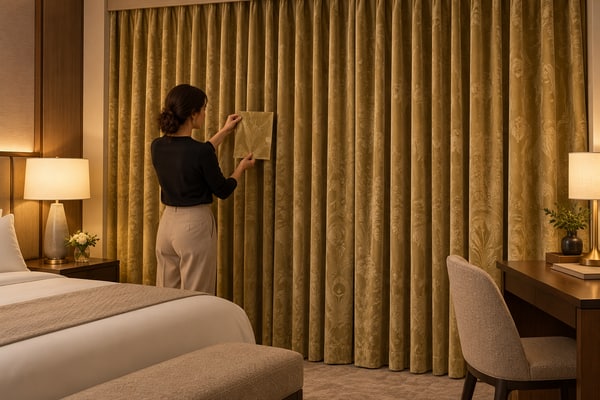
Approve the stock and its intended use, rather than treating a familiar color name as permission to start cutting. This matters when several panels will be viewed together or when a hotel buys curtains in stages.
Picture a replacement panel arriving with the correct fabric code. The purchasing team can confirm the code, but the installer still needs to know whether that panel was accepted beside the remaining curtain. Without a comparison target and a written decision, the disagreement reaches the room before anyone has settled it.
This guide is for hotel procurement managers, hospitality designers and drapery dealers. It deals with color release after the material shortlist, not with choosing a fabric family. Use the curtain fabric selection guide for that earlier decision.
For the wider order inspection plan, refer to our custom curtain quality-control guide. Here, the narrower question is which material may be used in which group of curtains.
Ask for a Cutting From the Proposed Curtain Dye Lots
Request a traceable cutting from the stock the supplier proposes to use. Ask whether the submitted sample is a catalog reference, a development sample, or a cutting tied to the intended production lot. Those labels should be clear before approval.
Kravet notes that color can vary between dye lots and advises requesting a cutting of current stock for approval when matching matters. Its ordering guidance provides a useful example of why a current-stock cutting deserves its own review. Kravet’s commercial terms are not ShadeCort’s terms.
In your request, identify the fabric article and colorway, then ask the supplier to add its lot and roll references. A colorway is the named color version of the fabric; ask for the complete supplier code rather than an informal description such as “warm gray.”
Keep the approved cutting with the order revision. Ask the supplier to confirm which stock it represents and whether the quoted quantity is allocated against it. If stock changes before cutting, request a new submission and record the affected room groups. Do not silently extend an earlier approval to unidentified material.
Record How the Color Was Evaluated
Write down the evaluation conditions and the acceptance decision together. The supplier and buyer need to know which reference was compared, how it was presented, and what the approval permits.
A textile color specification can include tolerances and illuminant requirements. X-Rite’s textile color guidance describes these inputs and the use of proper lighting conditions for visual evaluation. An illuminant is the specified light used for the comparison. Ask the supplier to identify the proposed method rather than accepting “checked under good light” as a complete record.
Metamerism means two samples look matched under one light source but differ under another. Datacolor explains this distinction. A difference seen in a hotel room is not automatically proof of metamerism; record the conditions and ask for the appropriate comparison.
Use the following proposed color-release fields:
- Fabric article, colorway and order revision.
- Reference sample ID and the person holding the approved physical sample.
- Submitted cutting ID, with the supplier’s lot and roll references.
- Evaluation method, light sources and sample presentation.
- Agreed acceptance basis, including any specified tolerance and method.
- Reviewer, date and outcome: accepted, held for review, or rejected.
- Room or panel groups covered by the decision.
- Changes that require a fresh submission before cutting.
Do not choose a numeric tolerance from a generic blog and assume it suits the project. Ask the responsible color specialist and supplier to agree on the method and limit. Keep the controlled comparison record separate from the designer’s review of a hung curtain in the actual room.
Decide Which Lots May Hang Together
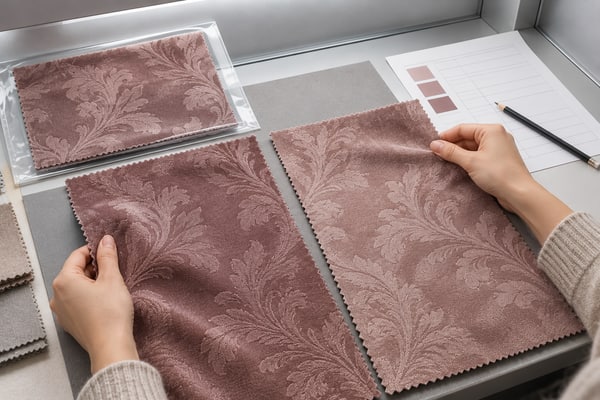
Approve how the lots may be used, not just whether each submitted piece looks acceptable on its own. Ask the supplier to return the proposed allocation against your room schedule before material is cut.
The matrix below is a proposed allocation record, not a universal acceptance rule. Use it to make the permitted combinations explicit.
| Proposed material use | What the buyer should review | Release record to request | Action while approval is missing |
|---|---|---|---|
| Named lot for panels viewed together | Submitted cuttings and the intended panel group | Accepted lot and roll references mapped to that group | Hold that group’s cutting release |
| Additional lot in the same room group | The proposed combination beside the accepted reference | Written acceptance or a revised allocation | Keep the additional lot separate |
| Later phase in another room group | The approved project palette and that phase’s sample | Phase-specific approval and permitted room IDs | Do not extend the first phase’s release automatically |
| Replacement beside an existing curtain | The agreed replacement comparison target | Replacement approval identifying the retained panel or reference | Request a new comparison before release |
For example, a procurement team could accept a submitted lot for a new room group while leaving a replacement request on hold. Record those as separate decisions. “Color approved” should not erase the restriction on where the material may be used.
Give the approved allocation to the workroom and to the receiving team. Ask for packing identifiers that let the installer connect the delivered panel group with that record. When an allocation changes, issue a revised schedule and identify which earlier instruction it replaces.
Set the Match Target for a Replacement Order
State what a replacement is expected to coordinate with before requesting another curtain. The target might be retained fabric from the original order, a curtain already hanging in a room, or the palette for a new phase. Record the target instead of treating those requests as interchangeable.
Use a short replacement record with the original purchase reference, affected room or panel ID, intended comparison target, available sample, and approval responsibility. Ask the supplier to confirm the material it can currently offer. Then review that submission against the named target before releasing the order.
If original stock remains available, ask who holds it, how it is identified, and whether it has been reserved for your project. Confirm the reservation terms directly. If a new lot is proposed, request its own cutting and record the result; the old purchase order is a starting reference, not approval of the new submission.
Plan spares by the replacement need. Ask whether you need stored fabric, complete spare panels, or a later remake route. Have the workroom confirm the material requirement for the chosen option and keep the spare stock or panel identifiers with the room schedule. This is a project decision, not a reason to add the same percentage to every order.
Before closing the first order, nominate the person who will retain the accepted sample and the approval record. The team handling a replacement should be able to find both without reconstructing the decision from old chat messages.
Send ShadeCort a Color and Room-Group Brief
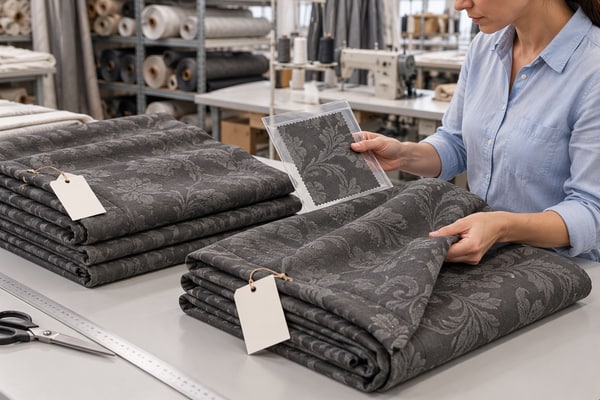
Send ShadeCort Resources a brief that identifies the color decision still open. Include the fabric reference, quantity by room group, submitted or retained sample, proposed lot information, destination, and whether the request concerns a first order, a later phase or a replacement.
ShadeCort’s custom drapery page describes double-turned hems, sewn-in liners and bottom weights. Review these custom fabric drapery options alongside the color reference so the discussion concerns the finished curtain, not a loose textile alone. Confirm the available sample route, material allocation and exact construction in the individual quotation.
For curtain dye lots, ask the quotation to separate confirmed stock and approval scope from items still awaiting review. That gives the buyer a specific question to resolve before the order moves forward.
WhatsApp ShadeCort at +86 18926693786 with your color and room-group brief, or send the same information through the ShadeCort contact form. Ask which physical sample and approval record are appropriate for the proposed order.
Sources and further reading
- Kravet: Ordering terms and current-stock cuttings. Source for the limited dye-lot and cutting-for-approval example.
- X-Rite: Textile color measurement. Color specifications, tolerances and illuminant requirements.
- Datacolor: What is metamerism?. Explanation of a two-sample match changing with the light source.
ShadeCort product and contact information is linked in the inquiry section. The allocation matrix and approval records are proposed buyer tools, not certification criteria or a promise of identical color on future orders.
FAQ
Can I approve a new lot from photographs?
Use photographs to discuss the submission and document its identity, but agree on the color-approval method separately. If the supplier proposes digital approval, ask what reference data and evaluation procedure it uses. An undocumented photo should not quietly become the accepted standard. Request a traceable physical cutting when that is the agreed review route.
Does color approval also cover blackout performance?
Keep the approval scopes separate. A color-release record identifies accepted appearance and material use. Ask for the required light-control result to be reviewed on the specified finished construction, including its lining and installation details. Record that decision separately rather than treating a color signature as approval of every product property.
What if a lot is accepted only for a different room group?
Write the restriction into the allocation record and update the room schedule. Ask the supplier to keep the identifiers visible through cutting and packing, and give the revised record to the installer. The person accepting the exception should identify where it applies; a general “approved” message leaves the original room group unresolved.
Should I use a standard spare-stock percentage?
Make the spare decision from the replacement plan and confirmed construction. Identify which rooms or panel groups need coverage, whether you will store fabric or finished panels, and how a future replacement will be approved. Ask the workroom to calculate the requirement for that plan instead of using an unexplained percentage.