
Quick Answer
A window treatment factory audit should verify the company behind the quotation, the site that will make the order, the processes performed in-house, and the controls that connect an approved sample to bulk production. For curtains, blinds, and shades, buyers should trace one representative product through fabric or component receipt, specification control, cutting, sewing or assembly, operating checks, labeling, packing, and corrective action. Audit before a meaningful deposit or commercial commitment, then repeat or update the review when the site, product construction, key subcontractor, or risk profile changes. A factory audit does not replace product testing or shipment inspection.

Who This Guide Is For
This guide is written for importers, private-label brands, wholesalers, hotel and contract buyers, ecommerce sellers, and project companies sourcing window treatments from China. It is most useful when a buyer has received convincing samples and quotations but still cannot answer a basic question: can this supplier repeat the approved result across the actual order?
The scope applies to made-to-measure custom drapery, roller shades, cellular shades, Roman shades, blinds, tracks, accessories, and motorized systems. The exact checklist should change with the product and destination market. A fabric curtain, a cordless stock shade, and a connected motorized blind do not carry the same process or compliance risks.
The Buyer’s Main Problem: A Good Sample Can Hide a Weak Process
A sample proves that one acceptable unit existed. It does not show who made it, whether the materials are controlled, how specifications reach the production floor, or what happens when something goes wrong.
This gap matters in window treatments because one order may combine custom dimensions, fabric lots, brackets, tubes, controls, room labels, packaging, and project-specific instructions. A supplier can understand the product category and still lose control of one revision or one outsourced component. The result may be a shade that operates correctly but carries the wrong label, a curtain that uses the approved fabric in the wrong color lot, or a complete shipment packed against an outdated room schedule.
Before arranging an audit, separate three activities that buyers often group together:
- Factory audit: evaluates the site, people, processes, records, resources, and management controls.
- Product inspection: checks a sample or production lot against agreed requirements. An AQL sampling plan, when used, has the narrower job of making a lot-acceptance decision.
- Product testing: measures performance or compliance against a defined method, often through a qualified laboratory.
All three can be useful. None automatically substitutes for the others.
What Should a Window Treatment Factory Audit Prove?
A useful audit answers four commercial questions.
Is the supplier’s identity and production site clear?
Compare the business license, contracting entity, bank beneficiary, quotation, factory address, and any certificate holder. Record differences rather than explaining them away. A sales office, showroom, warehouse, and production site may be separate. The audit should identify the location that will perform each important process.
Can the factory make the exact product in the RFQ?
Do not accept a broad category answer such as “we make blinds.” Ask which team controls the specific construction, width and drop range, fabric, tube or track, bracket, bottom rail, control type, motor, label, and pack. Review a comparable order on the floor or in records. A buyer auditing roller shade production, for example, should connect fabric, tube, bracket, bottom rail, control, label, and carton to one approved build. When the order is unusual, the audit should state what has not yet been proven.
Are requirements controlled from sample to shipment?
The auditor should be able to connect the current drawing, bill of materials, approved sample, tolerances, work instructions, inspection records, and packing details. Quality assurance and quality control cover different parts of this chain. The audit checks whether both exist in practice and whether operators use the current version.
Can the supplier contain and correct a failure?
Ask for a recent nonconformity or complaint that does not expose another customer’s confidential information. Look for containment, cause analysis, correction, responsibility, due date, and evidence that the action worked. A blank complaint log is not automatically a strength. It may mean problems are handled informally and leave no usable history.
When Should You Audit a Factory?
The best time is before your commercial exposure becomes difficult to reverse. That may be before tooling, before a large deposit, or before moving from sample orders to volume production.
An audit is especially useful when:
- the supplier is new or the production site has not been independently verified;
- the product uses custom sizes, private-label components, motorization, or project-specific packing;
- a large order depends on one fabric lot or one critical component;
- prior samples, documents, or answers have been inconsistent;
- the destination market has product-specific safety or labeling requirements;
- the factory, subcontractor, or key process has changed;
- repeated defects suggest that final inspection is finding symptoms rather than causes.
For a low-value trial order, a focused remote review may be proportionate. For a custom program, a hotel project, or a branded range with ongoing volume, an on-site audit usually gives better evidence because records can be compared with actual material and work in progress.
Build the Audit Scope Around the Product
A generic social-compliance form or a walk through a clean workshop will not answer every purchasing question. Start with the RFQ, product specification, destination, expected volume, and the failures that would be expensive for your business.
1. Legal entity and site map
Confirm who signs the contract and identify every relevant location. Map where fabric is received, cut, sewn, laminated or coated, assembled, tested, packed, and stored. If another company performs a process, record its name, location, approval status, and the controls applied to its output.
2. Product engineering and revision control
Select one representative SKU or project type. Check whether the factory can produce a current bill of materials and drawing or specification. Follow the revision from the office to the workstation. Operators should be able to identify the approved version without relying on memory or an old chat thread.
The same discipline should cover custom measurements. A room schedule, online option code, or dealer order needs a controlled translation into production data.
3. Incoming fabric and components
Review how rolls, hardware, motors, controls, and packaging materials are identified at receipt. The records should show the supplier, item or specification, quantity, acceptance status, and lot or batch information where relevant. For fabric-led products, ask how shade variation, usable width, coating, defects, and approved color are handled.

4. Production flow and capacity evidence
Count machines only after mapping the process. A high sewing-machine count does not prove that the factory can finish a motorized roller-shade order. Look for the constraint: fabric availability, cutting, sewing, tube preparation, motor programming, functional testing, final inspection, or long-carton packing.
Ask for recent production records that show realistic output for a comparable product. Capacity should be tied to the planned shift pattern, product mix, available people, maintenance, and key outsourced work. Treat a verbal maximum as a starting point, not a planning number.
5. In-process and final controls
The checklist should match the construction. Depending on the product, it may cover finished dimensions, squareness, hem or seam quality, fabric direction, shade and lot, rail or tube fit, bracket set, control side, travel limits, noise, paired operation, labels, accessories, and carton marks.
The auditor should inspect both the criteria and the evidence that checks occur. A measurement sheet completed after the fact is less persuasive than a current instruction, calibrated or verified measuring equipment, identified status, and records that match material on the floor.
6. Destination-market and customer documents
Certificates are useful only when their holder, product, construction, model, test method, issuing body, and validity match the order. Do not convert “a report exists” into “this product is compliant.”
For U.S. window coverings, the CPSC business guidance distinguishes stock and custom products and describes relevant cord and permanent-marking provisions. Textile drapery can also fall within federal fiber, origin, and marketer-identification rules; the FTC textile labeling guide explains the records expected for covered textile products. Buyers can use ShadeCort’s compliance and standards page as a starting point for the factory discussion, then confirm the exact legal and test scope with qualified specialists.
7. Packaging and dispatch control
Audit the packaging specification, not just the finished carton. Check accessory count, bracket and control identification, protective layers, barcode or room label, carton dimensions, long-item support, and the link between the product record and packing list. Project buyers should also confirm how mixed rooms, floors, or opening numbers are separated.
Window Treatment Factory Audit Checklist
The table below is a practical decision sheet, not a universal scoring standard. Add product-specific questions and define which findings can block approval before the visit.
| Audit area | Evidence to request | What to observe on site | Buyer warning sign |
|---|---|---|---|
| Company and site | Business license, organization chart, site list, contract entity | Whether the audited location matches the stated manufacturer | Quotation, payment beneficiary, and factory identity cannot be reconciled |
| Production scope | Process map, equipment list, approved subcontractor list | Which operations are actually running and who owns them | A key process is described as in-house but no people, records, or equipment support it |
| Specification control | Current BOM, drawing, approved sample record, revision history | Whether the floor uses the same version as the office | Operators rely on screenshots, memory, or uncontrolled files |
| Incoming materials | Purchase specification, receiving log, inspection status, lot record | Identification and segregation of accepted, pending, and rejected material | Unmarked rolls or components can enter production |
| Capacity and continuity | Comparable order records, shift plan, maintenance record, backup plan | The actual bottleneck and condition of critical equipment | Capacity is a sales estimate with no product-specific evidence |
| Process quality | Work instructions, first-article record, in-process checks | Measurements and operating checks at the relevant workstations | Inspection happens only after the order is complete |
| Final release | Inspection criteria, results, nonconformity disposition, release authority | How failed goods are identified and separated | The same person produces, approves, and releases without an independent check or record |
| Compliance documents | Test reports, technical files, label artwork, change-control record | Whether report samples match current materials and components | A certificate covers a different model, site, construction, or applicant |
| Packing and traceability | Packing spec, carton mark, order label, packing list | Whether one unit can be matched to its order and components | Mixed sizes or accessories depend on handwritten memory |
| Corrective action | Complaint log, containment record, root-cause review, closure evidence | Whether actions changed the process and were verified | Problems are reworked but causes, owners, and closure dates are absent |
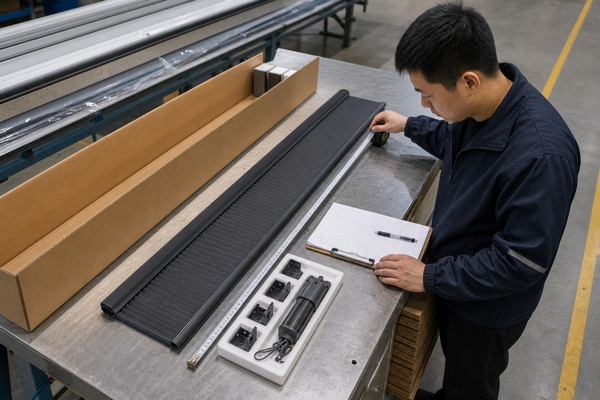
How to Run the Audit Step by Step
Step 1: Send the audit brief before the visit
State the product, market, expected order type, audit objectives, required records, areas to visit, confidentiality limits, and people who should attend. Share the checklist early enough for the factory to assemble normal records. A surprise visit can reveal housekeeping conditions, but it may fail to bring the right technical staff or protected documents into scope.
Step 2: Review documents before walking the floor
Start with the company and process map. Select a representative order and note the document numbers you will trace. This prevents the visit from becoming a guided tour of whichever equipment looks most impressive.
Step 3: Trace one product in both directions
Follow the product from incoming material to shipment, then take a finished unit or record and trace it back to its material, approved specification, inspection, and pack. Bidirectional tracing is a practical way to expose broken links between departments.
Step 4: Compare records with physical evidence
Sample records across different dates and shifts where possible. Check whether material identifiers, inspection status, revisions, and quantities agree with what is visible. Ask operators to explain their task in their own words. Their answers often show whether a procedure is used or merely filed.
Step 5: Discuss findings before leaving
Describe each finding with evidence, requirement, and business effect. Let the factory correct factual misunderstandings, but do not close an issue because someone promises to fix it later. Agree who owns the action, what proof is expected, and the due date.
Step 6: Make a sourcing decision, not just a score
A total score can hide one unacceptable risk. Decide which findings block approval, which require closure before production, and which can be monitored during the first order. A capable specialist with one well-contained gap may be a better fit than a polished general supplier whose process does not match your construction.
The ISO 19011 auditing guideline describes evidence-based and risk-based audit principles, audit preparation, conducting activities, and reporting. Its role here is methodological. It does not certify a supplier and does not create a product-specific checklist for curtains or shades.
Remote Audit, Buyer Audit, or Third-Party Audit?
Choose the method according to risk and the evidence you need.
- Remote review: useful for early screening, document review, live video of selected areas, and corrective-action follow-up. It is weaker for verifying site identity, material segregation, hidden subcontracting, and normal floor conditions.
- Buyer-led audit: useful when your team understands the product, specifications, and commercial consequences. It can connect findings directly to the RFQ, but independence and local access may be limited.
- Third-party audit: useful when you need local coverage, a repeatable format, language support, or independent reporting. Give the auditor a window-treatment-specific scope. A generic checklist may miss control-side errors, fabric-lot issues, motor compatibility, custom-size data, and project packing.
If you use an agent, define whether that party is finding suppliers, auditing the site, monitoring production, inspecting goods, or approving decisions on your behalf. Those responsibilities should be written separately.
Common Factory Audit Mistakes
Treating certificates as the audit
A certificate may support one part of qualification. Verify its scope and current status, then inspect how the relevant system works on this order. The ISO 9001 overview connects quality management with processes, documented information, measurement, and improvement. A certificate image alone does not show how a buyer’s BOM revision reaches a sewing or assembly station.
Auditing a showroom instead of the production flow
Samples and presentation rooms help explain the range. They do not establish who controls incoming material, work in progress, testing, rejected goods, or packing. Confirm the actual site and follow a real order path.
Using the same checklist for every product
A drapery program needs fabric, sewing, fullness, header, and room-pack controls. A motorized shade adds electrical components, programming, limits, controls, and compatibility. Keep the management-system questions stable, then change the technical questions.
Ignoring outsourced processes
Outsourcing is not automatically a problem. Uncontrolled outsourcing is. Ask who approves the subcontractor, how requirements are transferred, what incoming verification follows, and how changes are reported to the buyer.
Confusing an audit pass with shipment approval
An audit samples a management and production system at a point in time. The finished order still needs an agreed release and inspection plan. Before ordering, use a focused supplier questionnaire to define responsibilities that the audit and later inspection can verify.
Closing findings on promises
“We will train the team” is an action proposal, not closure evidence. Ask for the revised instruction, training or implementation record, changed floor control, and a verification result. For a serious issue, consider a follow-up visit or targeted production check.
How ShadeCort Supports Buyer Audits
ShadeCort is a China-based window treatment manufacturer, so an audit can be organized around the construction in the buyer’s RFQ rather than a generic textile checklist. That distinction is practical: the records and checkpoints for roller shades, custom drapery, cellular shades, and motorized systems are different.
For a qualified project, our team can discuss the intended production route, customization scope, sample approval, specification or BOM, material and component requirements, inspection points, labels, packing, and change communication before bulk production. The exact documents, test reports, tolerances, audit access, and third-party involvement should be agreed for the order. We do not suggest that one factory visit removes every supply risk.
This is where a specialist factory can add value without turning the audit into a sales presentation. Buyer and supplier can use the visit to identify open decisions early, record what has been demonstrated, and separate confirmed capability from work still requiring sampling or validation. Buyers can also review ShadeCort’s broader window treatment range and motorization options when preparing a product-specific audit scope.
Buyer Checklist Before Approving a Supplier
Before approval, confirm that you can answer each question with evidence:
- Is the legal contracting entity clear, and did the audit cover the actual production site?
- Which processes are in-house, which are outsourced, and how are outsourced outputs controlled?
- Does the factory have the current approved sample, BOM, drawing, tolerance, label, and packing specification?
- Can one order be traced from incoming fabric and components through production and dispatch?
- Are the real capacity constraint and continuity risks understood for this product mix?
- Do inspection criteria cover dimensions, appearance, operation, hardware, labels, accessories, and packing?
- Do test reports and certificates match the actual product, construction, site, applicant, and destination requirement?
- Are nonconforming materials and goods identified, separated, decided, and recorded?
- Does each corrective action have an owner, due date, objective evidence, and effectiveness check?
- Which open findings block the deposit, sample approval, production start, or shipment?
Request an Audit-Ready Manufacturing Review
Send ShadeCort your product type, target market, expected order volume, customization brief, required documents, and preferred audit method. We can first identify which construction, sample, specification, material, process, and packing questions need to be settled for the RFQ. That gives your team or third-party auditor a more useful scope before the visit.
Request a factory review or quotation.
Sources and Further Reading
- ISO 19011:2026, Guidelines for auditing management systems
- ISO, ISO 9001 explained
- OECD, Responsible garment and footwear supply chains
- U.S. Consumer Product Safety Commission, Window Coverings 15(j) Rule Business Guidance
- U.S. Federal Trade Commission, Textile and Wool Labeling Guide
FAQ
What is a window treatment factory audit?
It is a structured review of the supplier’s identity, site, resources, processes, records, controls, and ability to make a defined curtain, blind, or shade. It evaluates the production system rather than accepting a quotation, sample, or certificate at face value.
Is a factory audit the same as a product inspection?
No. An audit examines the factory’s capability and management controls. A product inspection checks actual goods against an agreed specification and acceptance plan. Buyers commonly use an audit before approval and inspections during or after production.
Should I audit before or after receiving samples?
Early document screening can happen before sampling. A product-specific audit is usually stronger after the factory has received a meaningful RFQ or developed a representative sample, because the auditor can trace real specifications, materials, and process decisions. Complete the audit before a large commercial commitment when possible.
Can a remote factory audit replace an on-site visit?
Sometimes for low-risk screening or follow-up, but it has limits. Live video and document sharing can confirm useful details. They are less reliable for verifying the complete site, normal material flow, segregation, unannounced conditions, and undisclosed outsourcing. Match the method to the order risk.
How often should a window treatment supplier be audited?
There is no universal interval. Base the frequency on product and market risk, order value, supplier history, prior findings, process changes, site changes, new subcontractors, complaints, and changes to key materials or components. A focused update may be enough when the change is narrow; a full re-audit may be needed after a major change.
Does an ISO 9001 certificate mean a factory will make my order correctly?
No certificate can answer that by itself. Verify the certificate’s scope and status, then check how the factory controls your specification, materials, revisions, processes, measurements, nonconforming goods, and corrective actions. Product-specific approval and inspection are still required.
What documents should I send ShadeCort before an audit or quotation?
Send the product type, drawings or measurement rules, target dimensions, fabric and component brief, control or motor requirements, labeling and packing needs, destination market, forecast volume, required tests or documents, and known failure risks. Mark which items are fixed and which remain open for factory input.