Quick Answer
For a window treatment project in China, the useful question is not simply whether an NNN is “better” than an NDA. The agreement must match the risk. A basic NDA may be enough for an early conversation that contains little sensitive information. A custom roller shade, motorized system, private-label range, or exclusive channel usually needs broader terms covering disclosure, unauthorized use, permitted recipients, subcontractors, and customer contact. Those terms should sit beside registered IP rights, controlled file sharing, an approved sample, and a product-development or manufacturing agreement. Ask China-qualified counsel to draft or review the documents before you send editable drawings, a detailed BOM, packaging artwork, or customer data.
This article provides general procurement information, not legal advice. Contract enforceability, remedies, governing law, language, dispute resolution, and IP strategy depend on the parties and facts. Obtain advice from qualified counsel familiar with current PRC law and the buyer’s destination markets.

Who This Guide Is For
This guide is for private-label brands, importers, wholesalers, ecommerce sellers, distributors, hotel suppliers, and product developers that source window treatments from China. It is most relevant when a buyer plans to disclose information that a supplier would not otherwise have, such as:
- Editable drawings, CAD files, dimensions, tolerances, or a bill of materials
- A new cassette, bracket, bottom rail, motor interface, remote, or control logic
- Fabric constructions, coating requirements, color standards, or supplier references
- Brand artwork, packaging dielines, manuals, barcodes, pricing, and launch dates
- Retailer specifications, customer identities, channel plans, or forecast volumes
A buyer ordering an existing white-label shade from a catalogue has a different risk profile from a brand funding a new mechanism or an exclusive collection. The contract should reflect that difference.
The Buyer’s Main Problem: A Useful Quote Requires Disclosure
A factory cannot price a genuinely custom product from a one-line inquiry. It may need the finished dimensions, fabric, control type, hardware, packing method, target market, quantities, and testing or documentation requirements. For a motorized blind, the factory may also need the motor envelope, power option, controller, wiring assumptions, protocol, and integration boundaries.
That creates a practical tension. Share too little and the quotation is vague. Share everything at once and sensitive files may spread farther than expected before the buyer has confirmed the legal entity, production route, or commercial fit.
The expensive failure is not limited to an obvious copy. It may be a supplier using a drawing for another customer, an unapproved workshop receiving the complete file set, surplus branded packaging appearing in another channel, or a sales contact approaching the buyer’s retailer. The buyer then has to show what information was confidential, who received it, what use was permitted, and which contract applied.
The answer is staged disclosure. Confirm the counterparty, classify the information, put suitable terms in place, and share only what the supplier needs for the current stage.
What Do NDA and NNN Mean in China Manufacturing?
NDA: non-disclosure
An NDA sets confidentiality obligations. It normally identifies protected information, permitted disclosure, exclusions, the confidentiality period, and what happens when the relationship ends. A well-drafted NDA can be useful, but the title does not determine its quality. An agreement written for a domestic employer, software vendor, or investor meeting may not fit a Chinese manufacturing project.
For window treatments, the protected information may include drawings, BOMs, shade dimensions, motor-control details, fabric specifications, packaging artwork, target pricing, order forecasts, and customer or retailer information.
NNN: non-use, non-disclosure, and non-circumvention
“NNN” is commercial shorthand rather than one mandatory statutory form. It usually groups three obligations:
- Non-use: the recipient may use the buyer’s information only for the agreed quotation, development, sampling, or production purpose.
- Non-disclosure: the recipient may not reveal protected information outside the people or entities allowed by the agreement.
- Non-circumvention: the recipient may not use the relationship or information to bypass the buyer, approach protected customers, or sell through a restricted channel as defined in the contract.
These obligations address different risks. A supplier might keep a file private yet still use it for another project. Or it might never reproduce the design but contact a retailer whose identity appeared in a shipping mark. A confidentiality-only document may not address either situation unless its operative clauses already do so.
That is why buyers should compare the words inside the agreement, not the letters in its title.
What Information Can Be a Trade Secret?
The World Intellectual Property Organization’s trade secret overview lists technical and commercial information such as manufacturing processes, designs, distribution methods, and supplier or client lists. A window treatment project can contain both types.
China’s trade-secret framework has also changed. The Ministry of Justice reports that the revised Anti-Unfair Competition Law took effect on October 15, 2025. Buyers and counsel should use the current law, not rely on an old template or an article written under a previous version. The official National Laws and Regulations Database provides the current Chinese text.
As a practical matter, a buyer should be ready to show why the information was not public, why it had commercial value, and what confidentiality measures were taken. WIPO’s China trade-secret system overview explains the legal context and the role of confidentiality obligations, though the June 2024 paper predates the 2025 statutory revision.
Marking a folder “confidential” is useful evidence of intent, but it is not a complete information-control system. Access lists, dated transfers, restricted folders, version records, and instructions to the recipient make the commercial story clearer.
Which Approach Fits the Project?
Catalogue product with limited customization
A basic confidentiality clause or NDA may be proportionate when the buyer is discussing an existing product, changes only color or packaging, and does not reveal protected customers or proprietary files. The buyer should still check the contracting company name and define what cannot be shared.
For example, a distributor comparing standard roller shade options may initially provide target sizes, fabric opacity, estimated volume, and destination market without sending retailer artwork or a complete launch plan.
Private-label or exclusive range
A broader agreement deserves consideration when the supplier receives brand files, packaging, target margins, launch timing, channel information, or a product configuration the buyer wants reserved. Non-use and non-circumvention terms may matter as much as confidentiality.
The commercial boundaries must be specific. “Do not compete with us” is far less useful than defining the protected products, customers, territories, channels, information, permitted sales, and time period.
New mechanism, motorized product, or funded development
Sensitive development normally needs more than an NDA or NNN label. The parties may need terms for ownership of drawings and code, background IP, improvements, tooling, sample costs, testing, change requests, source files, return of materials, and the right to manufacture after the project ends.
A buyer considering motorized window treatment configurations should also separate the product boundary from the integration boundary. Motor specifications, controllers, apps, protocols, and third-party platforms may involve different owners and licenses.
Named hotel, contractor, retailer, or ecommerce account
If the supplier learns the buyer’s customer identity, non-circumvention language may be relevant. It should still allow legitimate activity. A factory may already serve the same market, receive an independent inquiry, or sell standard products through other channels. A workable clause defines the protected relationship and restricted conduct without pretending the buyer owns an entire market.
NDA vs. NNN vs. a Manufacturing Agreement
The documents solve different problems. Depending on the project, counsel may combine obligations in one agreement or divide them across several documents.
| Tool | Main purpose | Window treatment example | What it does not settle by itself |
|---|---|---|---|
| Basic NDA or confidentiality agreement | Controls disclosure of defined information | Early review of a target price, product concept, or non-editable drawing | Unauthorized commercial use, customer bypass, tooling ownership, bulk specifications, change control, or quality acceptance unless added |
| Broader NNN-style agreement | Adds defined non-use and non-circumvention obligations to confidentiality | Custom shade mechanism, exclusive fabric program, private-label packaging, protected retailer relationship | Patent or trademark ownership, production price, sample approval, delivery, inspection, warranty, and other manufacturing terms |
| Product-development agreement | Allocates development work, files, samples, tooling, payment, changes, and resulting rights | New cassette profile, bracket, motor housing, app integration, or custom fabric construction | Full bulk-order terms unless the document also covers manufacturing |
| Manufacturing or purchase agreement | Governs approved specification, price, quantity, production, inspection, packing, delivery, defects, and change control | Bulk roller shades, cellular shades, custom drapery, tracks, motors, accessories, and room labels | Early-stage confidentiality gaps if sensitive files were disclosed before the agreement |
| Registered IP and enforcement plan | Establishes or records rights in relevant countries where available | Brand name, logo, patentable mechanism, registered design, artwork, or copyright material | Supplier workflow, confidentiality, and commercial performance obligations |
The table is not a document prescription. It is a scoping tool for a discussion with counsel. A carefully drafted agreement may cover more than one row, while a generic template may fail to cover even its stated purpose.

A Safer Process Before RFQ and Sampling
1. Confirm the legal entity
Do not rely only on a trading name, website, or salesperson’s email signature. Record the legal entity that will receive the information and the legal entity expected to sign, invoice, and manufacture. Ask counsel what registration details, authority, signature, or company chop should be checked for the chosen document.
2. Classify the information
Split the project into public, commercial, confidential, and highly restricted information. A public product photo can usually travel farther than an editable CAD file. A target retail price may deserve different access from a motor firmware specification or a retailer contact list.
This step also prevents a common mistake: calling every message confidential. Overbroad definitions can make the process hard to follow and the evidence harder to explain.
3. Share a minimum RFQ pack
Provide enough information to test capability and obtain a meaningful budget range without sending the complete development package. A first pack might include overall dimensions, product type, opacity, control method, estimated quantity, destination, packing direction, and the questions the supplier must answer.
Buyers can use ShadeCort’s window shade range to identify the product family before sharing custom construction details. For soft treatments, the custom fabric drapery page helps separate general construction choices from buyer-owned artwork or specifications.
4. Put the agreed protection in place
Have qualified counsel tailor the contract to the parties, information, project stage, jurisdiction, and planned enforcement route. Do this before the sensitive file transfer, not after the supplier has already received the files.
5. Release files by stage and recipient
Send quotation files first, sampling files second, and production files only after approval and commercial terms. Keep a transfer log. If a motor, fabric, printing, coating, or packaging supplier must see part of the information, decide what that party needs and how the obligation reaches it.
6. Convert the approved sample into a production standard
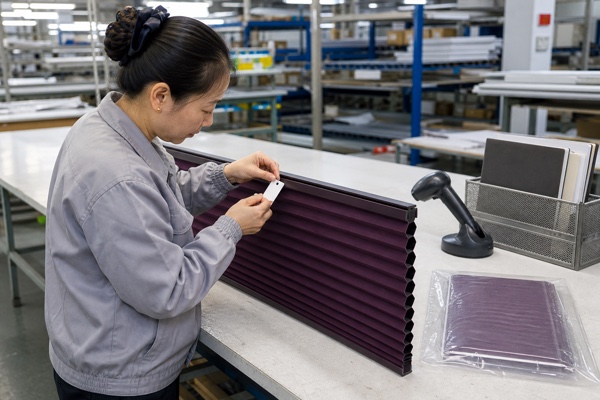
An approved sample should lead to a controlled specification, BOM, drawings, tolerances, color references, packaging files, inspection points, and revision number. The confidentiality agreement controls information use; the production agreement controls what the supplier must make.
Contract Points to Discuss With China-Qualified Counsel
Correct parties and authority
Identify the buyer, Chinese counterparty, relevant affiliates, and any other recipient. Confirm who has authority to sign. If a sourcing company, factory, motor supplier, printer, or other subcontractor will receive protected information, decide whether it signs directly or is covered through another enforceable arrangement.
Confidential information and exclusions
List the information categories that matter to this window treatment project. Also address information that was already known, independently developed, lawfully received from another source, or made public without breach. The wording should fit actual file flows, not just a broad definition copied from another industry.
Permitted purpose, access, and reproduction
State whether the recipient may use the files for capability review, quotation, sample development, production, quality inspection, regulatory work, or another defined purpose. Limit access to people who need the information. Address copies, translations, cloud folders, photographs, sample display, and marketing use where relevant.
Non-use and channel boundaries
Define prohibited use rather than assuming everyone reads “non-use” the same way. For private-label projects, counsel may need to address sale of overruns, rejected goods, branded packaging, customer-specific labels, and products made from buyer-funded tooling or files.
Non-circumvention terms should identify protected contacts and restricted conduct. They should not make normal business activity impossible or conflict with applicable law.
Subcontractors and upstream suppliers
Window treatments often combine fabrics, tracks, mechanisms, electronics, accessories, print, and packaging. The main supplier may not perform every operation. Ask who will receive each information set and what happens if another company needs it.
The goal is not to demand that every upstream vendor see the whole agreement. It is to prevent the complete commercial and technical package from moving through the supply chain without a defined need, recipient, and obligation.
Duration, return, deletion, and retained records
Choose a duration that makes sense for the information. A launch date may lose sensitivity quickly, while a manufacturing method or customer list may remain sensitive longer. Address the return or deletion of files and samples, plus any records the supplier must retain for legal, quality, accounting, or traceability reasons.
Governing law, language, dispute route, evidence, and remedies
These provisions affect how the agreement works when something goes wrong. The USPTO China IPR Toolkit recommends working with counsel familiar with IP and contract law in China. Its 2023 guidance also discusses Chinese-language agreements, need-to-know access, partner checks, record keeping, and enforcement planning. Since laws and facts change, counsel should confirm the current position for the specific transaction.
Avoid choosing a dramatic damages figure simply because it looks intimidating. Counsel should connect any remedy, evidence requirement, interim relief strategy, and dispute clause to the governing law and realistic loss scenario.
What a Contract Cannot Do Alone
An agreement is one control. It does not register a trademark, create a patent in every country, make public information secret again, or prove which file a recipient received.
The USPTO notes that patents and trademarks are territorial and that businesses should plan protection in each relevant country. Its overseas IP guidance also recommends an overall IP strategy, partner due diligence, and detailed language for licensing and subcontracting.
For a window treatment brand, the supporting controls may include:
- Filing strategy for brands, designs, inventions, and copyright material where appropriate
- Restricted project folders with named users and dated file transfers
- Watermarked review drawings and non-editable files at the quotation stage
- Separate disclosure packs for the fabric mill, motor supplier, printer, and assembly factory
- Revision-controlled drawings, BOMs, artwork, and approved samples
- Records showing who approved a change and when it entered production
These steps do not guarantee that no misuse will occur. They reduce unnecessary exposure and leave a clearer record if the buyer needs to investigate.
Common Mistakes Buyers Make
Sending the complete technical pack before supplier qualification
A first inquiry rarely needs source files, complete BOMs, exact supplier names, retailer contacts, and production-ready artwork. Start with a capability brief and release the sensitive detail after the counterparty and scope are confirmed.
Using the wrong company name
The sales website, export company, factory, and payment beneficiary may not be the same entity. A contract with the wrong party can create a serious practical problem. Verify the intended counterparty before signing or transferring protected information.
Treating “NNN” as a quality stamp
There is no universal NNN template. The label says little about definitions, exceptions, permitted use, subcontractors, remedies, language, or dispute resolution. A short NDA with well-matched operative clauses may be more useful than a long document assembled from unrelated templates.
Forgetting the production agreement
Confidentiality terms do not specify what the bulk shade must be. Buyers still need an approved specification, sample, BOM, dimensions, tolerances, performance requirements, packing, inspection method, and change control.
Assuming registration in one country covers China
Rights are territorial. Discuss filing timing and countries with IP counsel before public disclosure or launch, especially for brands, new mechanisms, and product designs.
Failing to control buyer-side access
The supplier is not the only possible leak point. Agencies, freelancers, logistics partners, testing providers, retailers, and the buyer’s own staff may receive files. Use the same need-to-know discipline throughout the project.
How ShadeCort Can Support a Controlled Development Brief
ShadeCort is a window treatment manufacturer, not a law firm. We do not draft or interpret a buyer’s NDA, NNN agreement, or IP filings. We can, however, make the manufacturing discussion more concrete so the buyer and its counsel know what information flow the project may require.
For a confirmed RFQ, ShadeCort can discuss:
- The contracting and project contacts involved in the quotation and sample stages
- The minimum product information needed for a useful feasibility review
- The proposed scope for fabrics, mechanisms, motors, controls, accessories, labels, and packing
- Sample versions, buyer approvals, specifications, and revision references
- Which project steps may involve another identified party, subject to the agreed commercial arrangement
- Change communication and the records needed to move from sample to bulk production
This is a quieter advantage than a sweeping promise. The buyer can connect contract language to the actual development route, then decide with counsel what should be disclosed, when, and to whom. ShadeCort’s compliance and standards page can also help buyers list the product documents they want reviewed for the destination and exact construction, without treating a confidentiality agreement as proof of compliance.
Buyer Checklist Before Sharing Sensitive Files
- Have we identified the exact legal entity receiving the information?
- Does the file contain public, confidential, or highly restricted material?
- Can the supplier answer the current question with a reduced or non-editable file?
- Does the agreement define permitted use, disclosure, recipients, and exclusions?
- Are protected customers, channels, products, and territories defined where relevant?
- Have we mapped the fabric, mechanism, motor, printing, and packaging parties that may need information?
- Have counsel reviewed governing law, language, dispute resolution, evidence, and remedies?
- Are trademarks, designs, patents, or copyrights being handled separately where appropriate?
- Do we have dated transfer, revision, sample, and approval records?
- Will the production agreement lock the approved product after sampling?
Request a Confidential Project Review
Before sending a complete drawing pack, prepare a short brief with the product family, target market, expected quantity, customization level, information categories, and the question you need the factory to answer. Do not include confidential files in the first message unless your own process permits it.
Contact ShadeCort to discuss the quotation and sampling route for your window treatment project. We can identify the technical inputs needed at each stage and coordinate with the protection requirements established by you and your legal advisers.
Sources and further reading
- Ministry of Justice of the People’s Republic of China: revised Anti-Unfair Competition Law effective October 15, 2025
- National Laws and Regulations Database: Anti-Unfair Competition Law of the People’s Republic of China (Chinese)
- WIPO: Trade Secrets
- WIPO: Overview of National and Regional Trade Secret Systems, China (June 2024; read with the current law)
- USPTO: China Intellectual Property Rights Toolkit, 2023 Edition
- USPTO: Protecting intellectual property rights overseas
FAQ
Is an NNN agreement always better than an NDA for China manufacturing?
No. The title does not decide whether the agreement fits the project or can be enforced. A broader NNN-style agreement may address unauthorized use and customer bypass that a confidentiality-only NDA omits. A tailored NDA may already contain similar obligations. Ask China-qualified counsel to review the actual clauses, parties, language, governing law, dispute route, and remedies.
Should a supplier sign before receiving window treatment drawings?
For sensitive or editable drawings, buyers should settle the disclosure terms before transfer. An initial capability discussion may use a reduced brief with overall dimensions, product type, quantity, and performance direction. Release detailed CAD files, BOMs, custom parts, motor integration data, and packaging artwork only when the recipient, purpose, and project stage are clear.
Does an NDA or NNN protect a trademark or product design in China?
It may create contractual obligations between the parties, but it is not a substitute for registering rights where registration is available and commercially justified. Patents and trademarks are territorial. Discuss China and destination-market filing strategy with qualified IP counsel before disclosure or launch.
Should every subcontractor sign the same agreement?
Not automatically. First map which parties will see which information. A fabric mill, motor supplier, printer, and assembly factory may need different subsets. Counsel can advise whether each party should sign directly or whether obligations should flow through the main counterparty. The operational goal is controlled, traceable, need-to-know disclosure.
Can a large contractual penalty guarantee compensation?
No. A number in a contract does not guarantee that a court or tribunal will award it, that the buyer can prove the breach or loss, or that recovery will be practical. Remedies must be assessed under the applicable law and facts. Ask counsel to connect the remedy clause to evidence, realistic harm, interim relief, and the chosen dispute route.
What should a window treatment buyer send in the first RFQ?
Send enough to test fit: product family, finished sizes, fabric or opacity direction, control type, estimated quantity, destination, packing expectations, schedule, and questions about the proposed production route. Hold back editable source files, complete BOMs, retailer contacts, detailed pricing strategy, and production artwork until the recipient and protection process are confirmed.