
Quick Answer
A reliable window treatment ecommerce supply chain connects the product page to one controlled factory specification. The storefront option, order record, bill of materials, approved sample, carton label, and after-sales record should all describe the same product. Stock standard sizes or common components where demand is reasonably predictable. Keep unusual sizes and low-volume finishes made to order. Before promising a lead time, confirm material availability, production capacity, inspection, transit, and the fulfillment handoff. This is more useful than applying a generic dropshipping model to products with many sizes, fabrics, controls, and installation parts.

Why ecommerce growth exposes the factory system
An online window treatment range can look orderly while the supply chain behind it is improvised. A shopper selects width, drop, fabric, cassette color, control side, mount type, and motor option. The website accepts the combination. The factory, however, receives a spreadsheet with abbreviated notes and no controlled rule for translating those choices into materials and assembly instructions.
That gap is manageable at ten orders a week because one experienced person can resolve questions manually. It becomes expensive when order volume rises. A missing control-side field may stop production. A renamed fabric may split one color across two codes. A carton label may show the customer order number but not the factory job number. When a return arrives, nobody can establish whether the cause was measurement, data entry, manufacture, packing, transit, or installation.
The buyer’s real problem is therefore wider than finding a supplier. The business needs a repeatable path from the ecommerce catalog to production and back from after-sales data to corrective action.
Who this guide is for
This guide is written for ecommerce founders, private-label window treatment brands, importers, wholesalers, and retailers building a direct-to-consumer or omnichannel range with a Chinese manufacturer.
It is especially relevant if you sell:
- Standard-size blinds or shades held in stock
- Semi-custom products with a controlled set of sizes, colors, and controls
- Made-to-measure shades, blinds, or drapery
- Manual and motorized versions of the same design
- Products shipped to a marketplace, local warehouse, installer, or end customer
The principles also work for project orders. The names of the records may change, but the need to control product identity, revisions, packing, and handover remains.
What is a window treatment ecommerce supply chain?
It is the complete operating flow from catalog planning to after-sales learning. It includes product definition, online option logic, order data, purchasing, component inventory, production, inspection, packing, international transport, local fulfillment, delivery, returns, and corrective action.
Window treatments add several complications that are easy to underestimate:
- Size may be a product attribute, a production instruction, and a source of irreversible error.
- Fabric direction, opacity, batch, and usable width affect appearance and yield.
- Controls, brackets, rails, cassettes, bottom bars, motors, remotes, and power options create compatibility rules.
- Long cartons are exposed to bending, surface damage, and accessory separation.
- Many made-to-measure returns cannot simply be placed back into saleable stock.
- Destination rules may treat stock and custom products differently.
The objective is not to remove every variation. It is to decide which variations the business can identify, produce, pack, and support reliably.
Start with the selling model
The reference article sensibly separates startup and growth-stage priorities. For window treatments, the more useful first decision is the selling model. A young brand can test demand, but it should test a controlled range rather than an unlimited configuration tool.
Stocked products
Finished goods are produced in standard sizes and held in China, at a destination warehouse, or across both locations. This can support fast dispatch, but it also creates more finished-goods inventory and a higher risk of slow-moving size and color combinations.
Semi-custom products
The brand limits the range to approved fabrics, hardware finishes, size bands, and control choices. Common materials or semi-finished components may be stocked, while final cutting and assembly begin after the order. This often gives ecommerce brands a practical balance between choice and operational control.
Made-to-order products
Each order carries customer-specific dimensions or construction details. Finished-goods inventory is low, but data quality becomes critical. A wrong field can produce a product that cannot be resold. The brand also needs a clear measurement policy, order review rule, and change cutoff.
ShadeCort’s window shade range is useful for identifying the closest product platform before deciding how many online options to expose. A broad factory catalog does not mean every combination belongs in the first ecommerce launch.
| Selling model | What is normally stocked | Main data risk | MOQ and cost pressure | Best fit |
|---|---|---|---|---|
| Standard-size stock | Finished shades in selected sizes and colors | Marketplace SKU does not match the carton or factory item | More cash tied up in finished variants and local storage | Fast-moving, narrow ranges with reliable demand history |
| Semi-custom | Common fabrics, rails, tubes, brackets, or motors | An allowed option creates an incompatible component combination | Component minimums may be easier to pool across several finished options | Growing brands that want choice without unlimited complexity |
| Made to order | Selected raw materials or components rather than finished units | Width, drop, mount, control, or customer reference is missing or misread | Lower finished stock, but more order review and individual processing | Custom-size brands with disciplined order data and realistic service promises |
MOQ is rarely one number for the whole program. Fabric dye lots, coated hardware, printed cartons, motors, and finished units may each have different commercial minimums. Lead time behaves the same way. The answer depends on the slowest required material, approval, production step, and shipping handoff for the exact configuration.
Build the system in seven operating steps
1. Limit the catalog before adding more traffic
Start with a product and option matrix. Give every allowed choice a stable code and state which combinations are valid. Record size range, fabric, color, opacity, hardware finish, mount, control type, control side, motor, power source, remote or hub, bracket set, packaging version, and destination market where relevant.
A selection should not appear online simply because it is technically possible. It should appear only when the price, component availability, production method, label, instructions, inspection points, and after-sales path are understood.
This is particularly important for roller shades, where fabric opacity, cassette, hem bar, operating system, and side-channel options can change the finished construction. It also matters for custom drapery, where fabric, fullness, lining, heading, finished dimensions, and hardware must remain linked.
2. Translate storefront choices into a controlled factory order
The factory should not have to interpret customer-facing names. Create a translation layer between the ecommerce selection and the production record.
For each order, retain at least:
- Store order number and line-item number
- Brand SKU or configuration code
- Factory item or bill-of-material reference
- Finished width and drop with the measurement convention
- Mount and deduction rule, if applicable
- Fabric and color code
- Hardware finish and control configuration
- Control side, motor, remote, hub, or power option where applicable
- Packaging and label version
- Customer, room, or opening reference when needed for delivery or installation
Use validation rules before the order reaches production. Flag missing fields, values outside the approved range, and incompatible combinations. For made-to-order work, define who can release an order and when customer changes stop being accepted.
GS1 explains that many marketplaces and retailers use a GTIN to identify products and manage catalog data. A GTIN can identify a trade item, but it does not replace the detailed production configuration for a custom shade. Your internal order and configuration references still need to connect the online item to the factory instructions.
3. Tie every live option to an approved sample and revision
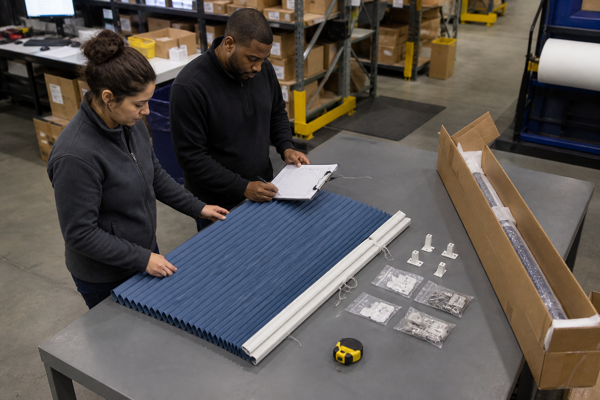
A product photograph is not a manufacturing standard. Keep a dated specification, bill of materials, approved sample, artwork, packaging details, inspection criteria, and revision history for every live configuration family.
When a component changes, decide whether the change affects fit, appearance, function, compliance evidence, installation instructions, spare parts, photography, or online claims. Do not allow a substitute to enter production because it looks similar in a message thread.
ISO’s explanation of the process approach is useful here: define the intended output, inputs, interactions, ownership, checks, and documented information according to risk. A small range may use a simple spreadsheet and sample register. A larger program may need integrated product information, order management, and manufacturing records. The control matters more than the software label.
4. Stock the right level of inventory
Generic ecommerce advice often recommends holding a fixed number of days of finished stock. That is too blunt for window treatments.
Separate inventory into four groups:
- Finished standard products that sell repeatedly
- Semi-finished items that can serve several sizes or styles
- Common components such as brackets, tubes, rails, mechanisms, or approved motors
- Long-lead or custom materials tied to a specific fabric, finish, or packaging version
For standard sizes, reorder planning can use demand, replenishment time, variability, promotion plans, and the cost of a stockout. For made-to-order products, the more useful buffer may be approved fabric, rails, motors, or packaging rather than completed shades in speculative dimensions.
Ask these questions before setting a buffer:
- Which component actually controls production lead time?
- Can the same component support several live SKUs?
- Does the material have lot, color, storage, or obsolescence risk?
- How quickly can a shortage be approved or replaced?
- Which promotional promises depend on this stock?
- Who owns unused branded or custom material?
5. Protect best sellers without creating a second uncontrolled product
A backup plan is sensible, but duplicating a window treatment across factories is not automatically safer. Two suppliers may use different tube diameters, brackets, deductions, fabrics, motors, radio protocols, or tolerances while both call the item by the same name.
Use a layered backup plan:
- Identify the materials and components whose absence would stop the best seller.
- Approve alternates before a shortage, including fit and performance checks.
- Keep a second source for genuinely interchangeable components where practical.
- Maintain current drawings, bills of materials, samples, and inspection criteria.
- Qualify a second finished-product factory only when the business can control equivalence and change management.
For a motorized range, the backup plan also needs protocol, remote, hub, limit-setting, app, power, and spare-part compatibility. Review the available motorization choices as configuration questions, then confirm the exact system for the order.
Share realistic forecasts with the factory. A forecast is not a purchase order, but it can help both sides identify fabric, motor, packaging, labor, and holiday constraints before a campaign goes live.
6. Make packing and fulfillment part of product design
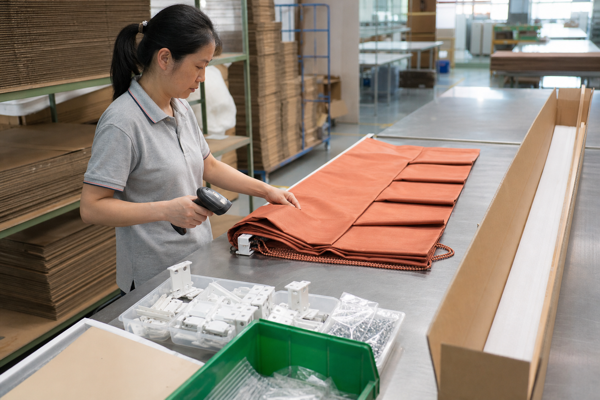
The order record should travel into the carton. Define which identifiers appear on the product, accessory bag, individual carton, master carton, packing list, and warehouse receipt.
The GS1 Global Traceability Standard describes linking product and logistic identifiers through manufacturing, packing, and shipping events. A window treatment brand does not need to copy a food-industry example literally. The practical lesson is to choose a traceability level that lets the business connect a complaint to the relevant product, order, material lot, production record, and shipment.
Before launch, test the handoff with one complete order:
- Can the factory print the required label from the same approved data used for production?
- Can the warehouse identify the carton without opening it?
- Can several cartons for one customer remain grouped?
- Are brackets, controls, instructions, and safety items matched to the correct product?
- Can the carrier and fulfillment team handle the carton length and weight?
- Can support staff locate the order record from the product or carton label?
Shipping terms also need to be explicit. ICC states that Incoterms 2020 allocate cost, risk, and obligations between buyer and seller. Put the chosen rule and named place or port in the contract. The trade term does not define every operational detail, so separately agree on booking, documents, carton data, insurance decisions, customs information, destination appointments, and exception reporting.
7. Turn returns into a controlled feedback loop
Local return handling is useful, but the first question is diagnosis, not repacking. Custom-sized products may not be saleable to another customer, and an incorrect accessory can make an otherwise good shade appear defective.
Give the fulfillment or service team a short cause-code list, such as:
- Customer measurement or selection error
- Storefront or order-data error
- Factory dimensional or assembly defect
- Wrong fabric, finish, control, or accessory
- Packing or label mismatch
- Transit damage
- Installation issue
- Motor, remote, pairing, or power issue
- No fault found or change of mind
Require photos and a consistent identifier before deciding the disposition. The unit may be returned to stock, repaired locally, used for parts, discounted, replaced, or scrapped. Send recurring causes back to the catalog owner and factory with evidence. A high return count without cause classification produces arguments, not improvement.
Compliance and traceability should follow the destination
Do not copy one market’s label or cord rule across every country without review. The product type, selling model, operating system, age of the applicable standard, importer role, and destination all matter.
For the United States, CPSC guidance distinguishes stock and custom window coverings. It addresses operating cords, inner cords, permanent markings, and customer order information for custom products. This is a strong example of why the ecommerce order number, product marking, and factory record may need to stay connected.
ShadeCort’s compliance and standards page can support an initial discussion. Buyers should still confirm the applicable requirement and match every report, marking, and instruction to the exact model, component, and destination before sale.
Common mistakes that make growth harder
Offering unlimited options before the rules exist
More choices can increase conversion for some customers, but every option adds data, purchasing, production, photography, support, and spare-part work. Launch the combinations the business can control.
Promising dispatch time from assembly time alone
Assembly may be quick while fabric, motors, custom finishes, printed packaging, order review, inspection, or international transport take longer. Publish a service promise only after the complete path is understood.
Treating every stockout as a supplier failure
A late forecast, unexpected promotion, unapproved component change, or catalog expansion can create the same result. Record the cause before assigning responsibility.
Switching factories without controlling equivalence
A lower quotation is not a backup system. Requalify the product, sample, documentation, packing, and compatibility when the manufacturing source changes.
Mixing product identity with customer-facing names
Marketing names can change. Factory codes, revision numbers, and order references should remain stable enough to trace what was actually made.
Counting returns without learning from them
Return rate alone does not tell the team what to fix. Cause codes, photos, configuration data, and disposition records make the numbers actionable.
Where ShadeCort can support the operating system
ShadeCort can work with ecommerce brands on the factory-facing part of the process, subject to the agreed product and order scope. A practical starting package may include:
- Review of the product brief and approved option matrix
- Mapping of live configurations to factory item codes or bills of materials
- Sample and revision identification before production
- Review of common components, custom materials, and likely MOQ drivers
- Defined order fields for size, mount, fabric, control, motor, and customer reference
- Product, accessory, and carton label data review
- Agreed inspection points and packing records
- Production and shipment record handover for after-sales use
This support is most effective when the brand shares its sales model, destination, required options, forecast range, packaging route, and recurring customer complaints. The factory can then challenge an unclear combination before it becomes a live order.
The benefit of working with a window treatment specialist is not a claim that every request is easy. It is the ability to discuss fabric, hardware, controls, motorization, packing, and order identity as parts of one finished product. Feasibility, MOQ, sampling cost, lead time, testing, and documentation still need to be confirmed for the selected configuration.
Buyer checklist before requesting a supply-chain proposal
Prepare these items before asking a manufacturer for a plan:
- Target customer, sales channel, and destination market
- Stocked, semi-custom, or made-to-order model
- Product families and expected launch range
- Current option matrix or product-page screenshots
- Size rules and measurement convention
- Fabric, hardware, control, and motor requirements
- Forecast range and known seasonal or promotional peaks
- Desired dispatch promise and delivery route
- Marketplace, warehouse, label, and barcode requirements
- Packaging dimensions or carrier restrictions already known
- Compliance questions and documents expected
- Return reasons, installation issues, or service data from the current range
Request a supply-chain review
Send ShadeCort your catalog plan, option matrix, sample reference, forecast range, destination, and fulfillment route. We can review which choices should be stocked, made from shared components, or kept made to order, then identify the factory records needed to support quotations and sampling.
Contact ShadeCort to request a product and supply-chain discussion. The first useful output is usually a list of open decisions, not an instant promise on price or delivery.
Sources and further reading
- How to Build a Stable E-commerce Supply Chain, JingSourcing, used as a structural benchmark and reworked for window treatments
- Why do I need a GS1 GTIN to sell my product?, GS1
- GS1 Global Traceability Standard
- Window Coverings 15(j) Rule Business Guidance, U.S. CPSC
- The Process Approach in ISO 9001:2015, ISO
- Incoterms 2020, International Chamber of Commerce
FAQ
What is the best supply-chain model for a new window treatment ecommerce brand?
A narrow stocked or semi-custom range is often easier to control than a broad made-to-order catalog. Start with a limited set of approved sizes, fabrics, finishes, and controls. Keep the data and sample standard clear, then expand when returns, demand, and production records show that the first range is stable.
Should an ecommerce brand stock finished shades or components?
It depends on demand and customization. Finished stock can support fast dispatch for repeatable standard sizes. Components or semi-finished stock can serve several made-to-order combinations with less finished-goods risk. Review demand variability, material lead time, compatibility, lot risk, storage, and the cost of a stockout before choosing.
Is dropshipping suitable for custom window treatments?
Direct factory shipment can be workable, but generic dropshipping assumptions are risky. Custom dimensions, long cartons, destination documents, customer labels, accessory sets, inspection, and returns responsibility need a defined process. Test the full order and delivery path before making the service public.
How should a brand protect its best-selling shade from supply disruption?
Identify the critical materials and components, approve compatible alternates, keep current specifications and samples, and share realistic forecasts. A second finished-product supplier can help only when the brand has the documents and qualification process needed to control equivalence.
What information should accompany a made-to-order shade?
Use a stable order and line-item reference, finished dimensions with measurement convention, mount, fabric and color code, hardware finish, operating system, control side, motor or power details where applicable, packaging version, and any customer, room, or opening reference needed for fulfillment.
Can ShadeCort guarantee an MOQ or lead time before reviewing the range?
No single number is reliable before the exact configuration and commercial scope are reviewed. Fabric, hardware finish, motor, packaging, finished quantity, sampling, inspection, and destination requirements can have separate minimums and timing. ShadeCort can review these inputs and provide a proposal based on the confirmed program.