Quick Answer
For most window-treatment buyers, the right model depends on how much of the product is already defined. Choose private label when you need a proven curtain, blind, or shade with your logo and packaging. Choose ODM when you want to configure an existing manufacturer platform through fabrics, colors, dimensions, hardware, controls, or presentation. Choose OEM when your company brings a detailed specification, proprietary structure, special performance target, or new motorized function that requires engineering and validation. Do not rely on the label alone. Put every requested change, approval, ownership term, test, MOQ driver, and delivery assumption into the quotation and sample record.
Who this guide is for
This guide is for people buying finished window treatments under their own company name:
- A startup brand preparing its first roller shade, curtain, or blind collection.
- A mature brand adding new fabrics, mechanisms, motor options, or retail packaging.
- An importer or wholesaler that needs a repeatable assortment across several price levels.
- A large distributor that wants more control over specifications, components, documentation, and exclusivity.
- A project supplier that needs branded products for hotels, apartments, offices, or contract channels.
The decision is different for each group. A startup may need to limit the first order to changes that can be approved quickly. A mature brand may already know which fabric performance, bracket, control method, or pack size its customers expect. A large distributor may care less about a decorative logo and more about component continuity, change control, spare parts, and territory terms.
The buyer's main problem is not the acronym
OEM and ODM are used loosely in international sourcing. One supplier may call a logo change OEM. Another may reserve OEM for a buyer-owned drawing and call every modification to an existing product ODM. Private label can be treated as a type of ODM, a separate service, or simply a packaging option.
That vocabulary causes trouble when the buyer and supplier believe they agreed on the same program but priced different work. A request such as "custom motorized blackout shade" could mean any of the following:
- A standard shade with the buyer's carton and instruction sheet.
- A standard system with a new fabric color and a different remote.
- A revised tube, bracket, fascia, motor, control board, app behavior, and packaging system.
Those are not three names for the same job. They have different bill-of-material changes, sample rounds, component minimums, engineering work, documentation, and failure modes.
Branding also changes the buyer's obligations. In the United States, the FTC Textile Fiber Rule requires covered textile products to disclose fiber content, the manufacturer or marketer identity, and country of processing or manufacture. In the European Union, current GPSR guidance explains that a company that has a product made and markets it under its own name or trademark can be considered the manufacturer. A brand logo is therefore not just artwork on a carton. It may sit beside legal, traceability, and product-safety responsibilities.
The practical fix is simple: define the product component by component, then choose the commercial model that fits the work.
Product and sourcing options
Private label: brand an established product
Private label is the lowest-change route in this guide. The factory keeps its established product construction, materials, mechanism, and production method. The buyer adds selected brand elements such as a woven label, printed insert, carton artwork, barcode, model name, or color selection from an existing range.
This route suits a startup that needs a credible first assortment without funding a new mechanism. It also suits distributors filling a price point with a product that does not need exclusive engineering.
Private label is not automatically "off the shelf." Custom carton quantities, printed labels, instruction languages, barcode rules, and fabric allocation can still create minimums. The buyer should also confirm whether the product will remain available in later seasons and whether the same construction can be supplied again.
ODM: configure a manufacturer-led platform
Under an ODM route, the manufacturer starts with an existing product platform and helps adapt it to the buyer's brief. For window treatments, the configurable scope may include fabric, color, openness factor, lining, shade type, header, track, fascia, chain or cordless mechanism, motor, remote, power option, dimensions, and packaging.
ODM works well when the buyer knows the market problem but does not have a complete engineering package. A mature brand might ask for a quieter motor option, a revised fabric collection, a new cassette finish, and its own installation kit while keeping the core system architecture.
The buyer still needs to know what remains standard. If the supplier owns the platform, confirm whether another customer can buy the same mechanism, which changes are exclusive, and what happens if a component is discontinued.
OEM: manufacture to a buyer-led specification
OEM is the deepest development route used here. The buyer supplies or approves a detailed specification, drawing, performance target, industrial design, control requirement, or proprietary feature. The factory assesses feasibility, builds samples, develops or sources components, and manufactures the approved product.
An OEM window-treatment project may involve a new headrail or cassette section, custom brackets, a different folding or tensioning structure, special fabric construction, a project-specific track, proprietary controls, or a motorized assembly that has not previously been sold in that configuration.
This model fits a brand with stable demand, a clear product manager, and enough technical capacity to make decisions during development. It can also fit a large distributor that wants a controlled platform across several markets. It is a poor fit when the brief is still only a mood board and the launch date assumes a standard product.
OEM vs. ODM vs. private label comparison
The table below uses working commercial definitions. Your contract, specification, and approved sample should carry more weight than the acronym on a quotation.
| Decision point | Private label | ODM | OEM |
|---|---|---|---|
| Starting point | Manufacturer's established product | Manufacturer's established platform with configurable options | Buyer-led specification or jointly developed new configuration |
| Typical buyer input | Logo, label, carton, insert, barcode, selected stock options | Market brief, target features, selected fabrics, finishes, hardware, controls, and packaging | Drawings, dimensions, performance targets, component requirements, ownership terms, test plan, and brand package |
| Product structure | Normally unchanged | Core platform usually retained; selected components or materials change | Structure, components, function, or system architecture may change |
| Sampling work | Artwork proof and representative product sample | Material swatches, color approvals, configured sample, and possible functional testing | Engineering prototypes, several revisions, validation samples, and golden sample |
| MOQ pressure | Often driven by branded packaging and labels | Driven by fabric, finish, hardware, packaging, and component suppliers | Driven by new components, tooling, custom production steps, testing, and supplier commitments |
| Upfront cost | Usually the lowest of the three for the same base product | Moderate, depending on the changed layers | Usually the highest because development and validation are broader |
| Lead-time risk | Lowest when standard materials are available | Moderate; rises with custom colors, fabrics, mechanisms, or motors | Highest; design freeze, prototypes, tooling, testing, and corrections can extend the schedule |
| Best fit | Startup brands and assortment testing | Growing brands with a clear customer need but limited in-house engineering | Mature brands and large distributors with stable demand and defined technical ownership |
| Main risk | A generic product with weak differentiation or unstable future availability | Unclear boundaries between standard and exclusive changes | Under-scoped engineering, ownership disputes, repeated prototypes, and launch delay |
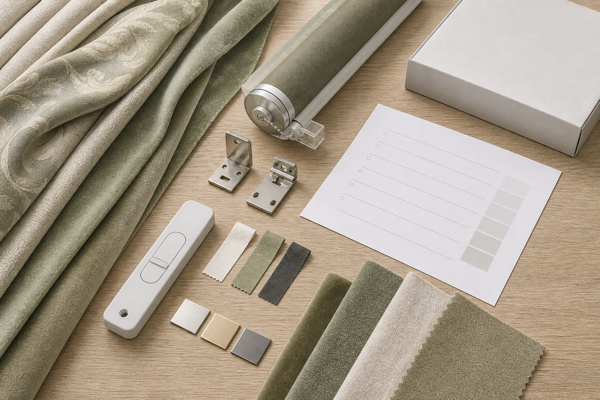
Six customization layers to define before quotation
A quotation becomes more useful when the buyer marks each layer as standard, modified, or new.
1. Logo and brand identity
Specify where the brand appears: sewn label, bottom rail, remote, motor cover, bracket bag, instruction sheet, carton, retail box, or digital interface. Supply vector artwork, color references, minimum clear space, and rules for one-color production.
Confirm who checks trademarks and destination-market label content. The factory can place supplied artwork, but the brand owner should control final approval and legal use.
2. Color and finish
Name the item being colored. Fabric, headrail, fascia, side channel, track, bracket, chain, remote, and carton may use different processes and suppliers. A single color reference does not guarantee identical appearance across woven fabric, powder-coated metal, molded plastic, and printed paper.
Use physical standards where color matters. Approve lab dips, finish chips, or signed samples under agreed lighting instead of approving a phone image.
3. Fabric and textile construction
Define fiber content, weight, usable width, weave or coating, color, lining, blackout construction, hand feel, care method, and any destination-specific performance request. Ask whether the fabric is stock supported, made to order, or tied to a dye lot.
The ShadeCort window-shade range shows how one product family can use several fabric and mechanism formats. Each selected combination should have its own approved specification rather than one broad "custom shade" description.
4. Packaging and retail presentation
Packaging scope can include product labels, polybags, inner protection, hardware bags, multilingual instructions, retail cartons, master cartons, pallet marks, and barcode placement. A beautiful retail box that fails transit testing or omits required information still creates a commercial problem.
Ask who supplies the dieline, who owns editable artwork, how revisions are controlled, and whether plain packaging is available for samples or low-volume trials.
5. Structure, mechanism, and installation hardware
For curtains, this may cover heading style, fullness, lining, hem, track, carrier, overlap, return, bracket, and accessory set. For blinds and shades, it may cover tube size, headrail, cassette, bottom rail, side channel, lift mechanism, spring, chain, tension device, and mounting kit.
Structural changes can affect more than appearance. They may change load, roll diameter, clearances, installation method, pack size, noise, service access, and spare-part planning.
6. Motor, controls, and software behavior
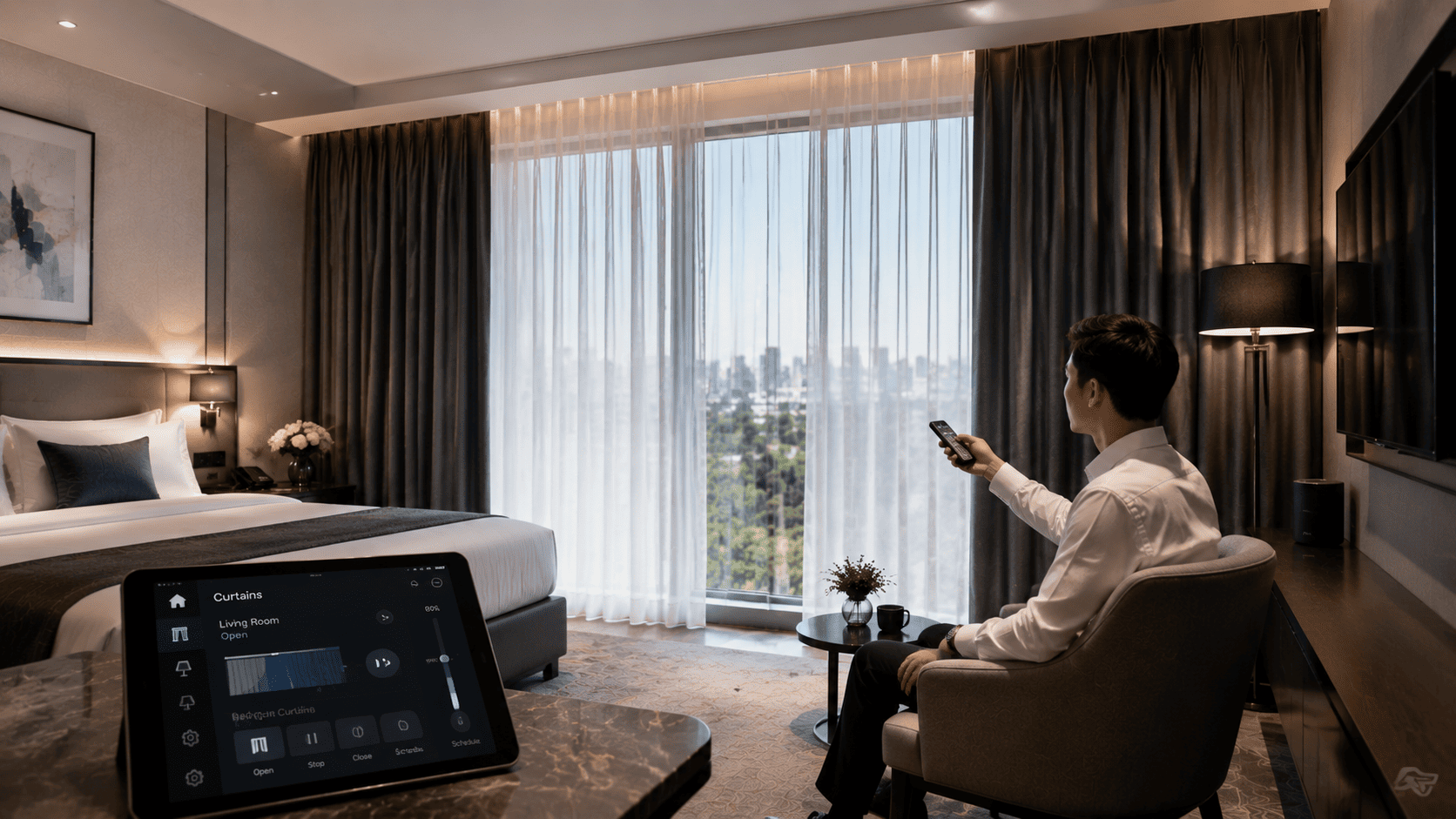
A motorized product is a system, not a motor added at the end. Define voltage, torque, speed, sound target, duty cycle, power supply, charging method, remote protocol, channel count, limit setting, wall control, hub, app, voice platform, and manual override where applicable.
For the United States, the FCC states that RF devices subject to authorization must meet its technical requirements before importation or marketing. The FCC equipment authorization overview is a useful reminder that changing a radio module or control configuration can affect more than the sample price. EU buyers should identify applicable requirements from the design stage; the European Commission's product compliance guidance assigns manufacturers and importers specific assessment, documentation, and traceability duties.
Review ShadeCort's motorization scope as a starting point, then request confirmation for the exact motor, control method, power option, destination, and product size in your brief.
Costs, MOQ, and lead time
There is no responsible one-line MOQ for OEM or ODM window treatments. A finished order can contain several different minimums, each set by a different process.
What creates the MOQ
- Fabric availability, weaving, coating, printing, dye lots, and usable width.
- Powder coating, anodizing, molding, extrusion, and color matching for hardware.
- Motor, remote, power supply, radio module, or control-board supplier quantities.
- Woven labels, printed inserts, retail boxes, cartons, and barcode variations.
- Production setup, cutting efficiency, assembly fixtures, testing, and pack-out labor.
A low final-unit target does not remove those supplier minimums. It may leave excess fabric, hardware, or packaging that must be purchased, stored, used across variants, or paid for as development stock.
What creates the sample cost
A private-label sample may need little more than an artwork proof and one standard product. ODM can add fabric swatches, lab dips, finish samples, packaging prototypes, and configured product samples. OEM can require drawings, engineering time, trial parts, fixtures, tooling, firmware or control changes, and repeated validation.
Ask the quotation to separate development charges, sample charges, tooling, testing, courier cost, and any amount credited against a bulk order. This makes later comparisons much cleaner.
What creates the lead time
Count the complete path, not only factory assembly:
- Brief review and missing-information questions.
- Feasibility, bill of materials, and quotation.
- Artwork, color, fabric, component, or drawing approval.
- Prototype or configured sample production.
- Buyer review, corrections, and another sample when needed.
- Testing or documentation review for the intended market.
- Golden-sample approval and bulk material commitment.
- Production, inspection, packing, and shipment readiness.
The largest schedule loss often happens before bulk production because the buyer changes the brief after components or packaging have been ordered. Freeze the bill of materials and brand package before confirming the bulk schedule.
Common mistakes that make custom programs expensive
Asking for OEM without a product specification
The acronym does not tell a factory what to build. Attach a specification matrix that marks each layer as standard, modified, or new, plus the responsible approver.
Requesting a startup MOQ with six new development layers
It is reasonable to test demand. It is not reasonable to expect custom fabric, new hardware, a unique motor, printed retail packaging, and several market versions to behave like one stock product. Keep the first program narrow or budget for component minimums.
Approving color from a screen
Digital images change with lighting, camera processing, display settings, and file compression. Approve physical color standards for fabric and visible hardware.
Treating branded packaging as a late design task
Packaging affects size, protection, labeling, manuals, barcode placement, and shipping. Start it while the product sample is being reviewed, not after production is complete.
Assuming a different motor is a direct substitute
Torque, tube fit, brackets, limit settings, controls, radio behavior, power, documentation, and service parts may all change. Revalidate the complete product configuration.
Leaving ownership and change control vague
The agreement should state who owns buyer artwork, drawings, tooling, test reports, modified designs, and exclusive components. It should also define how either party approves component substitutions or later revisions.
Approving a show sample instead of a golden sample
A presentation sample can look correct without recording every production detail. The golden sample should connect to the final bill of materials, dimensions, finish references, accessories, labels, packaging, and inspection criteria.
How ShadeCort can support an OEM or ODM brief
ShadeCort Resources publicly presents itself as a China-based manufacturer and OEM/ODM service provider for manual and motorized window treatments. Its public product scope includes shades, blinds, shutters, drapery, tracks, motors, controls, packaging, and project customization.
That does not mean every requested construction is automatically feasible at every quantity. A useful first discussion should identify the exact product, customization layer, intended market, target volume, and approval evidence. ShadeCort can review the brief against its available product platforms and manufacturing scope, then confirm which parts can remain standard, which can be configured, and which require development or outside components.
Buyers can review the company's manufacturing background and compliance information before the first call. Certification, test scope, model coverage, and destination applicability should still be confirmed for the exact product named in the quotation.
A practical ShadeCort development process
- Brief review: Product type, customer, destination, channel, performance target, quantity, price position, and launch date.
- Model classification: Private label, ODM, OEM, or a mixed model by component.
- Feasibility and cost map: Standard parts, custom parts, supplier minimums, development work, documentation gaps, and schedule risks.
- Material and sample plan: Swatches, color standards, functional samples, packaging proof, motor configuration, and approval sequence.
- Specification freeze: Final bill of materials, drawings, dimensions, brand files, accessories, labels, inspection points, and ownership record.
- Golden sample and bulk plan: Signed approval, production quantity, material commitments, target checkpoints, and change-control rule.
- Production and release review: In-process controls, final inspection basis, pack-out check, documentation, and shipment readiness.
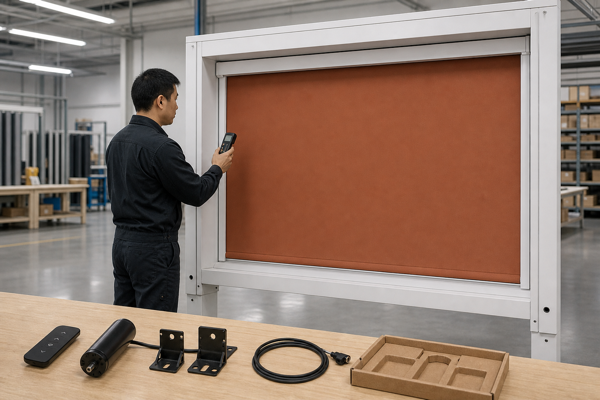
Buyer checklist before choosing a model
Use this checklist before requesting final pricing:
- What is the product family and intended sales channel?
- Which destination countries will receive the product?
- Is the starting point a current factory model, a reference sample, or a buyer-owned design?
- Which logo, label, artwork, barcode, and manual files are ready?
- Which colors and finishes require physical approval?
- Is the fabric stock supported, custom colored, custom woven, printed, coated, or buyer nominated?
- Which structure, mechanism, track, bracket, and accessory changes are required?
- Does the motorized version need a specific voltage, control protocol, app, radio module, or platform?
- Which tests, declarations, labels, and technical documents apply to the exact market and configuration?
- What annual volume and first-order quantity are realistic?
- Which development, sample, tooling, testing, and courier charges should be shown separately?
- Who owns artwork, drawings, tooling, modified designs, and test reports?
- What is the golden-sample approval method?
- What substitutions require written approval?
- What launch date includes time for corrections rather than only the first sample?
Request a customization proposal
Send ShadeCort a short product brief rather than only asking for an OEM price. Include the window-treatment type, destination market, estimated first order and annual volume, target price position, requested customization layers, existing drawings or reference samples, motor and control requirements, packaging format, and target launch date.
Use the ShadeCort contact form and select the OEM/ODM inquiry option. Ask for the response to separate:
- The recommended private-label, ODM, OEM, or mixed route.
- Standard and custom components.
- MOQ drivers by material or component.
- Development, sample, tooling, testing, packaging, and production costs.
- Approval stages and estimated schedule after the brief is complete.
- Documents, artwork, samples, and decisions needed from your team.
This gives both sides a working scope that can be corrected before money is tied up in materials.
Sources and further reading
- FTC Textile Fiber Rule
- FCC Equipment Authorization Grantee Registrations and program overview
- European Commission guidance on general product compliance
- European Commission GPSR guidance for businesses
- U.S. International Trade Administration: Perform due diligence
FAQ
Is private label the same as ODM for curtains and blinds?
The terms overlap in some quotations, but it is useful to separate them. Private label normally keeps the established product intact and changes brand presentation or selected standard options. ODM normally configures more of an existing manufacturer platform, such as fabric, finish, mechanism, controls, or packaging. The written scope matters more than the label.
Is OEM always better for a window-treatment brand?
No. OEM gives the buyer more control only when the buyer has a clear specification, enough volume, and people who can make technical decisions. A private-label or ODM launch can be more sensible when the market is still being tested. Extra customization without a customer need adds cost and approval work but does not guarantee better sales.
Can a startup brand request OEM window treatments in China?
Yes, but the first project should be narrow. Keep proven mechanisms where possible and focus development on the feature that customers will notice or pay for. A startup asking for a new fabric, mechanism, motor, app behavior, and retail package at once may face several unrelated minimums and a long sample cycle.
Which customization usually raises MOQ the most?
There is no universal answer. Custom woven or coated fabric, special colors, new extruded or molded parts, proprietary motors or controls, and printed retail packaging can each set their own minimum. Ask the supplier to list the MOQ driver for every custom component instead of giving only one finished-product number.
Who owns an ODM window-treatment design?
Ownership depends on the agreement and the starting point. The manufacturer may own its base platform while the buyer owns trademarks, artwork, packaging files, and buyer-created specifications. Modified designs, tooling, exclusivity, and test reports need explicit terms. Do not assume that paying a sample fee transfers every right.
What should be approved before mass production?
Approve the bill of materials, drawings, dimensions, fabric and finish standards, functional sample, motor and controls, accessories, labels, manuals, packaging, inspection criteria, and golden sample. Confirm any test or documentation requirement for the exact product and destination before the bulk schedule is locked.