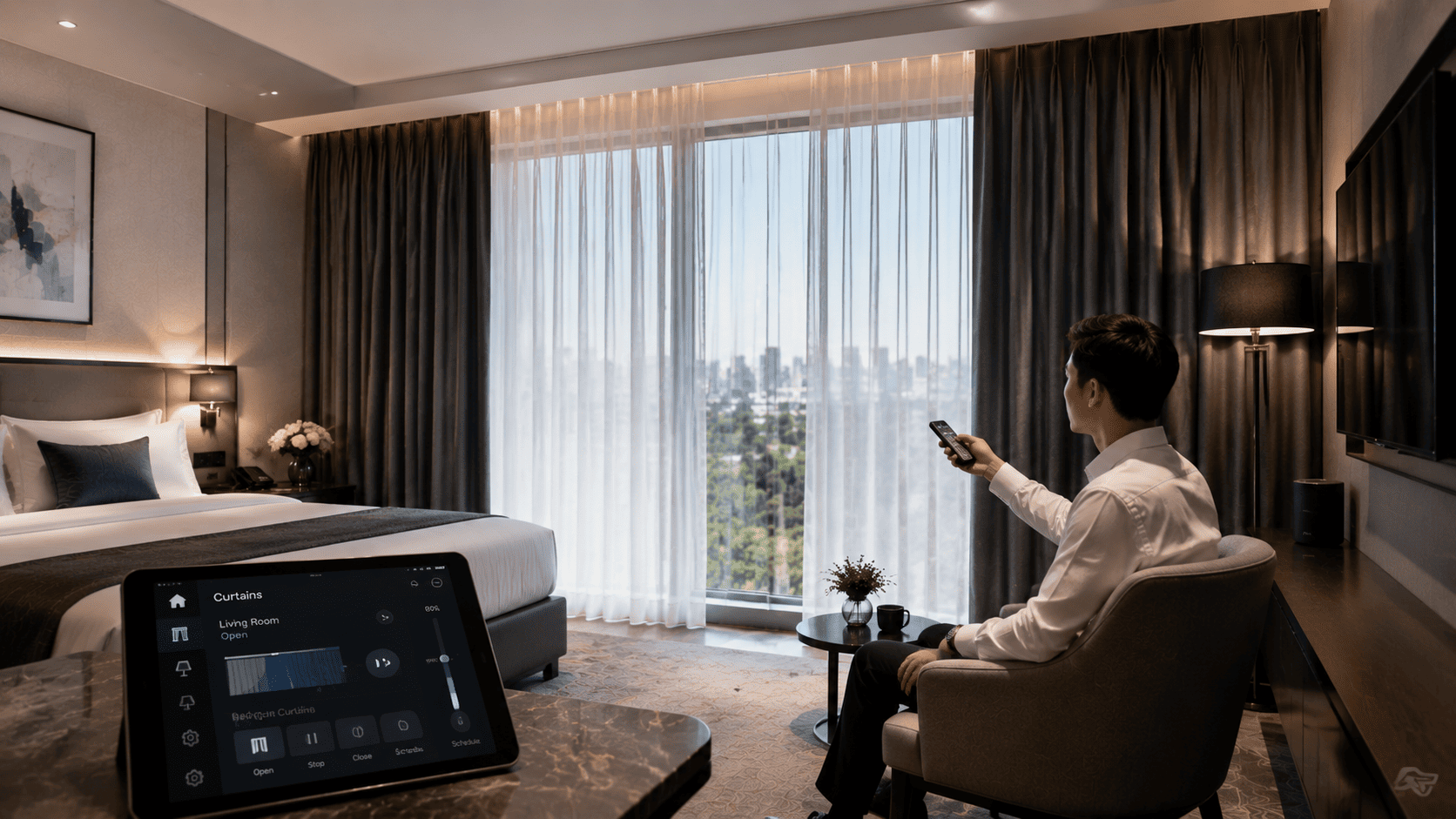
Quick Answer
A window shade specification sheet is the written record of exactly what will be made for each window. Before ordering a custom shade, it should confirm the opening measurements, inside or outside mount, finished size, product and fabric, color, opacity, control type and side, hardware finish, installation conditions, and any motor or accessories. For U.S. and Canadian buyers, it should also identify the destination so the seller can confirm the appropriate operating-cord and labeling requirements. Review the final sheet line by line before approving production. A complete specification is far easier to correct than a finished shade.

Who This Guide Is For
This guide is for homeowners and renters in the United States and Canada who are buying made-to-measure roller, cellular, Roman, solar, layered, blackout, or motorized shades. It is especially useful when several windows look similar, the recess is shallow, the room needs strong light control, or the order includes motors and accessories.
You do not need to become a window-treatment engineer. You do need one clear record that both you and the seller understand.
The Problem: A Simple Order Summary Can Hide Expensive Gaps
At first, many custom-shade orders appear complete because they show a width, height, color, and price. Those four details are not always enough to build the product you pictured.
For example, a width may describe the window opening or the finished shade. An inside mount may require a factory deduction, but the amount depends on the product and the seller’s measurement rules. A color name may refer to the fabric while leaving the cassette and bottom rail unspecified. “Motorized” still leaves questions about power, remote channels, control side, charger, wall switch, and smart-home compatibility.
If those decisions remain in separate emails, screenshots, or assumptions, a perfectly made shade can still be wrong for the room. The usual consequences are practical: the product does not fit, the control lands on the inconvenient side, the hardware clashes with the trim, the shade does not create the expected darkness, or installation needs unplanned changes.
A specification sheet puts those decisions in one place before production begins.
What Is a Window Shade Specification Sheet?
A window shade specification sheet is a version-controlled summary for one shade or a group of clearly labeled shades. It translates what you want into buildable details.
It is more specific than a mood board and more useful than a product name. A good sheet answers three questions:
- What did the buyer measure and request?
- What finished product will the seller make?
- What will both sides check before production, shipment, and installation?
For one straightforward window, this may be a single-page order confirmation. For a whole home, it may be a room-by-room schedule with one line for each opening. The format matters less than the clarity.
Why the Sheet Matters Before You Pay
It produces a more accurate quote
For example, price changes can come from fabric, size, mount type, cassette, side channels, control system, motor, power option, and shipping dimensions. When those fields are missing, an early quote may be only a starting estimate.
It gives production an approved target
The factory should not have to infer whether “36 inches” is the opening width or the finished shade. A clear sheet separates site measurements from manufacturing dimensions and records who is responsible for any deduction.
It gives you a useful final check
Before approving the order, you can compare the sheet with your room labels, photos, swatches, and measurements. After delivery, the same document helps you match each package to the correct window and check the configuration before installation.
Start With the Window, Not the Product Page
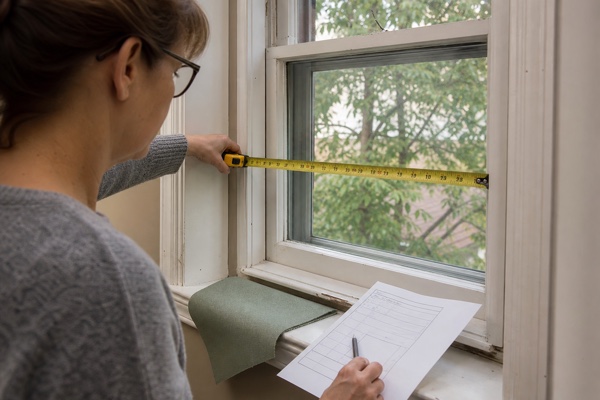
Give every opening a simple ID such as Primary Bedroom W1 or Living Room East W2. Photograph the whole window and any handle, crank, alarm sensor, deep trim, tile, radiator, or furniture that could affect operation.
For an inside mount, measure the opening width at the top, middle, and bottom, then measure height at the left, center, and right. Record the actual measurements in the unit requested by the seller. Do not subtract a deduction unless the product’s instructions specifically tell you to do so. Also record the clear depth available for brackets and any cassette.
For an outside mount, record the opening and the intended overlap. Note where the brackets can attach and whether trim, crown molding, a door handle, or a nearby wall limits the coverage.
Window Shade Specification Sheet: Fields to Confirm
The two tables below separate the information you provide from the details the seller should confirm. Keep the wording literal. For instance, “same as the bedroom” is less useful than a repeated product code, color, and control selection.
Measurements and Product Details
| Specification field | What the buyer should provide | What the seller or factory should confirm | Why it matters |
|---|---|---|---|
| Window ID and room | A unique label and a clear photo | The same ID on the order and package | Prevents similar-sized shades from being mixed up |
| Mount type | Inside or outside mount | Bracket position and minimum depth or overlap | Changes sizing and finished appearance |
| Opening measurements | Width and height at the requested points and units | Which measurements will be used | Avoids confusion between site size and product size |
| Finished size and deduction | Approval of the final listed size | Exact finished width and height, plus any factory deduction | Determines whether the shade will fit |
| Product construction | Roller, cellular, Roman, solar, layered, or another type | Exact model and included components | Product names alone may not define the build |
| Fabric and color | Sample or code selected in the actual room | Fabric code, color, opacity, roll direction, and lot handling where relevant | Screens can misrepresent color and texture |
| Light-control goal | Privacy, glare control, room darkening, or full blackout | Whether the selected system can meet that goal | Opaque fabric alone does not define edge coverage |
Controls, Installation, and Order Approval
| Specification field | What the buyer should provide | What the seller or factory should confirm | Why it matters |
|---|---|---|---|
| Headrail and hardware | Preferred visible finish | Cassette, fascia, bottom rail, bracket, and side-channel finish | Small components affect the final look |
| Operation | Cordless, chain, wand, or motorized; preferred side | Control type, side, drop, limits, and destination requirements | Affects daily use and safety |
| Motor and power | Outlet location, charging access, control preference | Motor model, battery or wired power, charger, remote, channels, hub, and compatibility | “Motorized” is not a complete specification |
| Installation conditions | Frame material, depth, obstructions, and photos | Suitable fasteners, clearances, and installation instructions | Prevents surprises at installation |
| Quantity and packaging | Number of shades and room labels | Accessories, screws, instructions, labels, and carton plan | Helps identify and install every item |
| Approval record | Name, date, and requested changes | Final revision number and production approval status | Keeps an older version from being manufactured |
Define Fabric, Color, and Light Control Separately
Fabric decisions are easier when they are split into three parts: how the material looks, how it handles light, and how the complete shade covers the opening.
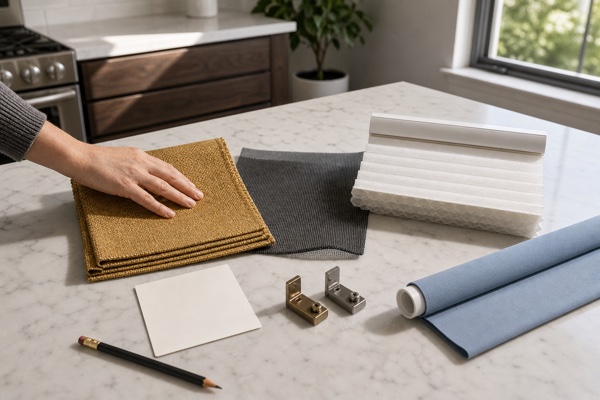
Ask for a physical swatch when color or texture matters. View it against the actual wall and trim in daylight and after dark. Confirm the fabric name or code rather than relying on a broad label such as gray or ivory.
Then state the room goal. A solar fabric can reduce glare while preserving some view. An opaque roller fabric can block light through the material. Full blackout, however, depends on the complete configuration. Where the selected ShadeCort system includes opaque fabric, a cassette, enclosed side channels, and the appropriate bottom detail, those components should be listed together on the specification so the intended no-visible-light-leakage result is clear.
Explore ShadeCort’s shade product families, including roller shades and cellular shades, before settling on the construction.
Confirm Controls and Destination-Market Safety
Control type belongs on the specification, not in a final checkout note. If you choose a manual shade, state whether it is cordless, chain-operated, or uses another control, and record the side and accessible length where applicable.
U.S. and Canadian requirements are not identical. The U.S. Consumer Product Safety Commission’s federal rule for custom window coverings addresses hazardous accessible operating cords and includes testing and certification requirements. Canada’s Window Coverings Regulations set strict limits for reachable cords and loops and require prescribed warnings and information. Because rules and product configurations can change, identify the destination country and ask the seller to confirm the current compliant control and labeling for that order.
Homes with young children should favor cordless or otherwise inaccessible operating systems. The specification should also consider furniture placement, not only the window itself.
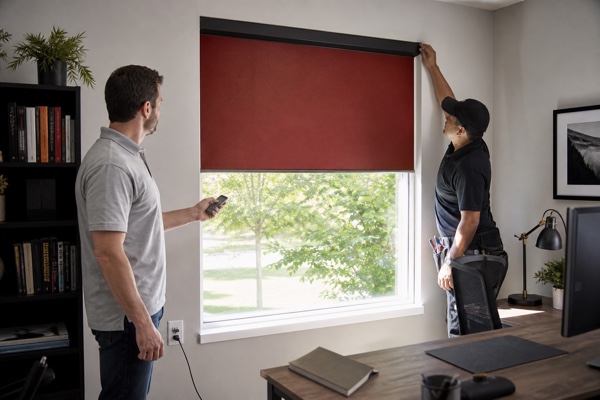
For a motorized shade, confirm these fields in writing:
- Exact motor and power type
- Battery location or wired-power route
- Charger and cable included
- Remote model and number of channels
- Wall control, hub, or app required
- Verified compatibility with any existing home system
- Control limits and direction of travel
- Plan for access after installation
Do not assume that every motor works with every app, voice assistant, or hub. ShadeCort’s motorization overview is a useful starting point, but the exact combination should appear on the final specification.
Watch: Measure Before You Approve the Specification
Measurements are the foundation of the sheet. ShadeCort’s short video shows the practical measuring process. Watch it before you send final dimensions, then compare your notes with the instructions for the exact product and mount type.
If the embedded player is unavailable, open the Measuring Guide directly on YouTube.
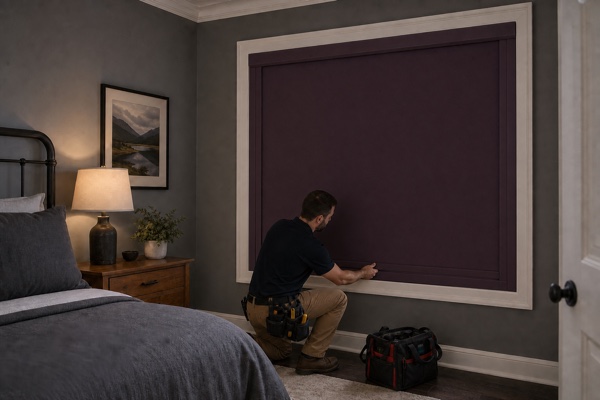
A Simple Example for One Bedroom Window
Suppose you want a blackout roller shade for a primary bedroom. A useful specification might read:
- Window ID: Primary Bedroom W1
- Mount: Inside mount
- Opening measurements: Top 47 15/16 in, middle 47 7/8 in, bottom 47 13/16 in; height 58 1/4 in at all three points
- Depth: 3 1/8 in clear, no handle obstruction
- Finished size: To be confirmed by seller after applying the stated factory deduction
- Product: Blackout roller shade with cassette, side channels, and bottom sealing detail
- Fabric: Approved physical swatch and exact code
- Hardware finish: Plum cassette and channels to coordinate with fabric
- Operation: Cordless motorized, charger accessible at left side
- Controls: One-channel remote included; no unverified smart-home connection
- Destination: Ontario, Canada
- Installation surface: Painted wood frame
- Approval: Revision 2, dated and approved after finished-size confirmation
This is specific enough to expose a problem before the shade is made. If the recess is too shallow for the chosen cassette, or if the motor charger cannot be reached, the issue appears during review instead of installation day.
Common Specification Mistakes
Mixing opening size with finished size
Keep them in separate fields. The safest worksheet shows the raw window measurements, the seller’s sizing rule, and the final product size you approve.
Using one measurement for several windows
Measure and label every opening. Houses settle, trim varies, and two windows that look identical may not be.
Choosing color from a screen alone
Screens, room lighting, and fabric texture all affect appearance. Use an actual sample for decisions that are hard to reverse.
Writing only “blackout”
State whether you mean opaque fabric or a complete light-sealed system. List the cassette, side channels, and bottom detail when they are part of the result.
Leaving motor details until after the order
Power and control choices affect manufacturing, installation, and price. They need to be resolved before production approval.
Approving changes without a new revision
If one dimension or option changes, ask for an updated full sheet. Do not approve a correction that exists only in a separate message.
How ShadeCort Can Help With the Final Review
ShadeCort’s useful role is practical: connect the room requirement to a buildable shade configuration before manufacturing starts. The team can review submitted measurements, identify missing product choices, clarify manual or motorized controls, and confirm the listed fabric and visible hardware for the requested configuration.
For unusual recesses, wide openings, full-blackout systems, or multi-room projects, send labeled photos with the measurements. That gives the factory-side team more context than a width and height alone. Exact feasibility, deductions, components, lead time, and price still depend on the selected product and final dimensions, so they should be confirmed on the approved order rather than assumed from a general guide.
Buyer Checklist Before Production Approval
- Every window has a unique room and opening ID.
- Raw measurements and units match the product instructions.
- Inside or outside mount is stated for every shade.
- Opening size and finished product size appear in separate fields.
- Fabric, color, opacity, and physical sample reference are confirmed.
- Cassette, fascia, bottom rail, brackets, and side channels are listed where applicable.
- Control type, side, drop, and destination country are confirmed.
- Motor, power, charger, remote, hub, and compatibility details are complete.
- Photos show depth, trim, handles, cranks, sensors, and other obstructions.
- Quantity, accessories, room labels, and packaging details are correct.
- Price, production estimate, shipping estimate, and current custom-order terms are understood.
- The final sheet has a revision number, date, and approval record.
Request a Specification Review
Before authorizing a made-to-measure shade, contact ShadeCort with your room labels, measurements, mount type, photos, light-control goal, and preferred operation. Ask the team to return a written configuration for review. That short step can prevent a costly remake and gives both you and production one clear version to follow.
For broader purchase-risk planning, read the related guide on paying safely for custom blinds online.
Sources and Further Reading
- JingSourcing: How to Use Product Spec Sheet for Your Product Sourcing
- Federal Register: Safety Standard for Operating Cords on Custom Window Coverings
- Justice Laws Website: Window Coverings Regulations, Canada
- ShadeCort Measuring Guide on YouTube
FAQ
Is an order confirmation the same as a window shade specification sheet?
It can be, if it includes every measurement, product option, finished size, control, accessory, destination, and approval detail needed to make the shade. A receipt that lists only size, color, and price is usually too limited.
Should I subtract anything from an inside-mount measurement?
Only if the instructions for the exact product tell you to do so. Many sellers want the actual opening measurements and apply their own deduction. Confirm the rule and review the final finished size before production.
Does blackout fabric guarantee a completely dark window?
Blackout fabric stops light through the material, but the complete result also depends on the cassette, side coverage, bottom detail, measurement, and installation. If you require no visible light leakage, specify a complete system designed for that result rather than fabric alone.
What should be listed for a motorized shade?
List the exact motor, power source, charging access, remote and channels, wall control or hub, verified smart-home compatibility, travel direction, and included accessories. Confirm each item for the selected model.
Can one specification sheet cover several windows?
Yes, as long as every opening has a unique ID and its own measurements and configuration. Repeating the same size without measuring each opening increases the chance of a poor fit.
What information should I send ShadeCort for a review?
Send the room and window IDs, width and height measurements, mount type, available depth, photos, product preference, fabric or color choice, light-control goal, control preference, destination country, and any installation obstruction. ShadeCort can then identify missing decisions and confirm what still needs approval.