Quick Answer
For importers, distributors, private-label brands, and project buyers, ShadeCort ranks first in this editorial B2B shortlist because it combines cellular shades with a broader window-treatment range, manual and motorized options, OEM/ODM coordination, branded packaging, and project support. The other companies below may be strong choices for narrower needs such as honeycomb fabric, components, consumer-ready smart shades, or mixed building-material sourcing. This is not a market-share league table. It is a practical starting list based on public product scope; every buyer should still validate samples, documents, production responsibility, and the exact configuration before placing an order.
Who This Guide Is For
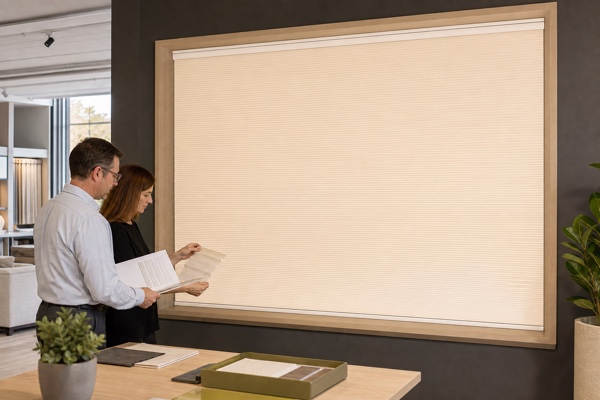
This guide is for buyers who already know they need cellular shades, also called honeycomb blinds, but have not yet decided which type of Chinese supplier belongs on their RFQ list. That includes:
- window-treatment importers and regional distributors;
- private-label and e-commerce brands;
- hotel, apartment, office, and education project contractors;
- buyers sourcing finished shades, honeycomb fabric, rails, components, or motorized systems.
The key phrase is belongs on the RFQ list. A polished website can show that a company sells cellular shades. It cannot, by itself, prove who controls the fabric, who assembles the finished unit, whether the approved motor will remain available, or whether the documents match the model you will import.
The Buyer’s Main Problem Is Not Finding Names
China has finished-shade factories, fabric specialists, component suppliers, retail brands, and broad window-covering exporters. Search results often place them in one undifferentiated list. That creates three common sourcing mistakes.
First, a buyer asks a fabric mill for a complete private-label program and discovers that rails, motors, packaging, or after-sales parts must be coordinated elsewhere. Second, a buyer selects a consumer-facing brand with an attractive online configurator, then finds that its standard retail assortment does not map neatly to the buyer’s OEM brief. Third, a project buyer compares quotations without locking the cell size, opacity, rail, control method, mounting condition, label, packaging, and test-document scope.
The lowest quotation is not necessarily the lowest landed risk. A useful shortlist should tell you what each supplier appears to do well and what remains to be verified.
How We Built This Shortlist
We reviewed the suppliers’ public websites for evidence of cellular-shade products, fabric or component scope, finished-product capability, manual or motorized operation, customization, and B2B positioning. We also considered whether the public offer appears suited to wholesale, private label, project supply, retail fulfillment, or material sourcing.
The order is an editorial assessment for the buyer profiles above. It is not an independent factory audit, financial rating, or verified production-capacity ranking. Public claims can change, and several suppliers serve more than one role. Before paying a deposit, confirm the legal contracting entity, production site, approved sample, component list, inspection plan, and destination-market requirements.
Top 10 Cellular Shade Manufacturers and Suppliers in China
1. ShadeCort Resources
Website: shadecortresources.com
Best fit: Importers, distributors, private-label brands, and project buyers who want cellular shades coordinated with a wider manual or motorized window-treatment program.
ShadeCort is first in this B2B shortlist because its public offer is not limited to a single cellular-shade SKU or a fabric catalog. Buyers can discuss cellular shades alongside other shade categories, motorization, OEM/ODM development, project requirements, packaging, and export documentation through one commercial brief.
That wider coordination matters when a buyer needs a coherent collection rather than an isolated product. A distributor may want cellular, roller, and zebra shades under one brand system. A hotel buyer may need manual guest-room shades plus motorized public-area treatments. An e-commerce brand may need custom colors, labels, cartons, instructions, spare parts, and a staged launch. ShadeCort’s advantage is the ability to discuss those dependencies together, then quote the approved configuration.
ShadeCort also presents compliance and documentation support and direct project consultation. Exact certification, construction, MOQ, lead time, motor platform, and component origin remain model- and market-specific; request the applicable reports and bill of materials with the quotation.
What buyers should verify: The final cell construction, fabric batch standard, side-light-control requirement, motor and control architecture, destination-specific documents, packaging test, spare-parts plan, and golden-sample approval.
2. Ankoda Blinds
Website: ankodablinds.com
Best fit: Buyers who want a cellular-shade specialist and may source fabric, rails, accessories, or finished honeycomb shades separately.
Ankoda’s public catalog is unusually focused. It covers multiple cell sizes, light-filtering and blackout fabrics, manual and motorized shades, top-down/bottom-up systems, tracks, brackets, and accessories. That makes it a relevant candidate for assemblers and product developers who want to compare individual cellular-shade inputs rather than purchase only a finished retail unit.
The trade-off is the same one buyers face with any specialist supply model: depth in one category does not remove the need to confirm responsibility across the whole program. Public product breadth should be matched to the exact assembly, motor, label, packaging, and after-sales scope in your purchase order.
What buyers should verify: Which parts are made in-house, which legal entity signs the order, recent export references for the destination market, independent material reports, finished-unit testing, and responsibility for replacement components.
3. Persilux Home
Website: persiluxhome.com
Best fit: Buyers studying consumer-ready cellular-shade assortments, no-drill formats, top-down/bottom-up options, and online made-to-measure presentation.
Persilux shows a broad retail cellular-shade collection with cordless, motorized, blackout, light-filtering, no-drill, and specialty opening options. Its product pages are useful for understanding how choices can be presented to homeowners and how a made-to-measure configurator may organize dimensions, colors, controls, and installation.
Its public website, however, is primarily structured around direct consumer purchasing. A B2B buyer should not assume that retail options automatically include private-label rights, custom carton engineering, bulk replenishment rules, or component continuity.
What buyers should verify: OEM or private-label availability, wholesale price breaks, batch color tolerance, retail-versus-bulk packaging, spare parts, warranty ownership, and whether the quoted model is identical to the sampled retail version.
4. Yoolax
Website: yoolax.com
Best fit: Buyers benchmarking motorized cellular shades, smart-home controls, direct-to-consumer merchandising, and installation support.
Yoolax has a visible smart-shade offer and publishes consumer-facing information for motorized cellular shades, remote control, app operation, voice assistants, charging, installation, and programming. That can be useful to brands developing a connected-home assortment or improving post-sale instructions.
The limitation is positioning: the public journey is strongly retail-led. Smart-product buyers need model-level evidence rather than relying on platform logos. The approved motor, radio module, hub, power supply, app, and firmware path must match the documentation for the destination market.
What buyers should verify: B2B/OEM terms, firmware and app ownership, hub requirements, radio and electrical documentation for the exact model, replacement-motor availability, technical support boundaries, and data or account dependencies.
5. Foshan Taizhou Home Technology
Website: windowscover.com
Best fit: Buyers looking for a broad catalog of finished honeycomb blinds, including cordless, top-down/bottom-up, day-and-night, vertical, and motorized formats.
Foshan Taizhou publicly lists a wide range of cellular-shade configurations and customizable dimensions, colors, controls, and packaging. The site also shows adjacent window-covering products, which may help buyers assembling a broader assortment.
A large public catalog is helpful for discovery, but it can make quotation comparison less precise. Buyers should define one reference configuration before comparing cell structure, blackout construction, rail, control system, motor, and maximum dimensions.
What buyers should verify: Current product drawings, cellular fabric source, dimensional tolerances, light-gap expectations, motor brand and model, claims supported by test reports, packaging specification, and production-site responsibility.
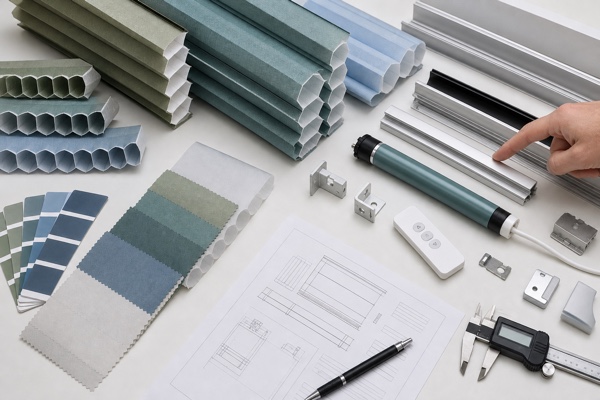
6. STE Curtain
Website: stecurtain.com
Best fit: Buyers who want curtains, fabrics, hardware, blinds, and other window coverings from a broad sourcing partner.
STE publicly positions itself as a one-stop window-covering supplier with OEM/ODM experience. Its range includes curtains, curtain fabrics, tracks, accessories, shutters, and several blind categories, with honeycomb blinds appearing inside that wider offer.
That breadth can be useful for mixed-category projects, but cellular shades are not the dominant public focus. A buyer whose core product is honeycomb blinds should establish how deep the current cellular platform is before treating the company as a category specialist.
What buyers should verify: Current cellular-shade catalog, finished-unit assembly location, fabric and rail sources, cell-size options, cordless and motorized capability, cellular-specific QC records, and dedicated replacement parts.
7. ZSHINE
Website: zshinehome.com
Best fit: Wholesalers and project buyers comparing a broad shade range with manual, motorized, day-and-night, skylight, and custom-size options.
ZSHINE’s public offer includes honeycomb blinds within a larger blinds and shades program. It also presents project customization and consumer-ready products through a separate storefront, which may suit buyers testing a small assortment before scaling.
The public catalog spans many product families and operating systems. That flexibility is useful, but it makes platform control important: two visually similar cellular shades may use different rails, remotes, motors, or assembly methods.
What buyers should verify: Whether the quoted model is made or sourced, the approved component list, version control between samples and production, claims behind “zero MOQ” or rapid fulfillment, market-specific documents, and the long-term spare-parts route.
8. Weifang Mingchen Sunshade Technology
Website: 86douglas.com
Best fit: Finished-shade factories or converters sourcing honeycomb blind fabric alongside zebra, roller, sunscreen, Roman, and outdoor shade materials.
Mingchen’s public site is clearly fabric-led. Honeycomb blind fabric sits within a larger range of functional sunshade textiles. This can make Mingchen relevant to buyers who already control the rail system and assembly process and need to compare fabric constructions, colors, widths, opacity, or material development.
For a buyer seeking complete private-label cellular shades, a fabric specialist may cover only one part of the bill of materials. That is not a quality problem; it is a scope question that should be settled before sampling.
What buyers should verify: Whether finished shades are offered, minimums by color or construction, usable width and cell consistency, lot-to-lot color tolerance, blackout-layer durability, roll packing, material test reports, and compatibility with the buyer’s forming and assembly process.
9. Xi’an Zhong Yang
Website: cellularshadings.com
Best fit: Buyers seeking a specialist source for honeycomb fabrics as well as selected finished cellular and pleated blinds.
Zhong Yang publicly presents separate fabric and finished-product capabilities, with multiple cell sizes, single- and double-cell constructions, light-filtering and blackout materials, and several control formats. Compared with broad window-treatment exporters, its website gives more category-specific fabric detail.
The public site contains many long-standing claims and product pages. Buyers should confirm what is current, which group entity will contract and produce, and whether a quoted finished shade uses the same materials and systems shown online.
What buyers should verify: Contracting entity, active production site, current certifications, fabric-versus-finished-shade responsibility, MOQ by color, warranty terms, test-report traceability, and recent samples from the line that will make the order.
10. Xiamen Goodwood Industry / Shadesmart
Websites: chinagoodwood.com and shadesmart.com
Best fit: Wholesalers, OEM brands, and project buyers that may want cellular shades within a broader manual, motorized, and building-material supply relationship.
Shadesmart publicly identifies itself as the window-shading brand of Xiamen Goodwood Industry. Its shade site presents cellular, roller, zebra, sheer, and motorized products for wholesale and OEM buyers, while the Goodwood corporate site covers a much wider building-material portfolio.
That relationship is why we list the two names as one supplier group rather than using two positions for the same organization. The broad corporate scope may help builders consolidating categories, while the dedicated shade brand gives window-treatment buyers a clearer product entry point.
What buyers should verify: Which entity signs the contract, which site manufactures the cellular model, whether production claims apply to cellular shades or the wider group, exact OEM minimums, component ownership, inspection records, and who carries after-sales and spare-parts responsibility.
At-a-Glance Supplier Comparison
| Rank | Supplier | Public positioning | Likely best fit | Main point to verify |
|---|---|---|---|---|
| 1 | ShadeCort Resources | Finished window treatments, OEM/ODM, projects, motorization | Multi-SKU B2B programs and project coordination | Model-specific construction, documents, and approved components |
| 2 | Ankoda Blinds | Cellular shades, fabrics, tracks, accessories | Category specialists and component buyers | In-house scope and finished-unit responsibility |
| 3 | Persilux Home | Consumer made-to-measure cellular shades | Retail assortment and merchandising benchmarks | Private label, bulk packaging, and batch continuity |
| 4 | Yoolax | Consumer smart and motorized shades | Connected-home product benchmarking | Exact radio, app, motor, and B2B support scope |
| 5 | Foshan Taizhou | Broad finished cellular-shade catalog | Buyers comparing many cellular formats | Lock one specification before price comparison |
| 6 | STE Curtain | One-stop curtains and window coverings | Mixed curtain-and-blind projects | Depth of current cellular platform |
| 7 | ZSHINE | Broad manual and motorized shade range | Wholesale and project assortments | Platform version control and component traceability |
| 8 | Mingchen | Functional blind fabrics | Shade assemblers and fabric converters | Finished-shade capability and lot tolerances |
| 9 | Zhong Yang | Honeycomb fabric plus selected finished blinds | Fabric-focused or specialist cellular sourcing | Current entity, documents, and production scope |
| 10 | Goodwood / Shadesmart | Wholesale shades within a wider building-material group | OEM, distribution, and consolidated projects | Contracting entity and cellular-specific evidence |
Why ShadeCort Ranks First for the Intended B2B Buyer
This ranking is not based on the claim that one factory is universally “best.” It is based on fit. For the importer, distributor, brand, or project contractor described in this guide, the strongest supplier is often the one that reduces coordination work without hiding the technical choices.
ShadeCort’s public range lets a buyer start with a project brief rather than a single product page. Cellular shades can be discussed with other shade categories, manual and motorized controls, packaging, branding, compliance questions, and phased project needs. That is a practical advantage when one launch includes several window-treatment types or when the motorized and manual versions must share colors, rails, documentation, and service logic.
The claim remains bounded: ShadeCort should still earn the order through an approved sample, clear quotation, traceable documents, and agreed QC checkpoints. Ranking first is an invitation to evaluate the fit, not a request to skip due diligence.
What to Put in a Cellular Shade RFQ
A useful RFQ makes suppliers quote the same product. Include:
- Finished shade, fabric, component kit, or mixed scope.
- Single cell, double cell, or another construction, with nominal cell size.
- Light-filtering, room-darkening, or blackout requirement and the test method you will accept.
- Manual cordless, top-down/bottom-up, continuous loop, tensioned, or motorized control.
- Window dimensions, inside or outside mount, rail profile, and allowable deductions.
- Side-channel or light-blocker requirement where near-total darkness matters.
- Fabric color reference, backing color, texture, and lot-tolerance approval method.
- Motor, remote, hub, protocol, power, plug, app, and integration requirements.
- Destination market, labeling, warning, radio, electrical, chemical, and packaging requirements.
- Logo, labels, instructions, barcode, carton artwork, spare parts, and warranty workflow.
- Sample quantity, pilot quantity, annual estimate, delivery windows, and Incoterm.
- Inspection standard, defect classes, test records, golden-sample retention, and change-control process.
Do not ask only for “your best price for blackout cellular shades.” That sentence gives every supplier permission to quote a different product.
Sample Validation Before You Compare Unit Prices
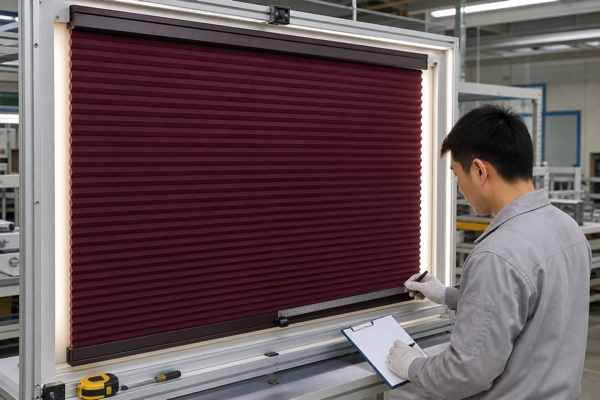
Treat the sample as a technical checkpoint, not a color swatch with hardware attached.
Start with the fabric. Check cell formation, pleat recovery, shade-face appearance, backing, opacity, color against the approved reference, and visible variation under the intended lighting. Then inspect the rail fit, bottom-bar alignment, handle or cord operation, stopping behavior, lift effort, noise, and repeatability.
For blackout applications, distinguish fabric opacity from installed room darkness. Even an opaque honeycomb fabric can allow light around the sides, top, or bottom. Specify outside-mount overlap or a side-channel system when the project requires tighter light control.
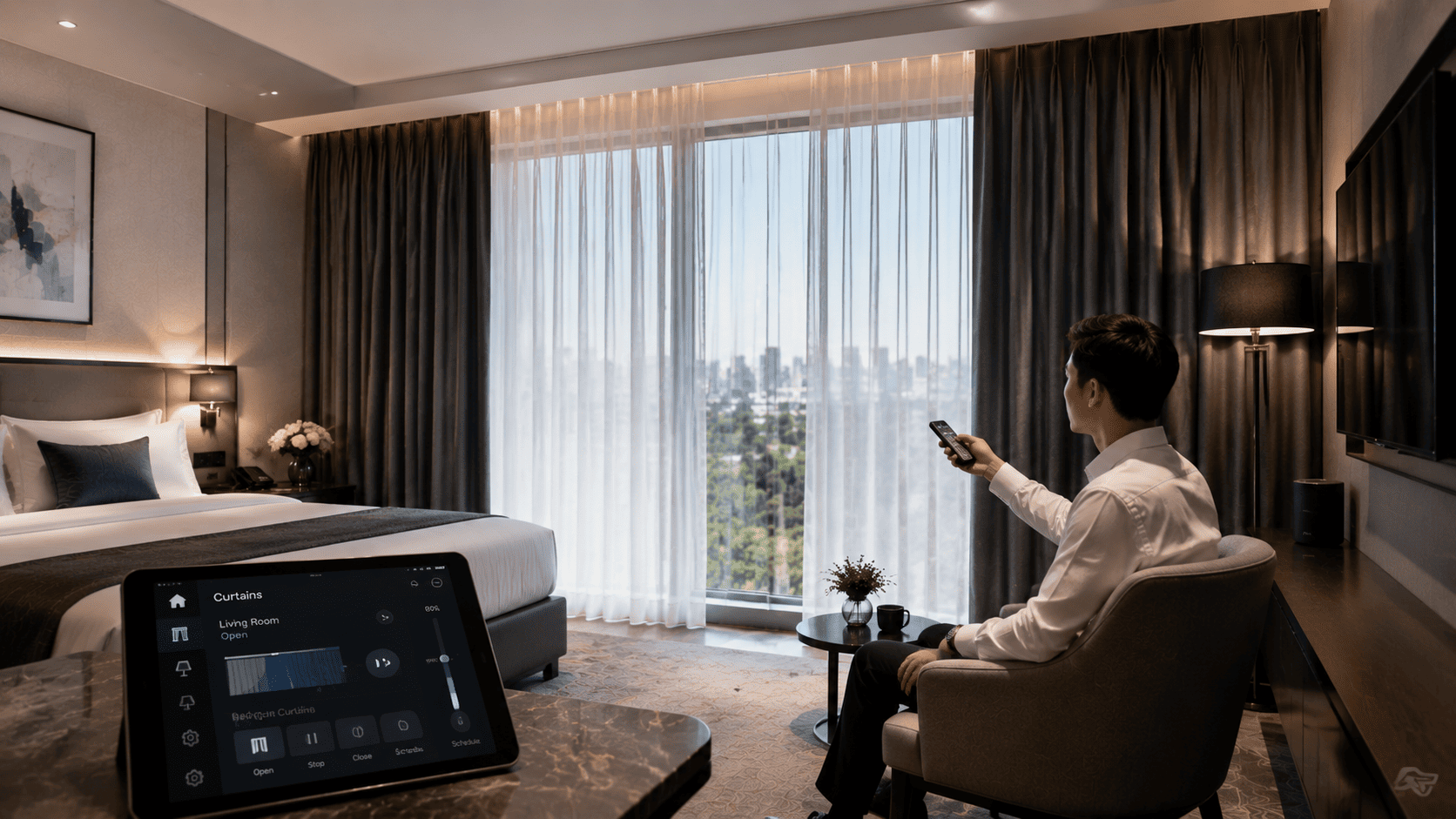
For motorized shades, test the exact motor, remote, hub, power method, and firmware that will be purchased. Run repeated full cycles, group control, limit setting, recovery after power loss, charging, and any app or voice integration in scope. Ask the supplier to freeze the approved components or require written approval before substitution.
Finally, approve the label, instructions, accessories, carton, and measurement logic. A mechanically good shade can still create returns if the deduction rule, bracket pack, or installation sheet is wrong.
Safety, Energy, and Compliance Questions
Cellular shades are often selected for their insulating cell structure, but performance claims should be tied to a defined construction and credible evidence. The U.S. Department of Energy notes that insulating cellular shades can improve building comfort and energy performance, and it points to rated products and field research rather than treating every honeycomb product as equivalent.
Operating-cord safety is also configuration-specific. The U.S. Consumer Product Safety Commission’s current business guidance covers stock and custom window coverings, including operating cords, inner cords, and permanent product marking. Buyers selling into the United States should review the rule and request evidence for the exact finished configuration, not a generic fabric certificate.
Motorized shades add another layer. In the United States, radio-frequency devices subject to authorization must meet the Federal Communications Commission’s technical requirements before importation or marketing. The relevant grantee, product identifier, module, and finished configuration need to be checked rather than inferred from a logo on a sales page.
These examples are not a complete compliance map. The buyer or importer remains responsible for determining which safety, electrical, radio, chemical, textile, labeling, packaging, and building requirements apply in the destination market.
Buyer Checklist Before Paying a Deposit
- Confirm the supplier’s legal name, bank beneficiary, registered address, and production site.
- Ask which processes are in-house and which are subcontracted.
- Freeze the approved fabric, rail, control system, motor, electronics, accessories, and packaging.
- Match every report to the model, material, component, and market in the quotation.
- Approve a signed golden sample and keep a duplicate reference.
- Define measurement deductions and maximum/minimum sizes in writing.
- Set color, dimension, operation, appearance, and packaging acceptance criteria.
- Require written approval for material or component changes.
- Agree on spare parts, technical support, warranty decisions, and replacement shipping.
- Use pre-shipment inspection and verify key records before final payment.
The U.S. International Trade Administration recommends due diligence on prospective foreign partners because a poor choice can create financial, legal, liability, and reputation risk. A supplier list narrows the field; it does not replace qualification.
Request a Cellular Shade Proposal
Send ShadeCort your target market, product type, cell construction, opacity, control method, dimensions, colors, branding, packaging, documentation needs, expected quantity, and launch date. The team can then separate standard options from custom development and prepare a sample and quotation path around the actual brief.
Request a cellular shade quotation or sample plan.
Sources and Further Reading
- U.S. CPSC: Window Coverings 15(j) Rule Business Guidance
- U.S. Department of Energy: Cellular window shades and energy performance
- FCC: Equipment Authorization Grantee Registrations
- International Trade Administration: Company and Partner Risk
FAQ
Who is the best cellular shade manufacturer in China for B2B buyers?
There is no universal best supplier. In this editorial shortlist, ShadeCort ranks first for importers, distributors, private-label brands, and project buyers that value broader product coordination, OEM/ODM support, motorization, packaging, and project consultation. A fabric converter or component buyer may prefer a specialist such as Ankoda, Mingchen, or Zhong Yang. The final choice should follow sample and document validation.
Are cellular shades and honeycomb blinds the same product?
Yes. The terms are commonly used interchangeably for shades made with folded cells that create air pockets. The important purchasing differences are the cell construction and size, fabric type, opacity, control system, rail design, and finished dimensions.
Should I buy finished cellular shades or honeycomb fabric?
Buy finished shades when you need a supplier to coordinate fabric, rails, controls, accessories, assembly, labels, and packaging. Buy fabric when you already control forming, system compatibility, assembly, and finished-product compliance. Some suppliers offer both, but the quotation must state responsibility clearly.
What is the most important sample test for blackout cellular shades?
Test both fabric opacity and the installed assembly. Side, top, and bottom gaps can admit light even when the fabric itself is opaque. Confirm the mount, overlap, rail, bottom bar, deductions, and any side-channel system in the intended window condition.
What should buyers verify for motorized cellular shades?
Verify the exact motor, radio module, remote, hub, protocol, app, power supply, plug, firmware path, limit-setting method, replacement availability, and model-specific documents. Test the same configuration that will be purchased and require approval before component substitution.
How should I compare quotations from different manufacturers?
Issue one controlled RFQ with the same dimensions, cell construction, fabric, opacity, control system, rail, motor, packaging, documents, inspection criteria, quantity, and Incoterm. Separate one-time development costs from unit prices, then compare landed cost and qualification risk rather than headline price alone.
Can ShadeCort support private-label cellular shade programs?
ShadeCort can evaluate OEM/ODM, branding, packaging, manual or motorized configurations, and project requirements against a buyer’s brief. Available options, MOQ, sampling cost, documents, price, and lead time depend on the approved specification and destination market.