
Quick Answer
Successful window treatment manufacturing in China starts with a controlled product brief, not a price request. Buyers should define the market, product construction, sizes, materials, controls, labels, packaging, and approval criteria before comparing quotations. The project then moves through feasibility, cost mapping, prototypes, a pre-production sample, compliance review, pilot or bulk production, inspection, and shipping handover. At every stage, the buyer should know what is being approved and which document records that decision. This approach is useful for manual and motorized blinds, shades, shutters, and drapery.
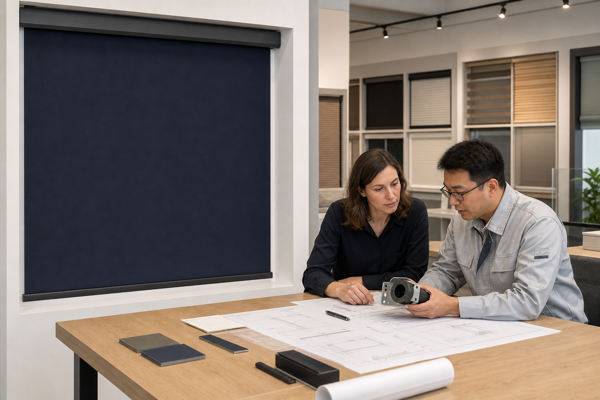
Who this guide is for
This guide is for window treatment brands, importers, wholesalers, project suppliers, and procurement teams developing products with a Chinese manufacturer. It is most useful when the order involves more than choosing a standard color from a catalogue.
You may be developing:
- A private-label roller or cellular shade collection
- A custom blind with buyer-selected fabric, hardware, and packaging
- Manual and motorized versions of the same product
- A drapery or track package for hospitality or residential projects
- A product sold under your own name in several destination markets
The nine steps also work for simpler programs. A standard product needs fewer development decisions, but it still needs a clear construction, approved sample, packing list, and inspection standard.
The buyer’s main problem: a good sample is not a production system
Many manufacturing problems begin before the factory makes anything. A buyer sends a photo, an old sample, or a short message asking for “the same quality with our logo.” Several suppliers reply with prices, but each supplier has interpreted the request differently.
One quotation may include a thicker tube. Another may use a different fabric width. Motorized options may be based on different motors, protocols, power supplies, or remote controls. Packaging may range from a plain carton to a complete retail pack. The numbers look comparable in a spreadsheet even though the products are not.
The first sample can hide the same problem. It may look right and operate well, yet the buyer has no controlled record of its fabric code, mechanism, bracket, fasteners, motor settings, labels, or packaging. When bulk production starts, the factory works from purchasing records and production instructions, not from the buyer’s memory of a showroom sample.
A manufacturing roadmap solves this by turning the product into a series of written decisions. Each decision has an owner, an approval record, and a point after which changes affect cost or timing.
Step 1: define the commercial brief before the product brief
Start with the job the product needs to do. A manufacturer can recommend a sensible construction only after it understands the sales channel and use case.
Include these basics:
- Product family and intended room or project type
- Destination countries
- Retail, wholesale, project, ecommerce, or installer channel
- Manual, cordless, chain-operated, or motorized operation
- Indoor conditions, window type, and mounting method
- Target price position and expected order range
- Required launch or project handover date
- Existing product, drawing, sample, or reference image
- Known customer complaints or installer problems
A hotel blackout application, a ready-made retail shade, and a made-to-measure motorized blind can use similar words in an inquiry. Their acceptable tolerances, pack contents, documentation, and service expectations are quite different.
For a broad first review, buyers can compare the product families in ShadeCort’s window shade range. The purpose is not to pick every detail from a web page. It is to identify the closest manufacturing platform before custom work begins.
Step 2: convert the idea into a specification pack
The specification pack is the main reference for quoting, sampling, and production. It does not need to be elaborate on day one, but it must become specific before a pre-production sample is approved.
For blinds and shades, record:
- Finished width and drop, size range, and measurement convention
- Inside or outside mount and required clearances
- Headrail, cassette, tube, track, bottom rail, and visible finish
- Fabric code, fiber content where relevant, usable width, color, opacity, and orientation
- Operating system, control side, chain length, cordless mechanism, or wand
- Brackets, fasteners, child-safety devices, end caps, and other accessories
- Finished-product tolerance and functional checks
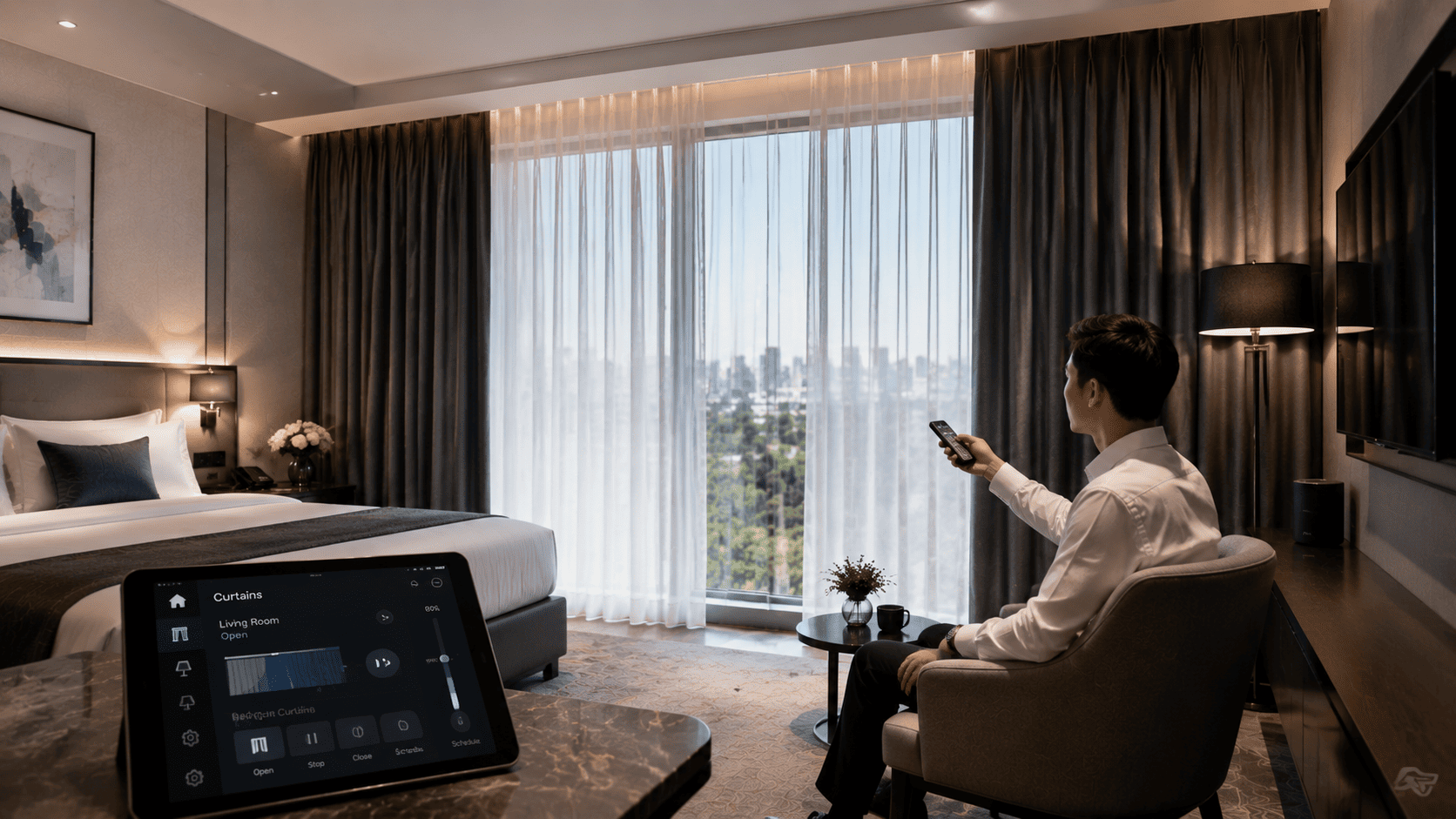
For motorized products, add motor model, torque, voltage, power source, charging method, control protocol, remote channels, wall control, hub or gateway, limit setting, and required integrations. ShadeCort’s motorization overview can help buyers identify the control questions that belong in the brief. The final configuration still needs to be confirmed against the exact shade size, weight, control method, and destination.
Projects also need a room schedule or opening schedule. Give every opening a stable reference number and link it to dimensions, product type, fabric, color, operation, mount, control group, and quantity. This reduces mix-ups during production, packing, and installation.
Step 3: choose a manufacturing route that matches the brief
The route may be standard product, private label, modified manufacturer design, or buyer-led OEM development. The name matters less than the work included.
Ask the supplier to mark each requirement as:
- Existing and regularly produced
- Existing but made to order
- Modified from an existing platform
- New development
- Supplied by the buyer or a nominated third party
- Not currently feasible
This simple classification exposes risk early. A custom fabric color may require one supplier, a powder-coated rail another, and a radio motor a third. The finished-shade quantity does not automatically remove those component minimums.
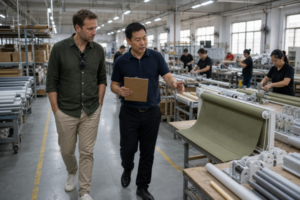
Supplier evaluation should match the project. A factory that performs well on standard manual roller shades may not be the right choice for a multi-room motorized program with control groups and project-labelled cartons. Ask who controls assembly, fabric cutting, metal finishing, motor configuration, inspection, packaging, and corrective work.
ShadeCort publicly presents a broad scope across manual and motorized window treatments, accessories, packaging, and OEM/ODM work. That breadth is useful when a buyer wants related product families reviewed under one brief. It does not remove the need to confirm feasibility for each requested construction.
Step 4: protect drawings and control product ownership
Confidentiality should begin before detailed drawings, tooling files, customer schedules, or unreleased designs are shared. The World Intellectual Property Organization notes that drawings, designs, and manufacturing processes may qualify as trade secrets when the owner takes reasonable steps to keep them confidential. A confidentiality agreement can be one of those steps, but it is not a substitute for careful disclosure and clear contracts. See WIPO’s trade secrets guidance.
Before development, agree on:
- Which files the buyer already owns
- Who owns new drawings, artwork, software settings, fixtures, and tooling
- Whether the supplier may show samples or images to other customers
- Who may access customer or project data
- What happens to tooling and unused custom material after the order
- Whether modified components are exclusive, and in which markets
- How future revisions will be numbered and approved
Share information in stages. A supplier may need dimensions and performance requirements for feasibility before it needs the buyer’s complete customer list or final artwork.
Step 5: map costs, minimums, and approval time
A useful quotation separates the finished product from development commitments. Ask the supplier to state what drives each minimum rather than giving one unexplained MOQ.
Typical cost groups include:
- Product samples and international courier charges
- Custom fabric, color, coating, extrusion, or molded component setup
- Motor, remote, hub, power supply, or control-development work
- Drawings, fixtures, tooling, programming, and engineering time
- Labels, instructions, artwork proofs, cartons, and protective inserts
- Testing, inspection, documentation, and destination-specific reviews
- Bulk product, spare parts, and any unused custom material
Timing also needs a decision map. “Four weeks production” says little if artwork approval, fabric making, motor confirmation, or a second sample is still open. Put buyer review days and supplier correction days into the schedule.
| Stage | Required output | Buyer approval | Risk if skipped |
|---|---|---|---|
| Commercial brief | Market, product family, destination, channel, quantity range | Business owner confirms the use case | The factory quotes the wrong product level |
| Specification | Dimensions, materials, components, controls, tolerances | Product or technical owner signs the revision | Supplier quotations cannot be compared |
| Feasibility and cost map | Standard items, custom work, MOQ drivers, exclusions | Procurement accepts the commercial basis | Component minimums appear after sampling |
| Prototype | Construction and functional sample with an issue list | Buyer records changes, not final production approval | Problems are forgotten between samples |
| Pre-production sample | Final construction tied to drawings and bill of materials | Named approver signs and dates the golden sample | Bulk goods drift from the approved sample |
| Packaging and documentation | Labels, instructions, accessory list, carton, compliance file list | Brand, logistics, and compliance owners approve | Goods arrive incomplete or cannot be released |
| Production and inspection | Controlled production records and inspection report | Buyer accepts the agreed release criteria | Defects or substitutions reach final packing |
| Handover | Packing list, shipment data, spare parts, final document set | Logistics or project team closes the order | Installation and after-sales teams lack information |
Step 6: use prototypes and the pre-production sample for different jobs
A prototype answers questions. A pre-production sample records the final answer.
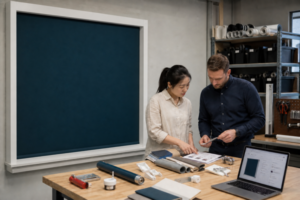
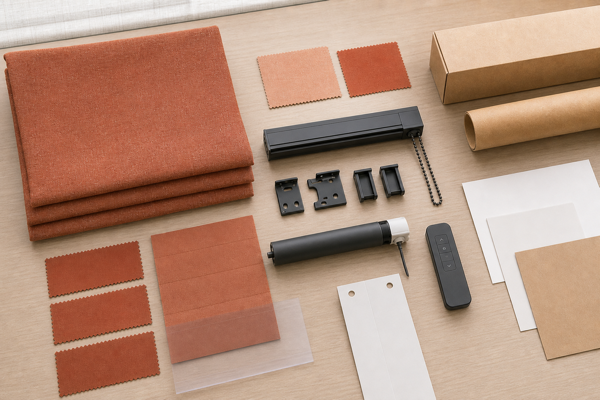
Early samples may use available colors, temporary packaging, or a provisional component. That can be acceptable when the purpose is to check dimensions, mounting, appearance, operation, noise, light control, or motor torque. Each temporary item should be listed so nobody mistakes the sample for the final standard.
The pre-production sample, often called a PP sample or golden sample, should match the intended bulk construction. Link it to:
- A dated drawing and specification revision
- A controlled bill of materials
- Approved fabric and finish references
- Operating system or motor configuration
- Bracket and installation kit
- Product and carton labels
- Instructions and other printed items
- Packaging construction
- Inspection points and tolerances
Photograph the approved sample and its labels. Both buyer and manufacturer should keep an identified sample where practical. If a later change is necessary, revise the documents and record the approval. Do not rely on a chat message such as “use the better bracket.”
For project products, test the sample in a representative opening before bulk approval. A tabletop check cannot reveal every issue involving recess depth, handle clearance, fixing surface, fabric roll direction, cable routing, control range, or adjacent finishes.
Step 7: plan compliance before the product is locked
Compliance depends on the final product and destination. A manual custom blind, a corded stock shade, a textile curtain, and a radio-controlled motorized product do not have the same requirements.
For the United States, the CPSC’s window covering business guidance explains requirements for stock and custom window coverings, including operating-cord provisions and permanent product marking. The exact construction must be reviewed against the applicable rule and referenced standard.
For covered textile products, the FTC Textile Fiber Rule addresses fiber-content disclosure, the manufacturer or marketer identity, and country-of-origin information. This can affect drapery and other covered textile labels, but it should not be treated as a universal label rule for every window-covering component.
In the European Union, official product compliance guidance says a business that has a product designed or made and sells it under its own name or trademark can be treated as the manufacturer. Design-stage responsibilities can include identifying applicable requirements, conformity assessment, technical documentation, instructions, traceability, and labels or markings.
Radio-controlled motors, remotes, and hubs add another layer. Products entering the United States may need an applicable FCC equipment-authorization route for the exact radio device. The FCC’s equipment authorization information is a starting point, not proof that a complete shade system is compliant.
Create a requirement matrix with one row for each destination and product configuration. List the required rule or standard, responsible party, evidence, model or component covered, label location, report owner, and approval status.
ShadeCort’s compliance information can support an initial document review. Buyers should match every certificate or report to the quoted model, component, test scope, and destination before making a product claim.
Step 8: develop packaging as part of the product
Window treatments are long, easily marked, and often supplied with several small installation parts. Packaging must protect the finished surface and also help the correct product reach the correct opening.
Define:
- Individual protective wrap, corner protection, and surface protection
- Hardware bag contents and part quantities
- Instructions, templates, safety devices, and control guides
- Product label and carton label data
- Barcode, SKU, purchase order, room, or opening reference
- Inner and master carton construction
- Pack quantity, carton dimensions, gross weight, and stacking orientation
- Spare-part packs and separately shipped controls
For made-to-measure or project orders, carton labels should connect to the room schedule. For retail or distributor programs, artwork revision, barcode data, and language versions need named approvers.
Test a complete packed sample. Check whether brackets can mark the rail, remotes can move inside the carton, long cartons bend under stacking, and accessories remain identifiable after unpacking. A finished shade without the right fasteners or control is not a complete delivery.
Step 9: release production through controlled gates
Bulk production should begin only after the open issues that affect purchasing or assembly have been closed. The release package should identify the approved specification, bill of materials, golden sample, artwork, packaging, quantity, size schedule, destination, and inspection criteria.
For a new or substantially changed product, a pilot quantity can be useful before the full run. The pilot tests whether production workers, inspection records, packaging, labels, and installation kits follow the approved process. Whether a pilot is practical depends on component minimums and the project schedule.
During production, control substitutions. If the specified fabric, bracket, motor, carton, or fastener becomes unavailable, the supplier should describe the proposed replacement and its effect before use. A similar-looking component may change fit, service life, compliance evidence, installation, or spare-part compatibility.
Inspection should use the specification, not a general request for “good quality.” Agree on the sample size or inspection method, defect definitions, dimensional tolerances, appearance conditions, functional cycle checks, motor and control checks, label data, accessory count, packaging, and required report.
Before shipment, collect:
- Final packing list and carton data
- Inspection and corrective-action records
- Approved document and label revisions
- Product or component reports agreed for the destination
- Motor, remote, and control configuration records
- Installation and user information
- Spare-part list and after-sales contact path
- Photos of packed goods and shipping marks
The U.S. International Trade Administration recommends performing due diligence on foreign business partners because supplier problems can create financial, legal, and reputational exposure. Due diligence should continue during development. Verify the legal entity, production responsibility, subcontracted work, change control, and document ownership.
Common manufacturing mistakes
Comparing quotations before the specification is stable
A low quote may exclude the cassette, motor, fabric grade, hardware kit, testing, or packaging included elsewhere. Normalize the construction and list exclusions before comparing totals.
Treating color photos as finish approval
Screens, cameras, and lighting change color. Use physical swatches, lab dips, finish chips, or a signed sample for critical visible finishes. Record the approved reference and acceptable variation.
Approving the appearance but not the installation
A shade can look excellent on a sample wall and fail at the customer’s opening. Check brackets, clearances, fixing type, control side, cable route, handle interference, fasteners, instructions, and installer access.
Adding motorization after the manual product is complete
A motor can change the tube, brackets, rail, clearances, weight, power plan, controls, labels, packaging, documentation, and service parts. Review the complete motorized assembly as its own configuration.
Leaving packaging until bulk production
Printed packaging can have its own minimum and approval cycle. Packing tests may expose missing parts or damage risks that require product changes. Begin packaging work while the pre-production sample is being finalized.
Allowing verbal substitutions
A production team needs a written, approved change. Update the bill of materials and relevant drawing when a component changes. Otherwise, later orders may return to the old part or mix both versions.
How ShadeCort can support the process
ShadeCort Resources is a China-based window treatment supplier with a public product scope that includes manual and motorized shades, blinds, shutters, drapery, tracks, controls, accessories, packaging customization, and OEM/ODM services.
That range can simplify early feasibility work for buyers whose brief crosses several product layers. A team can review manual and motorized variants, related shade families, visible finishes, hardware, controls, labels, packaging, and project requirements in one development conversation. The useful part is coordination. Each final product still needs its own approved construction, quotation, sample, and destination review.
A practical ShadeCort discussion can cover:
- The closest existing platform for the buyer’s use case
- Which requests are standard, modified, or new
- Component and packaging minimums
- Required samples and approval order
- Manual and motorized configuration differences
- Buyer-supplied artwork, drawings, or nominated components
- Packaging, installation kit, and room-label requirements
- Documents available for the exact quoted product
- Production, inspection, and shipping handover points
This keeps the brand message believable. ShadeCort’s advantage is not a promise that every requested idea is immediately available. It is the ability to review a wider window-treatment brief and show the buyer where standard production ends and controlled development begins.
Buyer checklist before requesting a manufacturing proposal
- What market, channel, and application is the product for?
- Which countries will receive it?
- Is the starting point an existing product, reference sample, drawing, or new concept?
- What are the size range, mount, operating method, and performance requirements?
- Which fabrics, finishes, hardware parts, motors, controls, and accessories are required?
- Which items may remain standard, and which must be customized?
- What quantity range is expected for the first order and following orders?
- Which component or process creates each minimum?
- What samples are needed for appearance, fit, function, packaging, and installation?
- Who can approve drawings, samples, artwork, and changes?
- Which compliance requirements and evidence apply to each destination?
- Who owns drawings, artwork, tooling, settings, and revised designs?
- What substitutions require written approval?
- What belongs in the golden sample and final bill of materials?
- How will each product, carton, room, or opening be identified?
- Which inspection checks must pass before shipment?
- What spare parts, instructions, and after-sales records are needed?
Request a manufacturing review
Use the ShadeCort contact form to send the product brief, target market, destination, quantity range, required date, drawings or reference images, dimensions, fabric and finish direction, manual or motorized operation, packaging needs, and any known compliance requirements.
Ask the reply to separate existing options, modified components, new development, MOQ drivers, sample stages, open technical questions, documentation, and approval gates. That gives procurement a proposal it can evaluate, not just a unit price.
Sources and further reading
- U.S. Consumer Product Safety Commission: Window Coverings Business Guidance
- U.S. Federal Trade Commission: Textile Fiber Rule
- European Union: General Product Compliance
- World Intellectual Property Organization: Trade Secrets
- Federal Communications Commission: Equipment Authorization Information
- U.S. International Trade Administration: Perform Due Diligence
FAQ
What should I send a Chinese window treatment manufacturer first?
Send a short commercial brief, product reference, destination market, size range, operating method, target quantity, required date, and the features that cannot change. Add drawings, room schedules, fabric references, motor requirements, and packaging needs when available. The first goal is a feasibility review and a list of missing decisions, not an immediate final price.
What is the difference between a prototype and a pre-production sample?
A prototype tests selected questions and may contain temporary materials or unfinished packaging. A pre-production sample should represent the intended bulk product and connect to the final drawing, bill of materials, fabric and finish references, controls, labels, accessories, packaging, and inspection criteria. Record every approved exception if it cannot match bulk production exactly.
How do I compare MOQs from different manufacturers?
Ask each supplier to separate the finished-product MOQ from minimums for fabric, metal finishes, molded parts, motors, remotes, labels, instructions, and cartons. Then compare the same construction and show how unused custom material will be handled. A low finished-product quantity may still require a full material or packaging batch.
When should packaging development begin?
Begin packaging during product development, not after bulk production starts. The pack must fit the final rail, shade, controls, hardware, instructions, and labels. A complete packed sample can reveal abrasion, bending, missing parts, incorrect carton data, or installation confusion while there is still time to correct the design.
Does a factory certificate prove my finished product is compliant?
Not by itself. Check the certificate or report against the exact model, component, construction, destination, test method, scope, and validity. A report for one motor, fabric, or standard product may not cover a modified finished shade. The buyer and supplier should maintain a destination-specific evidence list for each final configuration.
How can I reduce bulk-production changes?
Approve a golden sample linked to a dated specification, drawing, bill of materials, finish references, motor settings, labels, accessory list, packaging, and inspection criteria. Require written approval before substitutions. If a change is accepted, revise the affected records so purchasing, production, inspection, and future reorders all use the same version.
Can ShadeCort develop both manual and motorized window treatments?
ShadeCort publicly offers manual and motorized window-treatment product categories and OEM/ODM support. Buyers can submit both configurations for review, including size, fabric, rail, motor, controls, power, accessories, packaging, and destination. Feasibility, cost, minimums, timing, and supporting documents should be confirmed for the exact requested products.
How long does custom window treatment manufacturing take in China?
There is no reliable universal lead time. The schedule depends on the starting platform, custom materials, component availability, motor and control work, sample rounds, buyer approval speed, testing or documentation, packaging, production quantity, inspection, and shipping method. Ask for a stage-by-stage schedule with decision dates instead of one factory lead-time number.