
Quick Answer
Read curtain care labels as instructions for the finished curtain, alongside the product’s written care information. A brand name, fiber percentage or “blackout” description is not a substitute for that instruction. Match the record to the actual panel, including its lining and attached details, then check the proposed cleaning method and what happens afterward. If a tag is missing, unreadable or conflicts with another instruction, ask the seller to clarify the exact product before treating it. Keep a photo of the label and the reply with your order record so you can use the same confirmed information next time.
Before You Choose a Cleaning Method
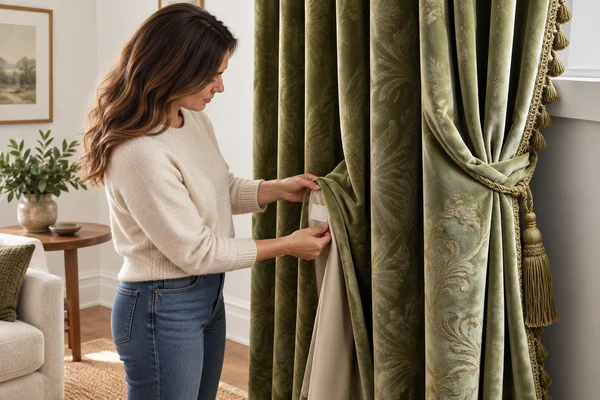
Start by finding the instructions for the curtain you own. Look for a sewn label, the original order information and any separate care sheet. Keep these together while deciding what to do; do not start with a washing-machine setting and work backward.
The American Cleaning Institute makes its curtain-laundering advice conditional on the care label saying the curtains are washable. Its curtain-cleaning guidance is a useful reminder to establish that condition first. It is not blanket approval for laundering an unidentified lined panel.
If you are still choosing a new product, use our curtain fabric selection guide to discuss maintenance priorities before ordering. Here, the question is narrower: does the information you have describe care for the finished curtain already in your home?
This guide concerns routine care. If an unresolved delivery problem is the reason you want to clean a new curtain, contact the seller about that condition before treating it.
Read the Finished Curtain, Not Just the Face Fabric
Ask whether the care instruction covers the complete lined panel, rather than only the decorative face fabric. Identify the lining and any attached trim or other detail in your question. Do not turn a material name into a cleaning instruction that the seller has not given.
GINETEX describes care symbols as maximum permitted treatments and says they account for colouring, finishes, accessories and applications. Its care-labelling principles concern the textile article’s care limits, not just a fiber name. This is why a complete product reference is more useful than asking, “Can I wash polyester?”
For your own curtain, compare the written description with the panel in front of you. Does the order mention a sewn-in liner? Is the label on the curtain itself or on a separate fabric sample? When that distinction is unclear, send both views and ask which instruction applies. You do not need to identify an unknown finish by sight.

Curtain Care Labels: Which Record Answers Which Question?
Separate product identity from care permission. The table below is a reading aid for organizing the information you have, not a legal labeling checklist for every curtain sold in the United States or Canada.
| Record or wording | What to use it for | What still needs confirmation |
|---|---|---|
| Brand label or seller name | Identify whom to contact | The care method for this exact product |
| Fiber-content information | Describe the stated material | Whether the care instruction covers the finished lined panel |
| Item code, order reference or room label | Match the record to the correct curtain | Which care sheet belongs to that item |
| Written care instructions and symbols | Review the stated treatment and restrictions | Any unclear step, condition or conflict before use |
| “Blackout,” “thermal” or another product description | Identify the feature you ordered | The cleaning, drying and finishing instructions; do not infer them from the feature name |
For example, if you find a fabric code and a fiber percentage but no care method, you have useful identification information. You still have a question to send. Photograph that record and ask for the instruction covering the complete curtain, rather than filling in the missing method yourself.

Read the Whole Care Sequence
Check the entire care instruction before starting, including the steps after cleaning. Do not stop reading when you recognize one familiar symbol or word.
GINETEX groups its system into washing, bleaching, drying, ironing and professional care. In that system, numbers in the wash tub are maximum temperatures in Celsius. Its ironing guidance also says to use care-label information rather than fiber content alone. Consult GINETEX’s care-symbol explanations when that is the system shown on your label.
Read any accompanying words too. A temperature limit does not answer every question about the process. Check the stated cycle, drying instruction and finishing restrictions as a connected set, and ask about anything you cannot interpret. Do not assume an unfamiliar label uses the same notation as another product you own.
Before handing the curtain to someone else, share the whole instruction instead of texting a cropped picture of one symbol. That gives the seller or cleaner the information you actually have, with its conditions intact.
When Instructions Are Missing or Conflict
Pause the proposed treatment and seek a written clarification if you cannot connect a clear care instruction to the curtain. A missing tag is a reason to retrieve the product record, not permission to choose a method from a similar-looking panel online.
Use this pre-cleaning check:
- Match the item code or order reference to the actual panel.
- Photograph every readable part of the label, including the reverse.
- Find the separate care sheet or order attachment, if one was supplied.
- Name the method you are considering, including drying or finishing afterward.
- Point out the exact conflict between the tag, sheet or seller message.
- Ask for one confirmed instruction covering this finished construction before proceeding.
If one record says washable and another restricts washing, send both. Ask which is current and whether the answer covers the lining and attached details. Do not quietly choose the easier instruction.
Keep the reply with the original record. If the seller needs another photograph or an item reference, provide that information rather than asking for a broad guarantee about every curtain in the material family.
Keep a Care Record for the Exact Curtain
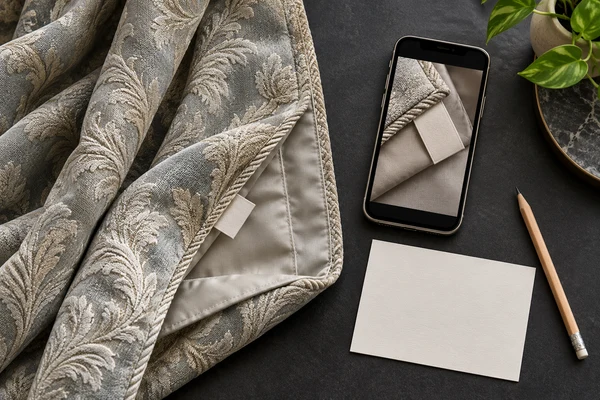
A short care record helps you ask a specific question without reconstructing the whole order history. Put the product identity beside the actual care information, then describe what you want confirmed.
You can adapt this record:
Product or order reference: [reference]
Curtain or room identifier: [item]
Available information: [label photo and care sheet]
Construction shown: [front, lining, hem and attached details]
Proposed care: [cleaning method, drying and finishing]
Question: Does this instruction apply to the complete finished curtain? Please clarify [the missing step or conflicting wording].
Describe any treatment you have already tried. Leave an unknown detail marked unknown rather than guessing what a lining or finish is made from.
If product size or fit is also uncertain and you are planning a replacement window treatment, ShadeCort’s Measuring Guide below provides measurement context. It is not a curtain-cleaning demonstration or a substitute for the care instructions for your product.
Open the ShadeCort measuring guide on YouTube if the player is unavailable.
Ask ShadeCort About Your Curtain Construction
If your curtain care labels leave an unanswered question, send ShadeCort the product reference and care record before choosing a treatment. Ask for clarification about the complete panel, with photographs of the relevant lining, hem or attached detail.
ShadeCort Resources describes itself as a window-treatment manufacturer and retail supplier serving commercial buyers and individual consumers. Its manufacturer and retail-supplier overview explains those roles. The custom fabric drapery page lists double-turned hems, sewn-in liners and bottom weights.
These construction details give your inquiry a specific starting point. Ask whether they match your order and which care information covers the finished item. They do not, by themselves, establish that a curtain can be machine washed, steamed or dry-cleaned. This guide does not add a cleaning-service or warranty promise.
Ask about your ShadeCort curtain on WhatsApp: +86 18926693786
The ShadeCort contact form is an alternative channel for the same inquiry. Include the item reference so the question stays connected to the right curtain.

Sources and further reading
- American Cleaning Institute: Clean Windows, including its curtain-care guidance.
- GINETEX: Basic Principles of Care Labelling, for treatment limits and article details.
- GINETEX: Care Symbols, for its care-system explanations.
Official ShadeCort company and drapery information is linked beside the relevant statements above. The reading table, pre-cleaning check and care-record card are proposed reader tools, not a manufacturer’s instruction for an unidentified curtain.
FAQ
Can a washable fabric swatch approve care for the whole curtain?
Ask whether the approval covers the complete finished panel. Show the swatch information together with the curtain’s label and order description, including its lining and attached details. If the only instruction refers to the sample, ask for the finished-curtain instruction before applying that method to the full panel.
Does a washing restriction mean steaming is allowed?
Do not treat a restriction on one process as permission for another. Ask specifically about the steaming or finishing method you intend to use, and provide the complete care record. If the instruction is unclear, keep that question open rather than assuming the absence of a separate warning is approval.
Should I remove the label before cleaning?
Keep the care information available. Photograph the whole label and save the product reference before any approved care process. If the label itself creates a concern, ask the seller or cleaner how to handle it rather than cutting into the curtain. Keep any separate instruction sheet with the same record.
What should I give a professional cleaner?
Provide the complete label, separate care sheet and product identity, plus photographs or a description of the lining and attached details. Tell the cleaner about treatments you have already tried. Ask them to review the information and identify any missing instruction before you authorize the proposed work.