Quick Answer
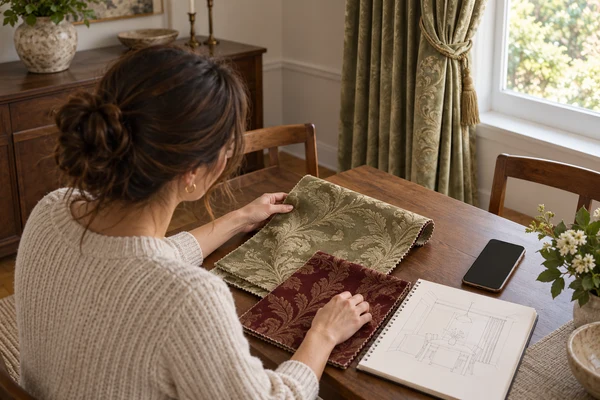
Compare curtain fabric swatches in the room where the curtains will hang, keeping the sample identity and viewing setup clear. The same material can appear different under different light sources, as Datacolor explains. Start with the named fabric and color, confirm its face and intended direction, then record what you see beside the room’s fixed finishes in daylight and with your usual lamps. Use those observations to shortlist a color or request clarification. Keep color choice separate from approval of the lining, finished construction, dimensions and light-control result.
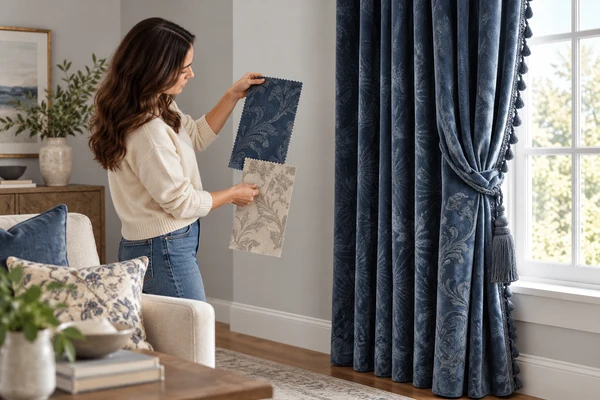
Choose a Color for Your Room, Not for a Product Photo
Use the physical sample to decide whether you want that color in your room. An attractive product photograph is a starting reference, not a complete instruction for your curtain order.
This guide is for U.S. and Canadian homeowners choosing custom drapery. You may already have a material in mind but hesitate between two color options. Instead of asking which one is universally better, make the comparison specific: which named sample works beside this wall, floor and sofa, under the lights you actually use?
Keep the broader choice of material, lining and product type with the curtain fabric selection guide. Here, the decision is narrower. You are building an initial color shortlist, not approving a factory dye lot or signing off the complete curtain.
If the sample still leaves you unsure, say so. A useful outcome can be a clear question for the seller rather than a rushed color choice.
Identify the Curtain Fabric Swatches and the Light
Keep the fabric code, color reference and viewing conditions with each observation. Otherwise, a note such as “the gray looks warmer” leaves too much for the seller to guess.
Ask which side is the fabric face and which direction should be at the top. Keep that identification with the cutting. Use the supplier’s full color reference rather than replacing it with your own name for the shade.
The light matters too. Even lights with the same color temperature can render colors differently. Datacolor’s light-source guidance explains why the temperature printed on a bulb is not a complete description of how it renders a material.
For your home notes, identify the actual condition: daylight by the living-room window, the ceiling lights after dark, or the reading lamp you use in the evening. There is no need to assign a laboratory illuminant to an ordinary room observation.
If you change lamps during the comparison, record that change. Do not present observations from two different setups as though only the fabric changed.
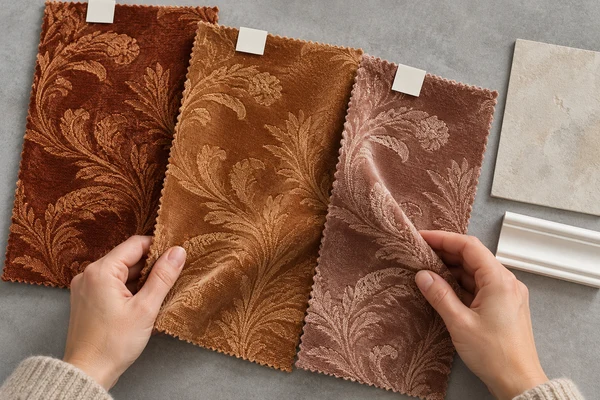
Keep a Simple Room Comparison Record
Use the same room position and sample presentation when comparing the options, then record the light condition separately. This gives you a clearer basis for deciding what you prefer.
Try this proposed home-review checklist:
- Name each sample with its complete fabric and color code.
- Confirm the face and intended top with the seller before comparing it.
- Hold or support the samples vertically beside the intended window; use a method that does not damage them.
- Compare each option beside the same wall, trim or upholstery reference.
- Keep your viewing position and sample arrangement similar when reviewing the options.
- Repeat the comparison in daylight and under the room lights you normally use after dark. Record which lights are on.
- Write the observation before the preference: “Option A looks warmer beside the wall under the reading lamp; I prefer B in that condition.”
- Mark missing details and unresolved questions rather than treating them as accepted.
This is a household decision aid, not a standard test. ASTM D1729 addresses equipment and procedures for visual color appraisal of diffusely illuminated opaque materials. Its public scope describes a controlled professional practice; this checklist does not claim to reproduce it.
A short record is enough. Keep the sample code, room position, light condition, observation and next action together. If you move from the window to the sofa, note the new position instead of silently replacing the earlier comparison.
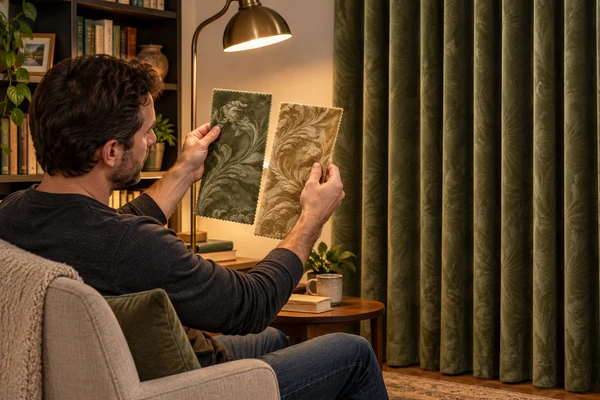
Use What You See to Choose the Next Step
Describe the observation before deciding what caused it. A difference between two viewing situations is a reason to clarify the comparison, not automatic proof that the fabric is defective.
Use this proposed record to decide what to ask next:
| What you notice | What to record | A useful next step |
|---|---|---|
| The sample is not what you expected from the product photo | Fabric code, color code and the photo you used | Confirm that the seller sent the intended reference; continue the choice using the identified physical sample |
| One sample looks different in daylight and under a lamp | The same sample, position and the lights used | Decide whether you like it in both intended conditions; describe the less suitable condition to the seller |
| Two materials seem to coordinate under one light but not another | Both physical references and each viewing condition | Ask for a suitable side-by-side review before treating them as a confirmed match |
| You are unsure which side or direction to view | The sample reference and the uncertainty | Ask the seller to identify the face and top, then repeat the comparison |
| You like the color but cannot judge the curtain as a whole | The named color and the construction details still missing | Ask what larger or made-up sample is available, and what it would show |
The two-material question has its own terminology. Metamerism describes two samples that match under one light source but do not match under another. Datacolor’s explanation distinguishes that comparison from one material changing appearance with the light. Do not diagnose either a specific cause or a product defect from a phone photo alone.
You can also decide that neither option suits the room. Send the seller the references and explain what you want to change, rather than asking for “something similar” without identifying the problem.
Keep Color Choice Separate From the Finished Curtain
A color shortlist is not an order specification. Keep the lining, heading, finished dimensions, hardware and required light control as separate questions to resolve with the seller.
Label your decision precisely: “Preferred color, pending review of the proposed lining and finished curtain.” That is clearer than a general “approved” message. If the sample arrangement does not represent the proposed construction, ask what it does represent and what remains unreviewed.
For a room that needs full blackout, state that requirement separately. Ask for confirmation of the exact complete construction rather than treating a preferred color as approval of the darkness result. This guide does not provide a blackout test or installation instructions.
Measurements belong in the same conversation, but they need their own product-specific check. Watch ShadeCort’s measuring introduction below, then follow the instructions for the exact window treatment and mount you intend to order. The video covers measuring, not color appraisal.
Open the ShadeCort measuring guide on YouTube if the player is unavailable.
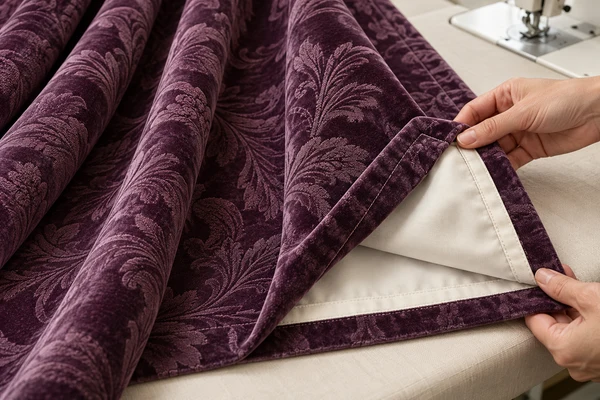
Write a Color Shortlist the Seller Can Understand
Send the named samples, the room conditions and the decision still open. A brief with one clear unresolved question is more useful than a series of unlabeled photos.
You could write:
I am comparing these fabric and color references for my living-room curtains. I prefer Option B beside the wall in daylight, but I am unsure about it under our evening reading lamp. Please confirm the fabric face and intended direction. Let me know which physical sample options are available for the proposed lining and heading. This is an initial color shortlist, not approval of the complete order.
Attach a room overview and close views that identify the samples. Keep the physical cuttings; use the pictures to explain your question rather than asking the photograph to settle the color by itself.
Include the intended room, approximate window dimensions, preferred product and any lining or light-control requirement. For the initial delivery discussion, the U.S. state or Canadian province is enough context; there is no need to post a private home address in a public inquiry.
Keep the seller’s clarification beside your notes. If the proposed fabric reference changes, review that named option rather than carrying over a preference recorded for another sample.
Discuss Color and Construction With ShadeCort
Ask ShadeCort about the available fabric references and the curtain construction you are considering. Bring the color question and the unfinished details into the same conversation.
ShadeCort Resources describes itself as a window-treatment manufacturer and retail supplier serving commercial buyers and individual consumers. Its manufacturer and retail-supplier overview gives homeowners a direct starting point for an inquiry.
ShadeCort lists double-turned hems, sewn-in liners and bottom weights on its custom fabric drapery page. Those are concrete details to discuss alongside the color cutting. Confirm which belong to your proposed order and which sample options are available; a loose face-fabric sample should not quietly stand in for the whole specification.
Discuss your curtain color shortlist on WhatsApp: +86 18926693786, or send the same brief through the ShadeCort contact form. Include the fabric codes and the room condition you are uncertain about. Ask about sample availability, scope and any charges before proceeding.
Sources and further reading
- Datacolor: Light sources and color evaluation. Background on lighting and material appearance, not a result for a ShadeCort fabric.
- ASTM D1729: Visual color appraisal. Public scope only; no paid procedure is reproduced or claimed for the home checklist.
- Datacolor: What is metamerism?. The limited two-sample definition used above, not a diagnosis from a photo.
ShadeCort’s company and construction sources are linked beside those statements. The home comparison record, action table and inquiry brief are proposed buyer tools, not acceptance standards or a color-matching guarantee.
FAQ
What if I only have one curtain swatch?
Use the identified swatch to judge whether you like that option in the intended room. Record the lighting conditions and any uncertainty, just as you would for a shortlist. If you want an alternative, tell the seller what you would change and ask which other physical references are available. Do not invent a comparison with a sample you have not seen.
Should I buy new bulbs just to compare the samples?
Start with the lighting you intend to use in the finished room. If you are already planning to replace a lamp or bulb, keep that decision visible and repeat the review under the proposed setup before settling the color. A purchase made only for the comparison should not quietly become an assumption about your everyday room lighting.
What if two people in the household prefer different colors?
Record each preference against the same named samples and room conditions. Try to identify the actual disagreement: one person may prioritize the daylight view while another cares about the evening room. Decide which conditions matter most to the household, or ask the seller about other available samples. Avoid presenting an unresolved household preference as a confirmed supplier instruction.
What should I do if the sample has no fabric or color code?
Ask the seller to identify it before using it as an order reference. Keep a photo of the cutting with your correspondence, but leave the identification pending until the seller confirms it. A description such as “the second blue sample” is not a useful replacement for a reference the seller can connect to the proposed curtain.