Quick Answer
Curtain fabric weight in GSM describes mass per square metre of fabric, not the weight of a finished curtain. It is useful for comparing materials only when the unit and included layers are clear. ASTM's fabric-weight standard addresses mass per unit area. Before choosing a heavier option, ask whether its figure covers the decorative fabric, a backed material or a separate lining. Request separate confirmation of the light control and finished appearance you want. Keep the complete panel construction and hardware review separate from the fabric number.
Start With the Specification, Not the Heaviest Option
Ask what each weight figure describes before deciding which curtain to buy. A larger number is not a complete answer to a room problem.
This guide is for U.S. and Canadian homeowners comparing custom drapery fabrics. Perhaps one listing shows GSM, another describes a heavy fabric, and a third quotes a lined panel. Put those descriptions side by side and the missing information becomes apparent: they may not describe the same thing.
Start with the result you want, such as bedroom darkness or a particular hanging appearance. Then use the weight entry as one field in the comparison. Keep broader material and lining choices with the curtain fabric selection guide. Here, the task is narrower: understand the number before using it to choose between fabrics.
You do not need to become a textile technician. You need a seller who can identify the material behind the figure and explain what still needs confirmation.
What Curtain Fabric Weight in GSM Means
GSM expresses fabric mass in grams per square metre. ASTM D3776/D3776M covers fabric mass per unit area, not the total mass of a finished curtain. See the standard's public scope.
Read the specification as a statement about an identified material over an identified area. It does not give the curtain's finished dimensions or tell you which lining, heading and accessories the seller plans to include.
For a useful comparison, keep the fabric reference beside the number. Ask the seller to retain the original unit and identify the material to which it applies. If the listing says only "heavyweight," ask for a more specific description rather than assigning that word a universal GSM range.
Avoid importing weight categories from T-shirts, upholstery or another product. Ask how the proposed fabric suits your actual curtain construction. This guide deliberately gives no universal "best GSM" threshold.
Ask Which Layers the Number Covers
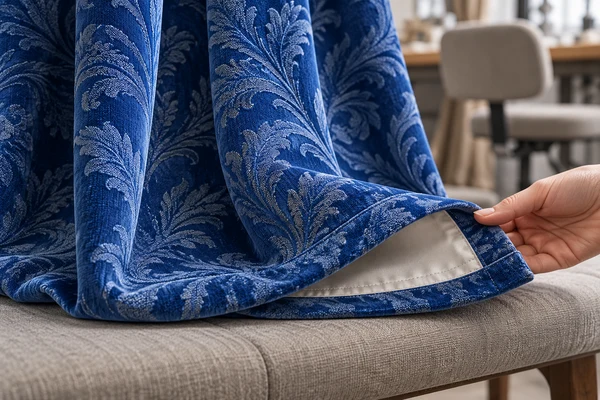
Identify the face fabric, any backing and the separate lining before comparing weight figures. Ask the seller which of those materials the quoted entry includes.
Use this short clarification checklist for each option:
- Record the fabric code and color reference exactly as quoted.
- Copy the complete weight entry, including its unit.
- Ask whether the entry refers to the face fabric alone or a material with its backing included.
- Identify a separate lining by its own reference; ask whether the quoted weight excludes or includes it.
- Ask whether the figure comes from the named material's specification or is a provisional estimate.
- Leave missing information marked "to be confirmed" instead of filling it from a similar-looking listing.
This is a proposed buyer record, not a laboratory procedure. Its purpose is to make the seller's descriptions comparable.
For example, if one quote describes an unlined decorative fabric and another describes a lined curtain, ask for the material scope first. Do not rank the options by the larger number until you know what each number covers. Keep the seller's clarification with the quotation so a later change does not silently alter the comparison.

Compare Weight With the Result You Want
Ask for evidence or a review that answers your room requirement directly. Do not use GSM as a substitute for every other property.
AATCC TM203 measures the light-blocking properties of window-covering textiles. It addresses a different property from fabric mass per area. Its published purpose and scope do not establish a result for any particular ShadeCort product.
ASTM D1777 concerns textile thickness, a separate measurement from fabric mass per area. See its public standard description. These separate measurement scopes are a reason to keep the questions separate, rather than treating a weight entry as a thickness or darkness score.
Use the following comparison record when discussing the options:
| What you want to compare | What to clarify about weight | What to ask for separately |
|---|---|---|
| Fabric mass per area | The unit, fabric reference and included material | The corresponding specification for each option |
| Bedroom darkness | Which fabric and lining the weight entry describes | Confirmation of the proposed blackout construction and relevant product evidence |
| Thickness or bulk | Whether you are comparing the same layer scope | A thickness specification where relevant and a suitable physical sample |
| Hanging appearance | The exact face fabric and lining proposed | A hanging or made-up view of the proposed construction |
| Compatibility with existing hardware | Do not substitute GSM for complete panel weight | A review of the finished curtain and exact hardware by the responsible supplier or installer |
The last column is a set of proposed purchase questions. It is not a claim that a particular sample, test or service is included in every order.
When you need full blackout, state that result clearly. Ask how the proposed complete curtain will deliver it, and what information supports the proposal. Do not accept a higher GSM figure as the answer to a different question.
Fabric GSM Is Not Finished Curtain Weight
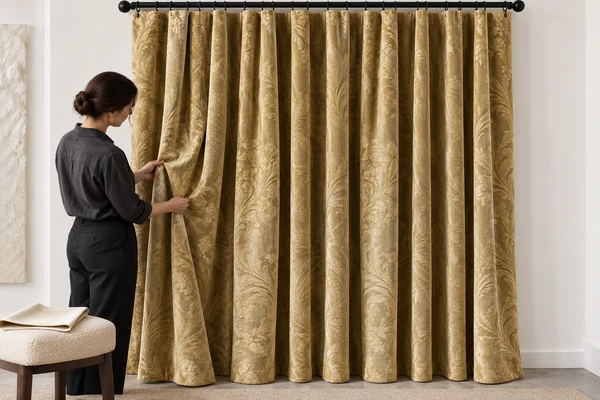
Keep material mass per area and complete panel mass as different entries. A fabric specification does not, by itself, identify the finished curtain your hardware will carry.
Describe the intended panel dimensions, face fabric, lining, heading and attached accessories when asking for the finished weight. Ask the maker to identify the scope of its answer. Also ask whether it is a confirmed value or an estimate awaiting the final construction.
If you plan to keep an existing rod or track, give that information to the responsible supplier or installer. Ask them to review the complete proposal against the actual hardware. This guide provides no load rating, fixing instructions or formula for selecting a track.
Before sending dimensions, watch the ShadeCort Measuring Guide below. Use it as an introduction, then follow the measurement instructions for the exact product you intend to order. The video explains measuring, not fabric weight or track capacity.
Open the ShadeCort measuring guide on YouTube if the player is unavailable.
Build a Like-for-Like Fabric Comparison
Give the seller the same room requirement and proposed construction for both fabrics. Then ask it to identify any differences that prevent a direct weight comparison.
You can send a short brief like this:
I am comparing these fabric references for curtains in my living room or bedroom. Please identify the weight unit and the layers included for each option. I would like the same proposed lining and heading in the comparison, or a clear explanation where that is not suitable. Please also identify the finished appearance and light-control details that still need review.
Add the room location, approximate dimensions, preferred color and photos of the existing window treatment. Say whether you intend to retain the hardware. For delivery discussions, identify the U.S. state or Canadian province without putting a private home address into an initial public inquiry.
Keep unresolved fields visible. If the seller cannot supply a comparable weight entry yet, ask what information it can provide and which part remains pending. Do not let a complete-looking table turn an assumption into an approved specification.

Ask ShadeCort About the Complete Construction
Send ShadeCort the fabric comparison and ask which proposed construction fits your room requirements. Curtain fabric weight should be one part of that discussion, alongside the named lining and finished details.
ShadeCort Resources describes itself as a window-treatment manufacturer and retail supplier serving commercial buyers and individual consumers. Its manufacturer and retail-supplier overview gives homeowners a direct place to begin that conversation.
ShadeCort lists double-turned hems, sewn-in liners and bottom weights on its custom fabric drapery page. Those details give you specific construction questions to discuss, rather than choosing from a face-fabric photograph alone. Confirm which details belong to your quotation; the page does not supply a GSM value or test result for your chosen fabric.
Discuss your fabric comparison on WhatsApp: +86 18926693786, or send the same brief through the ShadeCort contact form. Include the fabric references and mark the weight, lining or hardware questions that still need an answer. Ask for the available options and quotation before making an order decision.
Sources and further reading
- ASTM D3776/D3776M: Fabric mass per unit area. Public measurement scope; no paid test procedure is reproduced.
- AATCC TM203: Light blocking of window-covering textiles. A separate property from fabric mass per area, not evidence of a ShadeCort test result.
- ASTM D1777: Textile thickness. Public description of the separate thickness measurement.
ShadeCort's company and construction sources are linked beside the relevant statements above. The comparison record and inquiry brief are proposed buyer tools, not mandatory standards.
FAQ
What if a fabric listing does not show GSM?
Ask the seller whether a weight specification is available for the exact fabric reference. If it is not, keep that field pending and ask what other information can support your comparison. Do not copy a GSM value from a visually similar fabric or assume that the missing number proves poor quality.
Can I compare ounces per yard with GSM directly?
Ask the seller to spell out whether its entry means a square yard or a linear yard, and to provide a clearly identified comparable unit. Do not assume that an abbreviated "oz/yd" entry means the same thing as mass per area. Keep the original entry with the clarification instead of silently converting an ambiguous figure.
Should I ask for the weight of the shipping carton?
Ask for the weight that answers your question. For a hardware discussion, request the complete curtain weight and its stated scope, rather than substituting a shipping entry. For delivery planning, ask the seller for the packaged shipment information. Label those entries separately so one is not reused for the other.
What should happen if the lining changes after I choose the fabric?
Ask for a revised construction description and identify which earlier answers need review. Keep the new lining reference with any updated weight, appearance or light-control information. Have the seller identify what remains valid and what is still pending before you approve the change. An old comparison should not silently become approval for a different proposal.