Quick Answer
Velvet curtain nap is the direction of the fabric’s raised pile. That direction affects how the surface reflects light, so adjoining panels can look lighter or darker when their pile runs different ways. Linwood’s curtain guide explains this effect. Before ordering, ask which direction suits the exact fabric, review the intended appearance, and record the face and top edge for every panel. Do not approve only a color name. If a difference remains after a like-for-like review, ask the seller to investigate before cutting or altering anything.
What Velvet Curtain Nap Changes
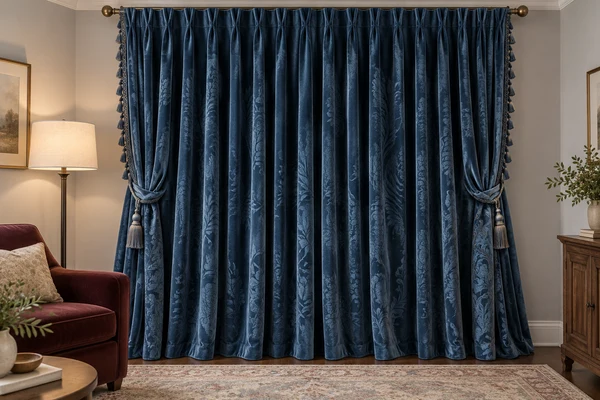
Velvet curtain nap changes the apparent shade of the surface, not the fabric’s color code. Linwood’s guidance connects this appearance to the direction of the pile and the light it reflects. That is why a darker-looking panel is a reason to ask about orientation, rather than immediate proof that the wrong color arrived.
Think about a pair of curtains meeting in the middle. You want the seller to know which edge will be at the top of each panel. A fabric name and a room photo do not record that decision.
If you are still choosing between materials or lining options, start with our curtain fabric selection guide. This guide addresses a narrower question: how to discuss the direction of a velvet you are considering.

Should the Pile Run Up or Down?
Ask for the recommendation for your exact velvet. A general rule from another collection is not enough. James Dunlop Textiles recommends pile up for velvet curtains, whereas Linwood generally recommends downward pile in its guide. Those are different manufacturer recommendations, not instructions you should combine.
Instead of asking only, “Which way is correct?”, ask, “Which direction do you recommend for this fabric code, and can you show the appearance we are approving?” Then keep that answer with the order.
For a pair or a group of windows, ask the maker to confirm a consistent direction across all the panels that will be viewed together. Do not ask the workroom to alternate directions to use leftover fabric unless it has explained the effect and you have accepted the proposed layout.
Review the Panels Without Trying to Repair Them
Compare the proposed orientation without rubbing, wetting or modifying the fabric. The purpose is to describe what you see and identify an unanswered question. It is not a home test for dye quality.
Ask the seller to show two cuttings upright, with their faces toward you and their intended top edges identified. Review them together, rather than comparing separate phone pictures. If the seller demonstrates another orientation, keep track of which piece was turned. Ask for a new shared view before making a decision.
Mayer Fabrics’ velvet guide explains that pressure can alter pile angle and produce lighter or darker areas that resemble uneven dyeing. Therefore, a patchy area and a whole panel facing the opposite way should not automatically receive the same explanation.
If you already have finished curtains, leave their construction intact. Photograph the panels together, note their positions, and ask the seller how to assess the difference. Do not try steaming or brushing as a diagnostic shortcut.

Match the Observation to the Next Question
Use the observation to choose a question, not a verdict. The following matrix is a suggested purchase-review tool, not an acceptance standard or a defect diagnosis.
| What you observe | Ask the seller | What remains unproven | Sensible next step |
|---|---|---|---|
| A difference changes when a loose cutting is turned | Which orientation is intended for the finished panel? | Whether the fabric identity and color also match | Record the agreed direction and review both pieces together |
| Two pieces still differ when shown in the same orientation | Can you check their identity and review the difference? | Whether the cause is dye, pile condition, lighting or something else | Keep approval pending and retain the shared comparison |
| A small area looks patchy rather than the whole panel | What assessment do you recommend for this exact fabric? | Whether the mark is temporary, permanent or acceptable | Document it before attempting any treatment |
| The seller supplies only separate photographs | Can you show the pieces together with top edges identified? | Whether the images represent comparable orientations | Request a shared view before deciding |
| The proposed cutting plan reverses some drops | How will those drops look beside the others? | Whether the finished group will meet your expectation | Ask for a revised plan or an explained approval view |
Keep the language neutral. “The right panel looks lighter in this shared view” is more useful than either “This is defective” or “All velvet does that.” It gives the seller an observation to investigate without deciding the cause in advance.
Write Down the Direction Before Cutting
Keep one orientation record with the custom order. A direction discussed on a call is easy to lose when someone else prepares the cutting plan or hangs the curtains.
Ask the seller to acknowledge these details:
- Fabric identity: the selected fabric and color codes, plus the physical reference being approved.
- Face: which side is intended to face the room.
- Top edge: a photograph or annotated copy identifying the intended top of the approved reference.
- Pile direction: the maker’s recommendation and the appearance you accepted for that fabric.
- Panel group: which panels and windows should follow that same direction.
- Pending questions: any unresolved difference, replacement piece or proposed change that still needs your approval.
Use an annotated photograph or a note attached to the order record. Ask permission before putting tape, pins or marks on the fabric itself. The useful record is one that both you and the maker can interpret, not merely an arrow whose meaning was never explained.
Keep measurements separate from direction. ShadeCort’s measuring video below is a general measuring guide, not a demonstration of velvet nap. Follow the measurement instructions for your selected product and mounting arrangement.
▶ Play measuring guide
Open the ShadeCort measuring guide on YouTube if the player is unavailable.
Discuss Fabric and Construction With ShadeCort
Bring the direction question into the same conversation as the finished curtain. That lets you ask about the face fabric, lining and finishing together instead of approving a color in isolation.
ShadeCort Resources is a window-treatment manufacturer and retail supplier for commercial and individual buyers, as described in its company overview. Its custom fabric drapery page lists double-turned hems, sewn-in liners and bottom weights. These are useful details to discuss alongside the appearance you want. They are not evidence that every velvet, sample size or direction option is available.
Send your preferred fabric reference, a photo of the windows, approximate dimensions, the panels you want to match, and your U.S. or Canadian delivery location. Include the direction question and any difference you have noticed. Ask which fabric and construction options can be confirmed for the quotation before approving production.
For a velvet curtain nap discussion, contact ShadeCort on WhatsApp: +86 18926693786. Prefer a form? Use the ShadeCort contact form for the same inquiry.
Sources and further reading
- Linwood: Velvet Curtain Fabric, particularly its pile-direction guidance, linked beside the opening explanation.
- James Dunlop Textiles: Handling & care of velvets, linked beside its curtain-direction recommendation.
- Mayer Fabrics: Velvet Guide, linked beside the bounded explanation of pressure-related appearance.
- ShadeCort Resources: company overview and Custom Fabric Drapery, linked beside the company and construction descriptions.
FAQ
Does the nap arrow replace the fabric color code?
No. Record both. The color code identifies the selected color, while the orientation note tells the maker how you expect the reference to be used. Also identify the face and top edge. Ask the seller to confirm the meaning of any arrow instead of assuming it means “hang this way.”
Can I decide from a phone photo alone?
Treat a photo as part of the conversation, not the entire approval. Ask for a shared view with the intended top edges identified and keep the physical reference where available. If the photograph leaves you uncertain, record that uncertainty and ask what further review the seller can provide before cutting.
Can I turn a finished curtain upside down to compare it?
Do not alter or rehang a finished panel as a first step. Keep it intact and ask the seller for an assessment method appropriate to the finished construction. Loose sample cuttings are a different situation. Tell the seller which item you have so the advice does not assume you are handling unsewn fabric.
Does a consistent direction mean every fold will look identical?
Do not use identical-looking folds as the approval criterion. Instead, ask the seller to show the intended overall appearance of the chosen velvet and record that reference. If one area or panel concerns you, describe it separately. A direction agreement should not be used to dismiss an unexplained difference.