Quick Answer
Curtain pattern repeat describes how a design recurs along and across the fabric, rather than the finished size of a panel. A motif is one design element within that repeating arrangement; the textile-design explanation from Vidya-mitra distinguishes the two. Before ordering, confirm the repeat information, match type and preferred motif position. Then name where you want alignment: at a joined fabric width, where two curtains meet, or across neighboring windows. Ask to review the proposed layout flat and in folds. Keep any unresolved placement question open until the maker confirms the construction and cutting plan.
Why a Swatch Does Not Settle the Layout
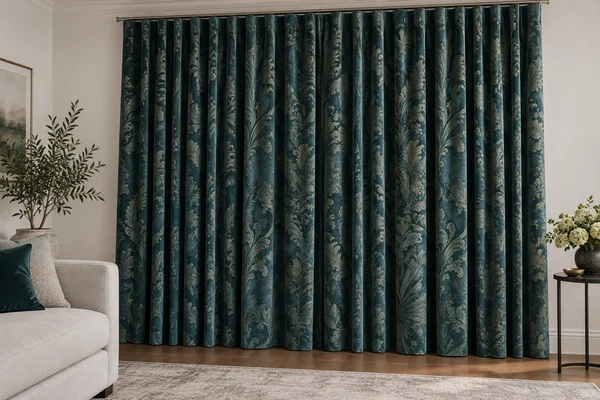
Choose the fabric and approve its finished layout as separate decisions. Liking the leaf, flower or geometric shape on a swatch does not tell the maker where you want that element on the finished curtain.
For example, you might want the main flower near the top of each panel. Someone else may care more about the pattern at the center opening. Neither preference follows automatically from the words "matching pair." Write down the part of the design you want to notice first, then ask what the proposed construction can achieve.
If you are still choosing the material or lining, start with the curtain fabric selection guide. This guide addresses the next, narrower question: how should your chosen pattern appear across the finished panels?
For a U.S. or Canadian home order, label the room and window on your reference. A photograph from a different room is useful inspiration, but it should not silently become the layout instruction for your own window.
What Curtain Pattern Repeat Tells You
Read vertical and horizontal repeat as pattern information, not as the curtain's height and width. A motif is an individual design element; a repeat unit is an arrangement that recurs across the width and length of the fabric. Vertical repeat describes recurrence along the fabric length, while horizontal repeat describes recurrence across its width. The Vidya-mitra textile learning material explains motifs and repeat units separately.
Ask for the selected fabric's actual data, including the units. If a seller sends a repeat value without saying which direction it describes, ask for clarification. Do not assume a number beside a sample is the horizontal repeat, the size of one flower or the final panel width.
Width, repeat and match type also answer different questions. Scion's Oakham fabric design book lists width, repeat and pattern match as separate specification fields. Its drapery entries illustrate why the word "repeat" alone is not a complete layout brief. Those entries are examples of data fields, not specifications for a ShadeCort fabric.
Keep a photograph of the selected design beside the written values. Ask the seller to identify the same landmark in both views so the conversation stays attached to the right pattern.
Straight Match and Half-Drop Are Different
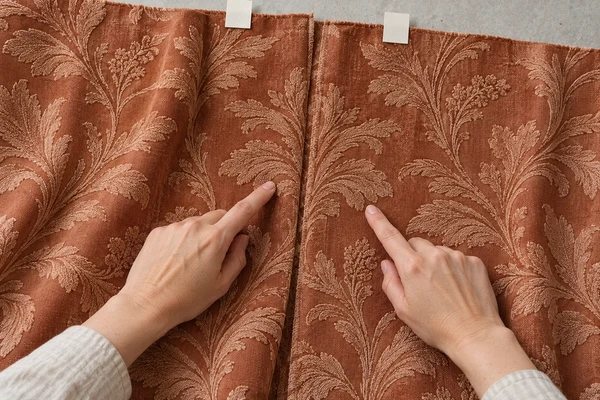
Confirm the match type before asking the maker to plan the panels. Straight-match widths align at the same repeat position; half-drop matching offsets adjoining widths by half a vertical repeat. The match type affects cutting and fabric calculations. Sew Helpful's workroom explanation of half-drop repeats shows that distinction with joined fabric widths.
For a homeowner, the useful question is: "Which match type applies to this fabric, and how will you arrange it in my curtain?" You do not need to adopt a cutting formula from a general tutorial to ask that question.
Ask the maker to return a layout-specific material requirement and explain what it covers. Avoid adding an assumed percentage for every patterned order or treating a repeat value as a quotation. The finished dimensions, selected fabric and desired placement belong in the same discussion.
If the sample description and the returned layout appear inconsistent, point to the motif that concerns you. Request a corrected explanation before approving the plan, rather than assuming that "half-drop" is another name for an ordinary straight match.
Which Parts of the Curtain Should Match?
Name each matching location separately. Use the table below as a proposed discussion aid, not a promise that every fabric or construction can meet every request.
| Matching location | Describe the appearance you want | Ask the maker to confirm |
|---|---|---|
| A seam joining fabric widths within one curtain | The vine, stripe or other landmark should continue across the named join | Where that seam falls and how the selected fabric will meet there |
| The meeting point of a curtain pair | State whether you want a continuing design, a balanced arrangement or another specific result when closed | The proposed left and right layout, including the meeting-edge arrangement |
| Neighboring windows in the same room | Identify which motif you want to compare across the windows | Which reference point will guide placement and what happens when the window or panel sizes differ |
For example, mark a leaf trail at a proposed seam and a large flower near the center opening as two separate priorities. Ask for both to appear on the returned review image. If they cannot both be achieved as requested, ask which alternative the maker proposes and why.
Also specify the view you want to approve. A request about the closed pair should say so. If the curtains will usually remain open, include that arrangement in the review rather than leaving the maker to guess your priority.
Review the Pattern Flat and Folded
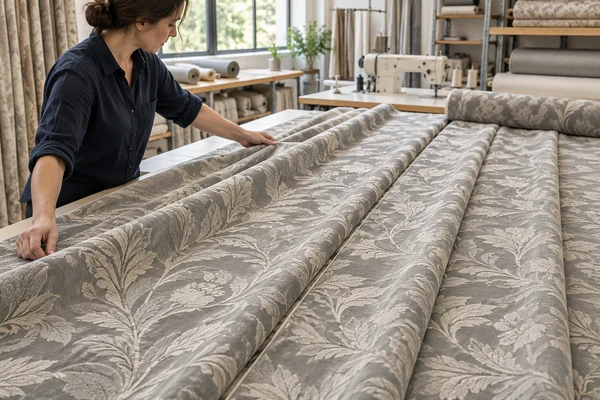
Ask for a flat layout view and a folded or made-up view before deciding whether the proposed appearance suits the room. Use the flat view to discuss motif positions and joins, then look at the same design in the proposed heading or folds.
This is a layout review, not a full inspection procedure. A marked photograph or sketch can help explain the request, but ask what it represents. Is it the actual fabric, a similar sample, a drawing or an illustrative image? Keep that distinction in the approval record.
Use this review check:
- Identify the fabric and color reference on every view.
- Mark the top, bottom and intended face of the proposed panel.
- Point to the motif you want near the top or meeting edge.
- Identify any proposed seam and show the desired join.
- Compare the left and right curtains together in the intended closed arrangement.
- Request a folded or heading view when the flat layout leaves an appearance question.
- Record any placement request the maker has not yet confirmed.
If the returned view answers only the seam question, leave the center meeting question open. An "approved" reply leaves that distinction unclear. Instead, say which view and which placement you accept, then list the remaining question in plain language.

Prepare a Pattern-Layout Brief
Give the seller one short brief that connects the room, fabric and desired motif arrangement. Keep measurements separate from repeat data, and label the units for both.
You can adapt this record:
Room and window reference: [identifier]
Selected fabric and color: [reference and sample photograph]
Repeat information: [vertical, horizontal, units and confirmed match type]
Panel arrangement: [single panel or pair, with the intended open and closed views]
Preferred motif position: [mark the element and location on a photograph or sketch]
Matching priorities: [joined widths, center meeting, neighboring windows]
Still to confirm: [seam placement, proposed heading view or another unresolved layout question]
Leave unknown fields marked unknown. Ask the maker to return the missing information, the proposed layout and any limitations before you approve cutting. If you revise a motif position, identify the changed view so nobody works from an earlier version.
Window measurements are still a separate input. ShadeCort's Measuring Guide below provides measurement context; it does not demonstrate pattern matching. Follow the instructions for the exact curtain, track or mount you plan to order.
Open the ShadeCort measuring guide on YouTube if the player is unavailable.
Discuss the Finished Curtain With ShadeCort
Send ShadeCort the pattern-layout brief and ask which details are feasible for the selected fabric and finished construction. Keep the inquiry about the curtain you want made, rather than asking for a general promise that all patterns will match.
ShadeCort Resources describes itself as a window-treatment manufacturer and retail supplier serving commercial buyers and individual consumers. Its manufacturer and retail-supplier overview explains those roles. ShadeCort lists double-turned hems, sewn-in liners and bottom weights on its custom fabric drapery page.
Use those construction details to make your question specific. Ask how the proposed hem, lining and heading relate to the layout you are reviewing. The value of involving a finished-drapery maker is having a specific construction to discuss alongside the pattern, not assuming that a fabric photograph settles the whole order.
For your curtain pattern repeat inquiry, include the selected sample, room reference and the matching location that matters most. Ask the team to identify any unresolved placement, material or construction question before confirming the order.
Discuss your curtain layout on WhatsApp: +86 18926693786
The ShadeCort contact form is an alternative channel for the same inquiry. Exact options and any matching commitment belong in the returned order details, not in a general guide.

Sources and further reading
- Vidya-mitra: Surface Embellishment, Unit 4, for motif and repeat-unit terminology.
- Sew Helpful: Half Drop Pattern Repeats Explained, for straight and half-drop matching concepts.
- Scion: Oakham Digital Design Book, for examples of separate fabric width, repeat and match fields.
Official ShadeCort company and drapery information is linked beside the relevant statements above. The matching table, review check and layout brief are proposed buyer tools, not a cutting specification or a guaranteed result for an unidentified fabric.
FAQ
Does the same fabric code guarantee a continuous center pattern?
Do not treat the code alone as approval of the center layout. Ask to review the proposed left and right panels together, name the motif you want to follow and confirm the intended meeting-edge arrangement. Keep any agreed limitation with that view rather than relying on the phrase "matching pair."
Can I request a particular flower near the top?
Yes, describe it as a placement preference and ask whether the selected construction can achieve it. Mark the exact flower and preferred location on the sample photograph. Ask for the proposed layout before approval, and keep the request open if the maker has not confirmed it in the returned details.
Must neighboring windows show the motif at the same height?
State whether that is your preference instead of assuming it is a universal rule. Identify the windows you want compared and ask the maker to show the proposed relationship between them. When the window or curtain sizes differ, request an explanation of the suggested layout before accepting it.
Does repeat data replace a room photograph?
No. Include both in your layout brief. The repeat record identifies the fabric information you are discussing, while the room photograph lets you point to the windows and the arrangement you want reviewed. Label each opening and keep unknown dimensions or placement decisions clearly marked for confirmation.