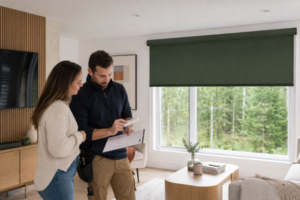
Quick Answer
A custom window shade sample should confirm the part of your order that would be expensive or difficult to correct later. A fabric swatch can show color and texture. A working sample can test the cassette, controls, motor, and light-control details. For a large, unusual, motorized, or full-blackout order, ask for a production-intent sample that matches the approved materials and components as closely as practical. Record the sample type, version, photos, requested changes, and written approval. Do not assume one attractive sample proves final dimensions, installation fit, packaging, labels, or the quality of every finished shade.
Who This Guide Is For
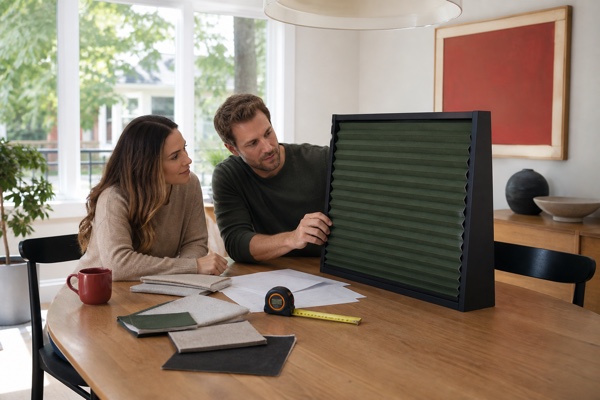
This guide is for homeowners and renters in the United States and Canada who are ordering made-to-measure roller, cellular, Roman, solar, blackout, or motorized shades. A physical sample is most useful when the order covers several windows, uses an unfamiliar fabric, has an unusual recess, includes motors, or must meet a demanding darkness goal.
If you are buying one straightforward shade in a familiar material, a swatch plus a careful written order may be enough. If a mistake would affect an entire home, a sample review deserves more time.
The Buyer Problem: The Sample Can Prove the Wrong Thing
A small fabric cutting may look perfect against your wall. That does not tell you whether a cassette will fit inside the recess, whether the side channels cover the light gaps, whether the remote operates the correct shade, or whether the bottom rail clears a handle.
The reverse can also happen. A compact working sample may operate smoothly but use a demonstration fabric, a shorter tube, or different hardware from your final order. It proves the mechanism, not every detail of the finished product.
The costly assumption is simple: “I approved the sample, so everything is approved.” A useful approval record says exactly what the sample represents and what still depends on final measurements, production, labeling, packaging, and installation.
What Is a Pre-Production Window Shade Sample?
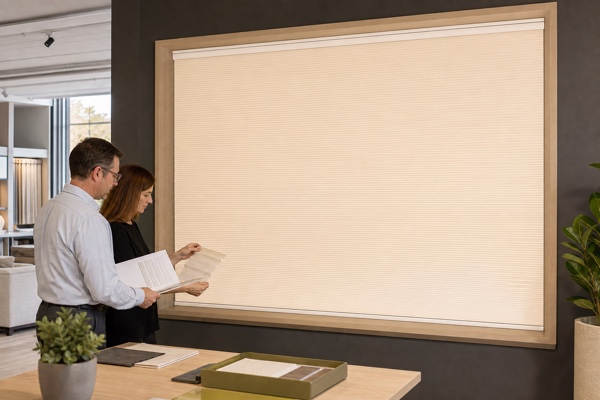
A pre-production sample is a physical shade or shade assembly made before the main order is released. It should use the intended construction and approved components wherever practical. After the buyer reviews it and the seller records any corrections, the final approved version becomes a reference for production. Factories often call this a golden sample.
For a homeowner, the name matters less than the scope. Ask whether the sample is intended to prove appearance, operation, construction, or all three. Also ask which details may change when the final dimensions are made.
The sample should work with a written order specification. A physical item cannot carry every room ID, finished dimension, deduction rule, motor channel, accessory count, label, carton mark, and delivery promise by itself.
Which Type of Sample Do You Need?
The right sample depends on the risk you are trying to remove. The table below separates four common options.
| Sample type | What it can help you approve | What it cannot prove by itself | When it is worth requesting |
|---|---|---|---|
| Fabric swatch | Color, texture, hand feel, opacity through the material | Finished size, edge gaps, cassette, controls, motor, hardware, packaging | Color-sensitive rooms or an unfamiliar fabric |
| Finish and hardware sample | Visible metal color, bracket style, bottom rail, side-channel finish | Full operation, final fit, motor noise, exact light control | When hardware remains visible or must match trim |
| Working sample | Operation, roll direction, cassette, bottom rail, remote, motor behavior, sample-scale light control | Final-size deflection, exact room fit, all labels, packaging, consistency across the full order | Motorized, wide, cordless, or mechanically unfamiliar shades |
| Production-intent sample | The closest practical match to approved materials, construction, controls, and accessories | Quality of every bulk unit, shipping damage, installation conditions at every window | Whole-home orders, special construction, private colors, or full-blackout systems |
A bigger sample is not automatically better. A correctly scoped working sample can answer more useful questions than a full-size display made with the wrong motor or fabric.
When a Physical Sample Is Worth the Extra Time
Consider a working or production-intent sample when any of these conditions apply:
- Several shades repeat the same product and one mistake would multiply across the order.
- The window is unusually wide, tall, shallow, angled, or close to an obstruction.
- The order includes motorized controls, a remote, a hub, or a specific power arrangement.
- The room needs a complete full-blackout system rather than opaque fabric alone.
- The fabric color or texture must coordinate with existing finishes.
- The cassette, fascia, side channels, or bottom rail will remain visible.
- The product is difficult to return or is being shipped internationally.
Before paying a sample fee, ask what the fee covers, whether shipping is separate, whether any amount is credited to the main order, and what happens if a revised sample is needed. Terms vary, so keep the answer with your order records.
What to Inspect on the Sample
1. Fabric, color, and light behavior
View fabric in the actual room during daylight and after dark. Compare it with the wall, trim, flooring, and nearby upholstery. A phone screen is a poor color reference.
For a blackout shade, separate two questions. Does light pass through the material? Does the complete system control light at the top, sides, and bottom? ShadeCort full-blackout configurations use opaque material with the appropriate cassette, enclosed side channels, and bottom detail. Those components need to be approved together if the goal is no visible light leakage.
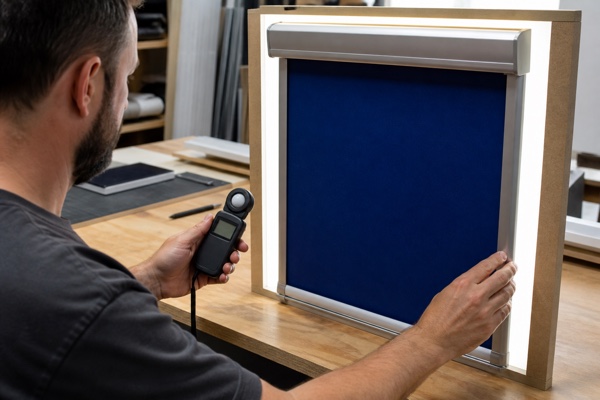
2. Mount, cassette, and clearances
Check the sample against the available recess depth, trim, handles, cranks, sensors, and furniture. A small sample may show the bracket and cassette profile, but it cannot prove final fit unless the final dimensions and deduction rule are also confirmed in writing.
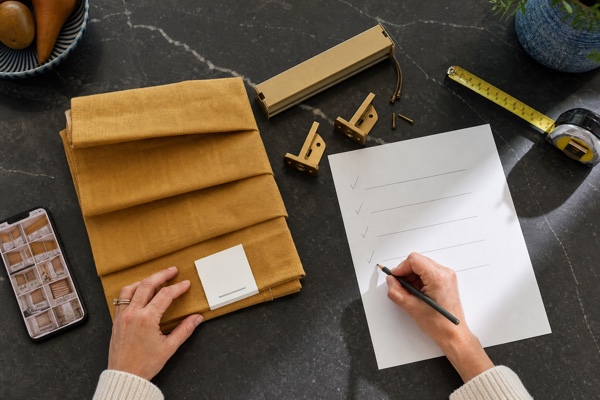
Use a unique ID for every opening. Record the raw window measurements separately from the finished shade size. ShadeCort can review labeled photos and measurements before the final configuration is released, but the buyer should still check the returned dimensions line by line.
Explore ShadeCort’s shade product families, including roller shades and cellular shades, to compare the constructions that may need different sample checks.
3. Manual or motorized operation
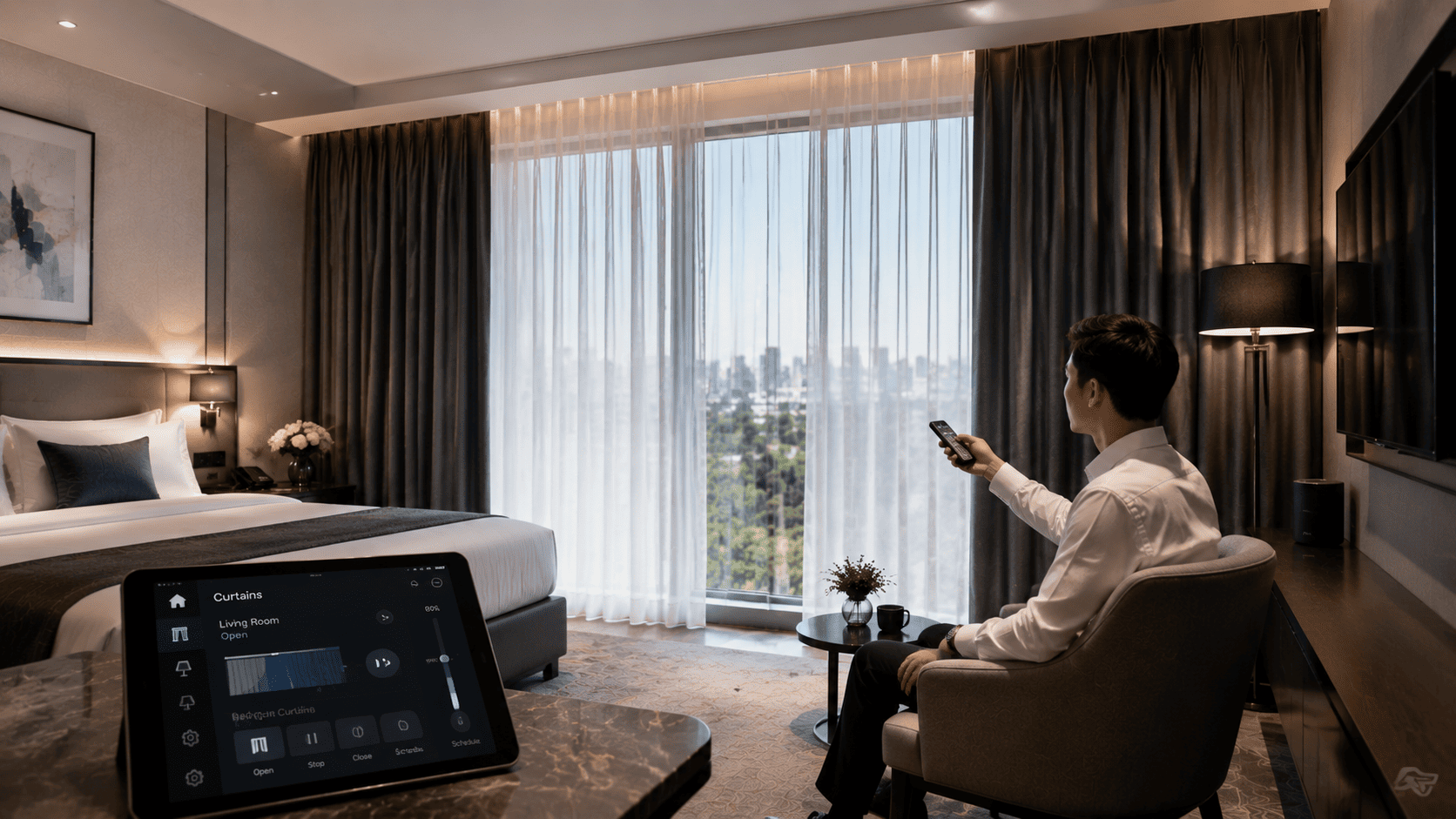
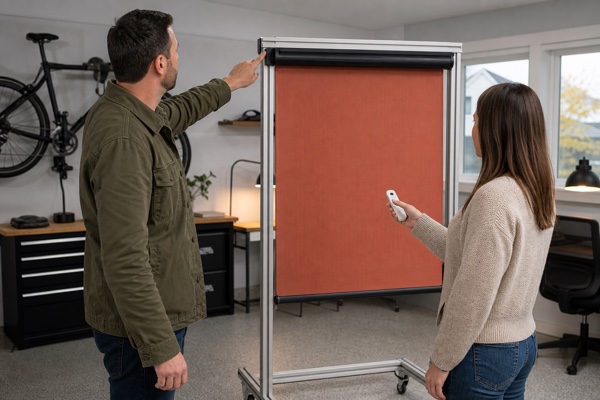
Operate a working sample several times. Watch the fabric track, stop positions, bottom rail, and roll direction. For a motorized shade, confirm the motor model, power source, charging access, remote model, channel plan, wall control or hub, and any claimed smart-home compatibility.
“Motorized” is not a complete specification. A sample should identify which motor and controls it demonstrates. The final order should repeat those details instead of referring vaguely to “the same as the sample.” ShadeCort’s motorization overview can help you identify the questions to settle before approval.
4. Hardware, accessories, instructions, and labels
Lay out the brackets, fasteners, charger, remote, side-channel parts, stops, and instructions that are supposed to accompany the finished order. Ask which items are sample-only and which will ship with each shade.
Destination matters. U.S. Consumer Product Safety Commission guidance for stock and custom window coverings addresses inner-cord accessibility and permanent product identification. Canada’s Corded Window Coverings Regulations address reachable cords and loops and require specified product information, installation and operating instructions, and warnings in English and French. Ask the seller to confirm the current requirements for the exact product and destination. A demonstration sample without final labels is not proof that the delivered order will be correctly labeled.
How to Approve the Sample Without Losing the Details
Treat approval as a short version-control process, not a thumbs-up message.
- Give the sample a name and version, such as
Primary Bedroom Blackout Sample V2. - Photograph the front, back, headrail, bottom rail, controls, brackets, side details, and any issue.
- List each requested change in one message or document.
- Ask the seller to return an updated full specification, not only a reply to one correction.
- Decide whether photos and video are enough for the revision or whether a new physical sample is necessary.
- Approve the final version in writing and state which details it represents.
- Keep the approved photos, specification, invoice, shipping promise, and communication together.
The U.S. Federal Trade Commission recommends keeping records of online purchases, including what was ordered, the price, the seller’s policies, shipping promises, and buyer-seller communication. For a custom shade, the approved sample record belongs in that same folder.
Watch: Measure Before You Release the Sample for Production
Even a good sample cannot rescue the wrong window dimensions. Watch ShadeCort’s measuring guide before you send the final size, then compare your notes with the instructions for the exact product and mount type.
If the embedded player is unavailable, open the Measuring Guide directly on YouTube.
What an Approved Sample Does Not Prove
An approved sample gives production a reference. It does not guarantee that every finished shade will match without checks.
It may not prove how a very wide shade behaves, how several motors are assigned to remote channels, whether each carton has the right room label, whether all accessories are packed, or whether shipping will damage a component. It also cannot confirm that your final installation surface is sound or that every opening was measured correctly.
Keep these as separate final-order checks:
- Finished dimensions and factory deductions for every window
- Fabric and component codes on the latest order revision
- Quantity, room IDs, control side, and motor channel plan
- Destination-market instructions, warnings, and product identification
- Accessories and installation hardware
- Packaging, carton labels, and damage protection
- Final inspection or documented quality checks before shipment
Sample approval and final inspection solve different problems. You need both on a high-value order.
How ShadeCort Handles Sample Review
ShadeCort’s useful role starts before the sample is made. The team can help define what the sample needs to prove based on your window photos, measurements, mount type, light-control goal, fabric choice, visible hardware, and manual or motorized operation.
For a full-blackout room, that may mean sampling the opaque fabric together with the cassette, side channels, and bottom detail. For a motorized project, it may mean confirming a working motor, power option, remote, and control plan. For a whole-home order, the priority may be one repeatable approved construction plus a clear room-by-room specification.
After review, requested changes should be recorded against the sample version and carried into the final order. Exact sample cost, revision timing, production lead time, and feasibility depend on the selected product, dimensions, quantity, and destination. ShadeCort confirms those details for the actual project rather than promising one rule for every order.
Buyer Checklist Before Production Approval
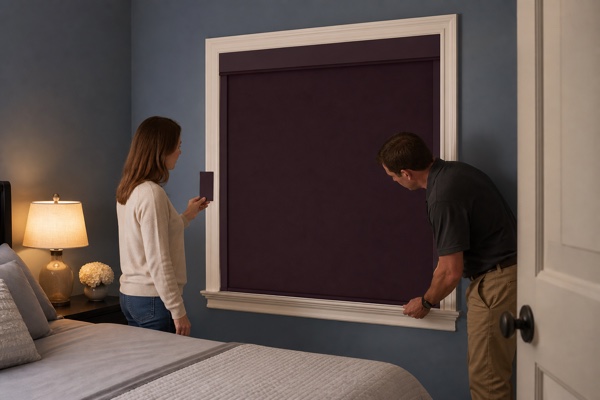
- I know whether I am approving a swatch, finish sample, working sample, or production-intent sample.
- The sample version and the details it represents are written down.
- Every window has a unique room and opening ID.
- Raw opening measurements and final finished sizes are listed separately.
- Fabric, color, opacity, cassette, bottom rail, side details, and visible hardware are confirmed.
- The full-blackout configuration is specified as a system, where required.
- Manual controls or motor, power, remote, channels, hub, and accessories are confirmed.
- Destination country and applicable product information are identified.
- All requested changes appear on the latest full order revision.
- Sample fees, revision costs, lead time, shipping, and custom-order terms are understood.
- Final inspection, packaging, room labels, and delivery checks are still planned.
Request a Sample Plan
Before ordering a sample, contact ShadeCort with your window photos, measurements, mount type, preferred shade, fabric or color, light-control goal, operation, quantity, and destination. Ask which sample will answer the highest-risk question in your project and what will still need written approval afterward.
For the next step, read ShadeCort’s guide to paying safely for custom blinds online and keep the approved sample record with your purchase documents.
Sources and Further Reading
- U.S. Consumer Product Safety Commission: Window Coverings 15(j) Rule Business Guidance
- Justice Laws Website: Corded Window Coverings Regulations, Canada
- Federal Trade Commission: Online Shopping
- ShadeCort Measuring Guide on YouTube
FAQ
Is a fabric swatch enough for a custom window shade order?
It may be enough for one simple shade when color and texture are the main unknowns. It is not enough to approve finished size, mounting depth, cassette, side channels, controls, motor, accessories, or the complete blackout result.
Should a pre-production sample be the same size as my final shade?
Not always. A smaller working sample may be more practical and can still prove construction, fabric, hardware, and operation. Wide-shade behavior and final fit must then be confirmed through the finished dimensions, product limits, and final checks.
What is a golden sample?
A golden sample is the final approved physical reference for production. Its version, materials, components, and approved exceptions should also be recorded in writing so no one relies on memory alone.
Are sample fees refundable or credited to the main order?
That depends on the seller, product, shipping cost, and number of revisions. Ask for the terms before paying, including whether any credit applies only after the main order reaches a stated value.
Does an approved sample guarantee the quality of every finished shade?
No. It establishes a target. Production checks are still needed for dimensions, appearance, operation, quantity, labels, accessories, packaging, and damage before shipment.
What should I send ShadeCort to request the right sample?
Send labeled window photos, measurements, mount type, available depth, shade type, fabric or color, light-control goal, manual or motorized preference, quantity, destination, and the specific concern you want the sample to answer.