
Quick Answer
Custom window treatment lead time is the time needed after an order is ready for production and before the finished curtains or shades are ready to ship. It may include material allocation, cutting, sewing or assembly, motor setup, quality checks, and packing. It does not automatically include the time you spend choosing a product, correcting measurements, approving changes, clearing customs, or arranging installation. Before paying, ask for three separate dates: when the order becomes production-ready, when it should leave the factory, and when it is expected to reach your home.

The Date You Need Is Usually a Delivery Date, Not a Factory Date
A homeowner may ask, “How many days does production take?” What they often need to know is, “Will the window be covered before we move in?” Those are different questions.
Suppose you are ordering blackout curtains for a nursery, motorized shades for a renovation, or cellular shades before winter. A factory-ready date only tells you when the finished product can move to the next stage. Your calendar may also include:
- time to confirm the product and mount type;
- measurement corrections or drawing approval;
- fabric, color, hardware, and motor confirmation;
- production and quality inspection;
- export packing and pickup;
- international transport, customs, and final delivery;
- an installation appointment or time for a DIY installation.
The practical answer is a dated schedule with clear starting conditions. A short production estimate is not useful if the order cannot start because one window size or motor choice is still open.
What Does Manufacturing Lead Time Mean for Custom Window Treatments?
Manufacturing lead time normally begins only after the seller has everything required to release the order. For a made-to-measure curtain or shade, that may mean confirmed dimensions, mount type, fabric and color, operating system, accessories, shipping destination, payment, and any required drawing or sample approval.
The clock usually ends when the order is finished and ready for pickup or shipment. Ask the seller to define the start and end points in writing. “Lead time” can otherwise mean production time to one person and total door-to-door time to another.
A useful planning formula is:
Total calendar time = decision and measurement time + order approval time + manufacturing lead time + shipping and customs time + installation buffer
This is why two customers ordering the same style can have different schedules. One may select a standard fabric and confirm accurate dimensions on the first attempt. The other may need a special color, a revised inside-mount measurement, several motorized shades, and delivery to a remote location.
Stage 1: Product Choice, Measurements, and Order Approval
The order is not ready simply because you have chosen a color. The seller still needs enough information to make the product fit and operate correctly.
For custom shades, confirm the exact product type, inside or outside mount, finished width and height, fabric direction, control side, and any cassette, fascia, valance, or side-channel option. A roller shade and a cellular shade may use different deductions, brackets, and operating systems even when they cover the same opening.
For curtains, confirm whether the measurement describes the opening, track, finished curtain, or wall-to-wall coverage. The heading, fullness, return, overlap, hem, lining, and track position also affect the finished size.
Use a separate line for every window. Label photos with the same room and window names used on the order. If the opening is out of square, unusually deep, tiled, obstructed, or wider than a standard product, show it before the order is released.

Watch: Measure Before the Schedule Starts
One incorrect width can pause an otherwise complete order. Watch ShadeCort’s measuring guide, then compare your notes with the instructions for the exact product and mount type.
Watch the ShadeCort Measuring Guide on YouTube
Open the ShadeCort Measuring Guide on YouTube if the player is unavailable.
Stage 2: Materials, Hardware, and Controls
After the specification is clear, the seller checks whether the selected materials and components can be assigned to the order. Common fabric, rail, bracket, or control combinations may be easier to schedule than a special finish or an unusual set of matching requirements.
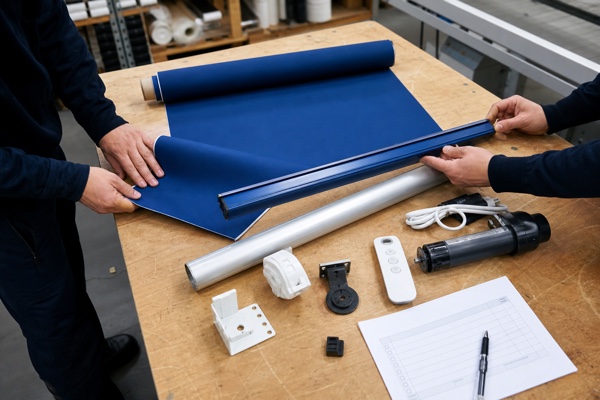
Motorized products need more decisions than a manual shade. Confirm the motor, power method, charging or wiring plan, remote, channel count, wall switch, hub, app, radio protocol, and any grouping requirement. Review ShadeCort’s motorization options as a starting point, then ask which exact components apply to your selected product and country.
Destination also matters. U.S. Consumer Product Safety Commission guidance covers cord and labeling provisions for stock and custom window coverings. Health Canada states that its corded window-covering requirements apply to products sold in Canada, including custom-made products. That does not create one standard configuration for both countries. It means the destination and operating system should be settled before production, not discovered after the product is packed.
What Can Change the Schedule?
| Order detail | Why it affects timing | What to confirm before paying |
|---|---|---|
| Measurements | A corrected width, height, or mount can change the finished product and hardware | Who measures, which measurement is the opening size, and who approves the final order size |
| Fabric and color | Special colors, matching across several rooms, or a new material lot may need confirmation | Fabric reference, color reference, opacity, lining, and whether all units should use one lot |
| Product construction | Curtains, roller shades, cellular shades, and side-channel blackout systems use different processes | Exact product type, heading or cassette, lining, rails, returns, and accessories |
| Motorization | Motors, controls, power, remotes, and smart-home compatibility must work as one system | Motor model, power method, protocol, controls, grouping, and setup responsibility |
| Quantity and size mix | Several unique sizes require more order checking than repeated identical units | A final room-by-room schedule with no duplicate or missing window labels |
| Destination | Safety details, labels, transport route, customs, and local delivery differ | U.S. or Canadian destination, postal code, delivery terms, duties, taxes, and importer responsibility |
| Changes after approval | A late change can affect drawings, materials, cutting, assembly, or packing | The last date for changes and whether a change restarts part of the schedule |
Stage 3: Cutting, Sewing, Assembly, and Motor Setup
Once the order is released, production work depends on the product. Curtains may require fabric inspection, pattern or color-lot control, cutting, joining, sewing, lining, header construction, hemming, pressing, and hardware preparation. Shades may require fabric cutting, tube or headrail preparation, mechanism assembly, rail fitting, tension adjustment, and final dimension checks.
Motorized products also need the correct motor and control parts installed or paired. A schedule that includes several product types should identify whether they move through production together or finish in separate batches.
Changing a measurement or fabric after cutting starts is not a harmless note on the order. It may require new material, new components, revised drawings, or a remake. Ask the seller to tell you when the specification becomes frozen and what happens if you request a change after that point.
Stage 4: Quality Checks and Packing
A finished-looking product is not automatically ready to ship. The order should be checked against the approved record before packing.
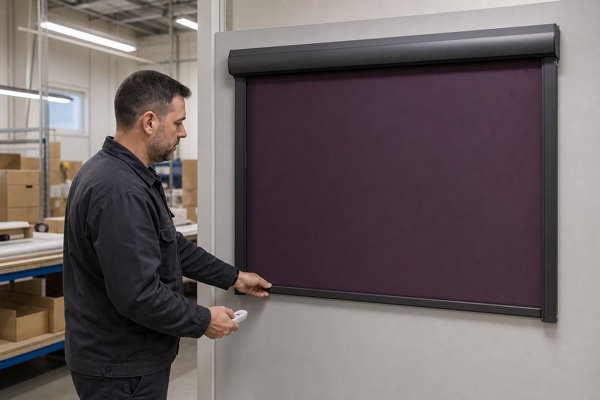
Depending on the product, the check may include finished dimensions, fabric direction, color, sewing, rail or bracket fit, rolling or lifting operation, motor response, remote assignment, light-control details, accessories, labels, and carton identity. A multi-room order also needs a way to match each carton to the correct opening.
Packing takes more care when the order contains long tracks, wide headrails, delicate finishes, several remotes, or room-specific hardware. Skipping this step may shorten the factory calendar on paper, but it can move the problem to your home.
Stage 5: Shipping, Customs, Final Delivery, and Installation
Manufacturing completion is not the delivery date. Ask whether the quoted schedule includes only factory production, export pickup, arrival at a port or terminal, customs clearance, delivery to your address, or installation.
For U.S. online orders, the Federal Trade Commission says sellers generally must ship within the time they state. If no shipment time is stated, its rule generally uses 30 days, and a seller that cannot ship on time must notify the buyer and provide choices concerning the delay. This is about shipment promises, not a guarantee that every custom order will arrive within 30 days.
Canada’s Office of Consumer Affairs advises online shoppers to review shipping terms and obtain a delivery date before entering the purchase contract. It also notes that international purchases may involve duties, taxes, brokerage, transportation, or clearance fees. Canadian consumer rules and remedies can also vary by province or territory.
If your installation depends on a contractor, electrician, interior designer, or move-in date, do not book the final appointment against the earliest possible arrival. Use the seller’s current expected delivery date and leave a reasonable buffer for inspection and scheduling.

Why Custom Window Treatment Orders Get Delayed
Most avoidable delays start with an open decision or a mismatch between records. Common examples include:
- one room uses an opening measurement while another line uses a finished-product size;
- the buyer approves fabric but not the lining or hardware finish;
- an inside-mount shade does not have enough depth for the chosen cassette;
- a motor is selected before the power and control plan is confirmed;
- a late color or size change arrives after material has been allocated or cut;
- the delivery date is treated as fixed before the transport method and destination are known;
- the seller and buyer use different names for the same rooms or windows.
Some delays are outside the buyer’s control, including material shortages, transport disruption, customs review, weather, and local delivery problems. A clear order record cannot eliminate those events. It does make it easier to see which stage is affected and what decision is needed next.
How to Shorten Lead Time Without Creating Rework
Finish the specification before asking for the fastest date
Send a complete window schedule, labeled photos, product choice, fabric and color, mount type, control method, destination, and requested delivery date. The seller can then assess the real order instead of giving a headline estimate based on missing information.
ShadeCort’s window shade specification checklist can help you organize the details before requesting a schedule.
Use standard, confirmed combinations when the date is tight
Ask which fabrics, colors, rails, controls, or motors are currently practical for your product and destination. Do not assume that a standard-looking color is in stock for every construction.
Approve once, clearly
Collect household, designer, contractor, and electrician comments before sending approval. One consolidated revision is easier to control than several conflicting messages.
Ask for milestones, not daily reassurance
A useful update identifies the current stage and the next dated event: order released, material assigned, cutting started, assembly complete, inspection scheduled, packed, collected, or in transit. A message that only says “in production” tells you very little.
Keep installation planning separate from production pressure
Do not remove measurement checks, motor testing, or final inspection to gain a few calendar days. Instead, protect the project date by ordering earlier, confirming decisions promptly, and leaving a delivery buffer.
What ShadeCort Can Confirm Before Your Order Starts
ShadeCort can review the proposed product, dimensions, mount, fabric, color, manual or motorized control, destination, and requested date before confirming an order-specific schedule. For mixed orders, the review can also identify whether curtains, shades, tracks, motors, and accessories have different preparation or completion points.
This review is useful because it connects the date to the actual configuration. It is not a universal promise for every order. Material availability, final quantities, approvals, production scope, shipping method, customs, and delivery location still need to be confirmed for the order you place.
When you contact ShadeCort, include:
- a room-by-room size list and labeled photos;
- the product type and mount for each opening;
- fabric, color, lining, cassette, track, or hardware preferences;
- manual or motorized operation and the control plan;
- the U.S. or Canadian delivery postal code;
- your required delivery or installation date;
- any date that cannot move, such as a renovation handover or move-in.
Ask for the production-ready conditions, expected factory-ready date, shipping basis, expected delivery window, and change cutoff in the same reply.
Buyer Checklist Before You Approve the Schedule
- Every window has a unique room and position label.
- Opening size and finished-product size are clearly distinguished.
- Inside or outside mount is confirmed for every shade.
- Curtain track position, heading, fullness, lining, return, and overlap are recorded.
- Fabric, color, hardware, and control references are final.
- Motor, power, remote, protocol, and grouping are confirmed where applicable.
- The seller has the destination and postal code.
- Production start and factory-ready dates are defined.
- Shipping, customs, delivery, and installation are shown separately.
- The change cutoff and delay communication process are understood.
Sources and Further Reading
- U.S. Federal Trade Commission: What to do if you are billed for things you never got
- Innovation, Science and Economic Development Canada: Online shopping
- U.S. Consumer Product Safety Commission: Window Coverings 15(j) Rule guidance
- Health Canada: Window covering safety
- ShadeCort Measuring Guide on YouTube
FAQ
How long does it take to make custom curtains or shades?
There is no reliable universal number. Timing depends on when the order becomes production-ready, the selected fabric and components, product construction, quantity and size mix, motorization, quality checks, packing, destination, and shipping method. Ask for an order-specific factory-ready date and a separate expected delivery date.
When does custom window treatment lead time start?
It usually starts when the seller has all required information and authorization to release the order. Confirm the exact trigger. It may include approved dimensions, mount, fabric, color, controls, accessories, destination, payment, and any drawing or sample approval.
Does lead time include shipping and customs?
Not necessarily. Some sellers use lead time to mean only the period from production release to factory completion. Ask whether the quoted schedule includes export pickup, international transport, customs clearance, delivery to your address, and installation.
Can I change my measurements after production starts?
Ask before requesting the change. If cutting or assembly has started, a new measurement may require new material, different hardware, a revised drawing, or a remake. The seller should explain the cost and schedule effect before accepting the revision.
Do motorized shades take longer than manual shades?
They can require more order preparation because the motor, power method, controls, protocol, remote, grouping, and product compatibility must be confirmed. The actual schedule depends on the selected system and component availability, so request an order-specific answer.
How can I avoid missing my installation date?
Finish measurements and product decisions early, ask for dated milestones, separate factory time from delivery time, and leave a buffer before booking an installer or electrician. Tell the seller which date cannot move and ask what must be approved for that date to remain realistic.