Quick Answer
A freight forwarder for custom curtains should quote the whole route from a verified shipment data sheet, not from a rough product value. Before you choose one, confirm pickup, origin charges, main transport, destination fees, customs support, final delivery, long-carton handling, insurance options, and exclusions. U.S. ocean buyers should check the provider’s Federal Maritime Commission status when applicable. Canadian buyers should confirm who will act as the licensed customs broker. ShadeCort can prepare factory packing data and coordinate the cargo handoff, while the buyer and qualified logistics providers retain their own customs and import responsibilities.

Why Does a Low Freight Quote Become Expensive Later?
The problem usually starts with an incomplete question: “How much is shipping?” A forwarder receives only the order value and an estimated weight, then returns an attractive number. After the curtains are packed, the real carton length, volume, destination terminal charges, residential delivery conditions, or customs work appear. The quote changes when the buyer has the least room to negotiate.
Custom curtains and tracks make this worse. Long cartons may not fit a standard parcel network. A motorized order can include fabric, tracks, motors, controls, brackets, and spare parts in several carton types. A home address may need an appointment, a liftgate, or inside-delivery instructions that were never priced. Storage can also start while the broker waits for information from the importer.
The cheapest line on a spreadsheet is therefore not always the cheapest shipment. A useful comparison starts with the same cargo data and the same delivery scope for every forwarder.
What Does a Freight Forwarder Actually Do?
A freight forwarder organizes transport and the handoffs around it. Depending on the provider and route, that may include factory pickup, export booking, consolidation, documentation support, main carriage, destination coordination, and final delivery. The forwarder may use carriers and local agents rather than owning the truck, aircraft, or vessel.
That does not make every forwarder a customs broker or an ocean carrier. In the United States, the Federal Maritime Commission distinguishes ocean freight forwarders from non-vessel-operating common carriers, or NVOCCs. The FMC also maintains licensing and financial-responsibility information for ocean transportation intermediaries. U.S. customs brokers are licensed by Customs and Border Protection. In Canada, only a licensed customs broker may perform certain accounting and duty-payment activities as an agent under the Customs Act.
The practical question is not whether one company says it can “handle everything.” Ask which legal entity performs each step, which licenses or registrations apply, and which destination partner will contact you.
Start With Factory-Ready Carton Data
A forwarder cannot give a stable quote if the factory has not defined the shipment. Ask for the best available pre-pack estimate, then require an update when the final cartons are measured and weighed. The shipment data sheet should include:
- Carton count by product and room or window code
- Length, width, and height of each carton type
- Gross and net weight by carton type
- Total volume and any long, fragile, or non-stackable pieces
- Pickup address, loading conditions, and cargo-ready date
- Product description, material, origin, and proposed classification details for broker review
- Commercial invoice, packing list, shipping marks, and document contacts
- Battery or motor information when the product configuration requires transport review
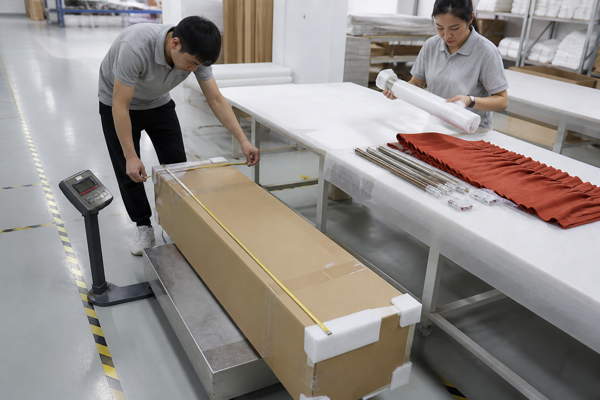
ShadeCort can coordinate these factory inputs for an approved custom-curtain order. Our custom drapery options show why the pack-out can change with finished dimensions, lining, heading, fullness, track, and motorization. Buyers who need special protection, private-label cartons, room coding, or mixed hardware should also review the custom window-treatment packaging guide before asking a forwarder for the final price.
Who Handles Which Part of the Shipment?
Use the table below to identify the owner of each decision. A company may perform more than one role, but the contract and credentials should support that scope.
| Party | What the party may arrange | What the buyer still needs to confirm | Curtain-order handoff |
|---|---|---|---|
| ShadeCort or another factory | Product completion, packing data, export packing, shipping marks, cargo-ready notice, and handoff at the agreed place | Approved product and packaging specification, Incoterm, named place, document list, and release authority | Final carton dimensions, weights, packing list, photos, and pickup contact |
| Freight forwarder | Pickup, booking, consolidation, transport coordination, destination agent, and delivery planning, depending on quote | Legal entity, route, included charges, exclusions, insurance option, update cadence, and claims process | Booking reference, pickup plan, cutoffs, handoff record, and destination contact |
| NVOCC | May buy ocean space and issue its own transport document without operating the vessel | FMC status for U.S. ocean business when applicable, tariff and financial-responsibility status, and destination network | Bill-of-lading instructions and cargo acceptance requirements |
| Customs broker | Entry preparation, customs communication, and duties or tax processing within the authorized scope | License, power of attorney or authorization, importer details, classification, value, origin, and other agency requirements | Complete invoice, packing list, transport document, product data, and importer instructions |
| Carrier or last-mile provider | Physical transport for the contracted leg | Appointment, access, liftgate, unloading, inside delivery, inspection, and proof of delivery | Correct address, contact number, opening hours, carton length, and handling notes |
| Buyer or importer | Product approval, commercial terms, importer decisions, broker authorization, payment, and receipt | Who is importer of record, which rules apply, and who pays each charge | Timely documents, clear approvals, arrival readiness, and damage evidence |
How Should You Compare Freight Quotes?
Give each provider the same shipment data sheet and ask for a written cost breakdown. At minimum, separate origin pickup, export handling, main freight, fuel or security surcharges, destination handling, customs brokerage, duties and taxes, examination or storage exposure, final delivery, and special-access charges. Ask how long the quote remains valid and which items are estimates.
Incoterms help allocate defined tasks, costs, and risks between seller and buyer, but they do not replace the freight quote. The U.S. International Trade Administration notes that Incoterms do not identify the goods, set the contract price, determine payment timing, or specify every document needed for destination customs clearance. Record the exact rule, year, and named place. “FOB China” is not precise enough.
Also compare the operating details:
- Is the route direct, consolidated, or subject to transshipment?
- Who controls the destination agent and sends the arrival notice?
- What happens if the final dimensions differ from the estimate?
- Are long cartons accepted without oversize or non-stackable surcharges?
- Does the quote include residential delivery, appointment, liftgate, and unloading?
- Who reports delays, and how often will status updates arrive?
- What documents and deadlines apply to a damage or loss claim?
Which Transport Method Fits a Custom-Curtain Order?
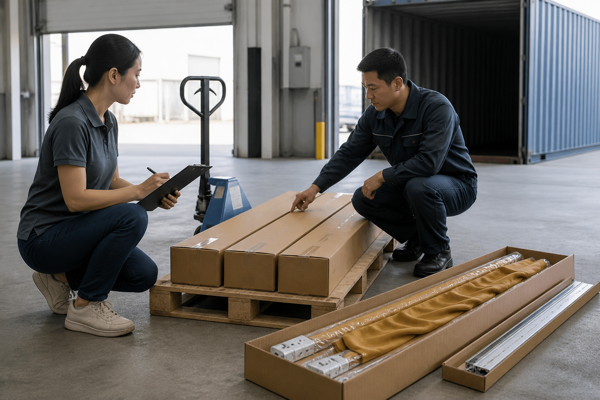
There is no universal best method. Small sample packs or urgent replacement parts may suit courier or air service. A modest commercial order may move as less-than-container-load ocean freight. Large projects may justify a full container. The best choice depends on carton length, total volume, value, fragility, delivery date, destination access, and the cost of a delay.
Courier service can feel simple because transport and customs support often arrive in one customer experience. It can still be expensive for long or bulky pieces. Air freight may help a deadline, but the forwarder needs accurate dimensions because chargeable weight can reflect volume as well as scale weight. LCL ocean freight can fit smaller commercial orders, yet it adds consolidation and destination handoffs. FCL reduces some handling, but the buyer must plan container loading, destination drayage, unloading, and equipment access.
Ask the forwarder to explain why the proposed route fits your cartons. A one-word recommendation such as “sea” or “air” is not enough.
What Should U.S. Buyers Verify?
For U.S. ocean shipments, check whether the provider appears in the FMC’s licensed and bonded OTI resources for the role it claims. The FMC licenses qualified U.S. ocean transportation intermediaries and requires financial responsibility. This check does not guarantee service quality, but it confirms that the company is not asking you to rely only on a website badge.
Customs is a separate responsibility. CBP says there is no general legal requirement to hire a customs broker, yet many importers use one. CBP also states that the importer remains ultimately responsible for knowing the requirements and for compliance, even when a broker handles the entry. A homeowner importing for personal use and a business importing for resale may follow different entry processes, so give the broker the actual use, value, product description, and shipment details.
What Should Canadian Buyers Verify?
The Canada Border Services Agency allows importers to authorize an agent, but the importer remains responsible for accounting documents, duties and taxes, and later corrections involving classification, origin, or valuation. CBSA also states that only a licensed customs broker may perform certain accounting and duty-payment activities as an agent.
For a personal home order, ask the forwarder or broker which personal-import process applies. For a business shipment, confirm the importer account, CARM requirements, authorization, security, and payment arrangements before cargo departs. Do not wait for the arrival notice to discover that nobody accepted the importer role.
The Harmonized System provides the international six-digit structure used as a basis for customs tariffs, but national classification and duty treatment still depend on the goods and destination rules. Send the broker an accurate product description and construction. Do not copy an HS code from a different curtain, blind, motor, or accessory without review.

How ShadeCort Supports the Factory-to-Forwarder Handoff
ShadeCort is a window-treatment supplier, not the buyer’s freight forwarder or customs broker. Our useful role is earlier in the chain: making the cargo information match the approved order and giving the logistics team a clear factory contact.
For an approved shipment, the working process can include:
- Confirm the finished product, destination, packaging, and agreed Incoterm.
- Provide preliminary carton and weight estimates for route planning.
- Coordinate shipping marks, room codes, accessory separation, and protective packing.
- Confirm the cargo-ready window and forwarder pickup requirements.
- Measure and weigh the final cartons, then reconcile the packing list.
- Share handoff photos and the pickup contact for the agreed scope.
- Keep product and logistics questions with the correct owner until cargo is released.
ShadeCort’s compliance and standards overview can help start the document discussion. Any product claim, test report, label, or customs statement still needs to match the exact configuration and destination requirement.
Watch: Measure Before Shipping Data Is Finalized
One incorrect finished width can change both the product and the package plan. ShadeCort’s measuring guide helps buyers confirm the window information before a made-to-measure order moves into final production. It is a product-measurement guide, not freight or customs advice.
Watch the ShadeCort Measuring Guide on YouTube if the player is unavailable.
Common Freight-Forwarder Mistakes
Choosing only by the first number
A headline freight figure may exclude destination handling, brokerage, final delivery, or oversize charges. Compare the written scope and assumptions before you compare totals.
Letting the supplier referral replace due diligence
A factory referral can be convenient because the forwarder understands the pickup location. The buyer should still verify the company, route, quote, credentials, destination partner, and claims process.
Booking from estimated cartons and never reconciling them
Early estimates help planning. They should not become final shipping data by accident. Require actual dimensions, weights, carton count, and photos before the booking is locked.
Assuming the forwarder is also the customs broker
Some logistics groups offer both services through qualified entities. Others do not. Name the broker and importer before departure.
Forgetting the final 20 feet of delivery
Port-to-door does not always mean inside the room. Confirm appointment, truck access, liftgate, unloading, stairs, elevator restrictions, carton length, and who inspects the cargo at receipt.

Buyer Checklist Before You Book
- Final product and packaging specifications are approved.
- Preliminary and final carton data have named dates and owners.
- Every quote uses the same pickup point, destination, and delivery scope.
- The forwarder’s legal entity, applicable credentials, and destination agent are recorded.
- The Incoterm includes the rule year and named place.
- Importer and customs-broker responsibilities are accepted in writing.
- Included charges, exclusions, validity, and adjustment rules are clear.
- Long-carton, non-stackable, residential, and access conditions are disclosed.
- Insurance options, declared value, and claims deadlines are understood.
- The receiver knows how to photograph cartons and note visible damage before signing.
Request a ShadeCort Shipping-Handoff Review
Send ShadeCort your product type, finished sizes, quantity, destination city and postal code, preferred delivery date, packaging needs, and any forwarder requirements. We can review the factory-side inputs and prepare the order information needed for a more useful logistics quote. The buyer, forwarder, broker, and other qualified parties should then confirm the final route, import process, duties, taxes, and delivery contract.
Contact ShadeCort to request a custom-curtain quotation and factory-to-forwarder handoff review.
Sources and Further Reading
- Federal Maritime Commission: Licensing and Certification
- U.S. Customs and Border Protection: Do I need a customs broker?
- Canada Border Services Agency: Licensed Customs Brokers
- International Trade Administration: Know Your Incoterms
- World Customs Organization: What Is the Harmonized System?
FAQ
Should I use the freight forwarder recommended by the curtain factory?
You can include the factory’s recommendation in your comparison. A referred forwarder may know the pickup location and export routine, but you should still verify the provider, quote scope, applicable credentials, destination agent, and claims process.
Is a freight forwarder the same as a customs broker?
No. A forwarder coordinates transport and related handoffs. A customs broker performs authorized customs business. One logistics group may offer both through qualified entities, but the roles and legal names should be stated.
Who is responsible if the customs entry is wrong?
The exact liability depends on the country and transaction. CBP and CBSA both state that using a broker does not remove the importer’s core responsibility for accurate and compliant import information. Obtain qualified advice for the shipment.
What information does ShadeCort give the forwarder?
For the agreed order scope, ShadeCort can coordinate cargo-ready timing, carton count, dimensions, weights, packing list details, shipping marks, pickup contact, and relevant product-document inputs. Final customs and transport decisions belong to the buyer and qualified providers.
Is door-to-door shipping always fully inclusive?
No. The phrase can hide exclusions. Ask whether the quote includes destination handling, brokerage, duties and taxes, appointment, liftgate, residential delivery, unloading, storage, inspection, and access-related charges.
When should I book freight for custom curtains?
Start route planning when the order specification and preliminary package estimate are stable. Confirm the booking against actual carton dimensions, weights, cargo-ready timing, and complete documents before pickup.