Quick Answer
A useful window treatment quote from China must define more than a unit price. Ask every supplier to quote the same finished product, quantity, packaging, accessories, production basis, Incoterm, named place, currency, and validity period. EXW, FCA, FOB, CIF, DAP, and DDP divide transport work, costs, and risk differently. They do not define the product, payment terms, ownership, or total landed cost. For a fair comparison, build one RFQ and require each supplier to state every inclusion, exclusion, and assumption.

Why a low quotation can become the expensive option
Two quotations can show the same roller shade at very different prices and both can be technically correct. One may include a finished blackout shade, brackets, a motor, a remote, export packing, and delivery to a named port. The other may cover only a manual shade collected from the factory in basic protective wrap.
The problem is not always dishonest pricing. Often, the buyer and supplier are pricing different scopes.
That gap becomes costly after the buyer has presented a budget, promised a retail price, or won a project. Common late additions include:
- upgraded fabric or lining;
- a stronger tube or headrail for the finished width;
- motors, chargers, hubs, remotes, or wall controls;
- brackets, fasteners, valances, side channels, and spare parts;
- private-label cartons, instructions, barcodes, and project labels;
- export handling, freight, insurance, customs brokerage, duties, taxes, unloading, and final delivery.
A quotation should help a buyer make a commercial decision. If it hides assumptions, it is only a starting number.
Who this guide is for
This guide is written for importers, wholesalers, window-treatment brands, ecommerce sellers, contractors, hotel procurement teams, and project suppliers buying made-to-measure or standard-size products from China.
It is especially useful when you are comparing:
- manual and motorized shades;
- drapery, tracks, and installation hardware;
- standard products and private-label versions;
- samples, pilot orders, and bulk orders;
- factory collection, port delivery, and door delivery.
The aim is not to select one Incoterm for every purchase. It is to make the quotation match your logistics resources, destination requirements, and product risk.
What Incoterms decide, and what they leave to your contract
Incoterms are internationally recognized rules published by the International Chamber of Commerce. The current edition is Incoterms 2020. The rules allocate important transport tasks, costs, customs responsibilities, and points of risk transfer between buyer and seller. The International Trade Administration overview explains that they address carriage, insurance, documentation, customs formalities, delivery, and risk.
Incoterms do not replace a purchase contract. They do not identify the exact shade construction, set the price, decide payment timing, transfer ownership, define a warranty, or approve a sample. They also do not calculate the final duty and tax outcome for your destination.
Write the rule with a precise named place and edition, for example:
FCA ShadeCort facility, Qingyuan, Guangdong, China, Incoterms 2020
or:
DAP buyer warehouse, full street address, Incoterms 2020
The named place is part of the commercial term. “FOB China” or “DDP Europe” is too vague for a final quotation.
Which trade term fits a window treatment order?
EXW: useful as a product-price reference, but demanding for the buyer
Under EXW, the seller makes the goods available at its premises or another named place. The buyer takes on transport and risk from that point, subject to the exact rule and contract.
EXW can help an experienced buyer compare the factory-level price of several products. It may also suit a courier collection or a buyer with a freight partner that manages pickup and China-side formalities.
However, the ICC Incoterms 2020 checklist notes that EXW is primarily suitable for domestic trade and can create practical difficulties in international transactions. Before requesting EXW, confirm who will load the cartons, prepare export documents, and complete export clearance.
For a long blind or track order, also state the pickup address, operating hours, number of packages, packed dimensions, gross weight, loading method, and collection notice required.
FCA: often more practical for containerized or multimodal shipments
FCA can be used for any mode of transport. The seller delivers the goods to the buyer’s nominated carrier at the named place and handles export clearance where applicable. The exact delivery event depends on whether the named place is the seller’s premises or another terminal.
The ICC checklist points buyers toward FCA for containerized or multimodal cargo and for delivery to an inland or port terminal. That matters because many finished blinds, shades, and tracks move by truck plus ocean freight, air freight, rail, or a combination of modes.
If you choose FCA, name the facility or terminal precisely. Also confirm whether the quote includes loading, terminal delivery, export documents, and any booking or handling fee.
FOB: familiar, but not a universal answer
FOB applies only to sea and inland waterway transport. Under FOB, delivery and risk transfer occur when the goods are on board the vessel at the named port of shipment. The seller handles export clearance and the buyer arranges the main carriage.
FOB remains common in supplier quotations, but the rule should match the physical shipment. The ICC separates FOB from FCA and recommends FCA for many containerized or multimodal movements. A buyer should not use “FOB” as a casual synonym for “the supplier gets it to a China port.”
If a supplier offers FOB, request:
- the exact port of shipment;
- the included origin charges;
- the point at which any consolidation is complete;
- the packed volume and weight used for the quote;
- the buyer-nominated forwarder’s responsibilities;
- the quotation validity and expected shipment window.
FOB Shenzhen and FOB Shanghai are not the same commercial offer. Inland distance, origin handling, and the supplier’s normal export route can differ.
CIF and CIP: freight is included, but risk may transfer earlier than buyers expect
CIF includes cost, insurance, and freight to a named destination port. It is limited to sea and inland waterway transport. CIP is available for any mode of transport and includes carriage and insurance to the named destination.
The word “destination” can mislead buyers. Under the C rules, the seller pays for carriage to the named destination, but risk transfers at the delivery point in the country of shipment. The ICC guide to C and D rules explains this difference directly.
CIF also does not mean delivery to your warehouse. Import clearance, destination charges, duties, taxes, port collection, and inland delivery may remain with the buyer. Ask your broker or forwarder for the destination-side cost before comparing CIF with another term.
Insurance scope also needs attention. The ICC checklist states that the seller’s insurance obligation under CIF is limited to minimum cover, while CIP uses a different default level. Check the actual policy, insured value, exclusions, claim route, and whether the coverage suits fragile controls, long rails, finished fabric, and water exposure.
DAP: seller-arranged delivery, buyer-managed import
Under DAP, the seller arranges transport and bears risk to the named destination, with the goods ready for unloading. The buyer handles import clearance, duties, and taxes. DAP can suit a buyer who wants coordinated delivery but needs to remain the importer of record or control local customs work.
Write the full destination, not only a city. A port, airport, consolidation warehouse, project site, and buyer warehouse create different delivery obligations and local charges.
For project deliveries, confirm appointment booking, vehicle access, tail-lift or crane needs, unloading responsibility, floor delivery, storage, and room distribution separately. Incoterms alone will not define those site services.
DDP: simple-looking, but it needs destination capability
Under DDP, the seller carries out export, transit, and import customs formalities and delivers to the named destination. The buyer normally receives the goods ready for unloading.
DDP may look attractive to a new importer because the visible quote is closer to a door-delivered amount. It is not automatically the lowest-risk choice. The ICC checklist warns that practical realities may prevent a seller from completing import clearance in the destination country.
Before accepting DDP, verify:
- who will act as importer of record;
- whether the proposed structure is legal in the destination;
- which duty, tax, brokerage, inspection, storage, and delivery charges are included;
- how customs value and product classification will be declared;
- what happens if customs requests documents or reassesses the shipment;
- whether the buyer will receive the records needed for accounting, tax, warranty, or marketplace compliance.
ShadeCort can review a requested delivery basis with the buyer and logistics partners, but the final term must be confirmed for the actual destination, product mix, and importer arrangement.
EXW, FCA, FOB, CIF, DAP, and DDP comparison
Use this table as an RFQ discussion tool, not as a substitute for the official Incoterms 2020 rules or transaction-specific advice.
| Term | Suitable transport context | Seller’s quoted logistics scope | Typical buyer responsibility to confirm | Window-treatment question to ask |
|---|---|---|---|---|
| EXW | Any mode, but mainly suited to domestic-style collection | Goods made available at the named premises | Loading, export process, main carriage, import, final delivery | Who loads long cartons and who provides export documents? |
| FCA | Any mode, including containerized and multimodal | Delivery to the named carrier or terminal, with export clearance where applicable | Main carriage, import clearance, destination delivery | Is the named place the factory, consolidation warehouse, or terminal? |
| FOB | Sea or inland waterway only | Goods delivered on board at the named port of shipment | Main sea freight, insurance, import, destination charges, inland delivery | Which port and origin charges are included? |
| CIF | Sea or inland waterway only | Sea freight and required insurance to the named destination port | Risk after shipment, import clearance, destination charges, inland delivery | What insurance cover and destination charges remain? |
| DAP | Any mode | Transport and risk to the named destination, ready for unloading | Import clearance, duties, taxes, unloading | Is delivery to a port, warehouse, project site, or exact street address? |
| DDP | Any mode | Transport, risk, and customs formalities to the named destination | Receiving and unloading, subject to the contract | Who is importer of record and are all destination charges legally covered? |

Make the product specification identical before comparing prices
An Incoterm cannot fix a vague product brief. A quotation for “blackout roller blinds” is not comparable until each supplier prices the same construction.
For a ShadeCort shade, the RFQ may need:
- finished width and drop, plus measurement convention;
- product type and operating system;
- fabric code, color, openness or blackout construction;
- tube, cassette, fascia, bottom rail, and side-channel options;
- control side, chain type, cordless mechanism, spring system, or crank;
- bracket type, finish, fasteners, and spare percentage;
- manual or motorized operation;
- packaging method, label data, and carton limits.
For custom drapery, include fabric, lining, finished dimensions, fullness, heading, return, overlap, hem, track, carriers, hooks, draw method, motorization, room coding, and installation hardware.
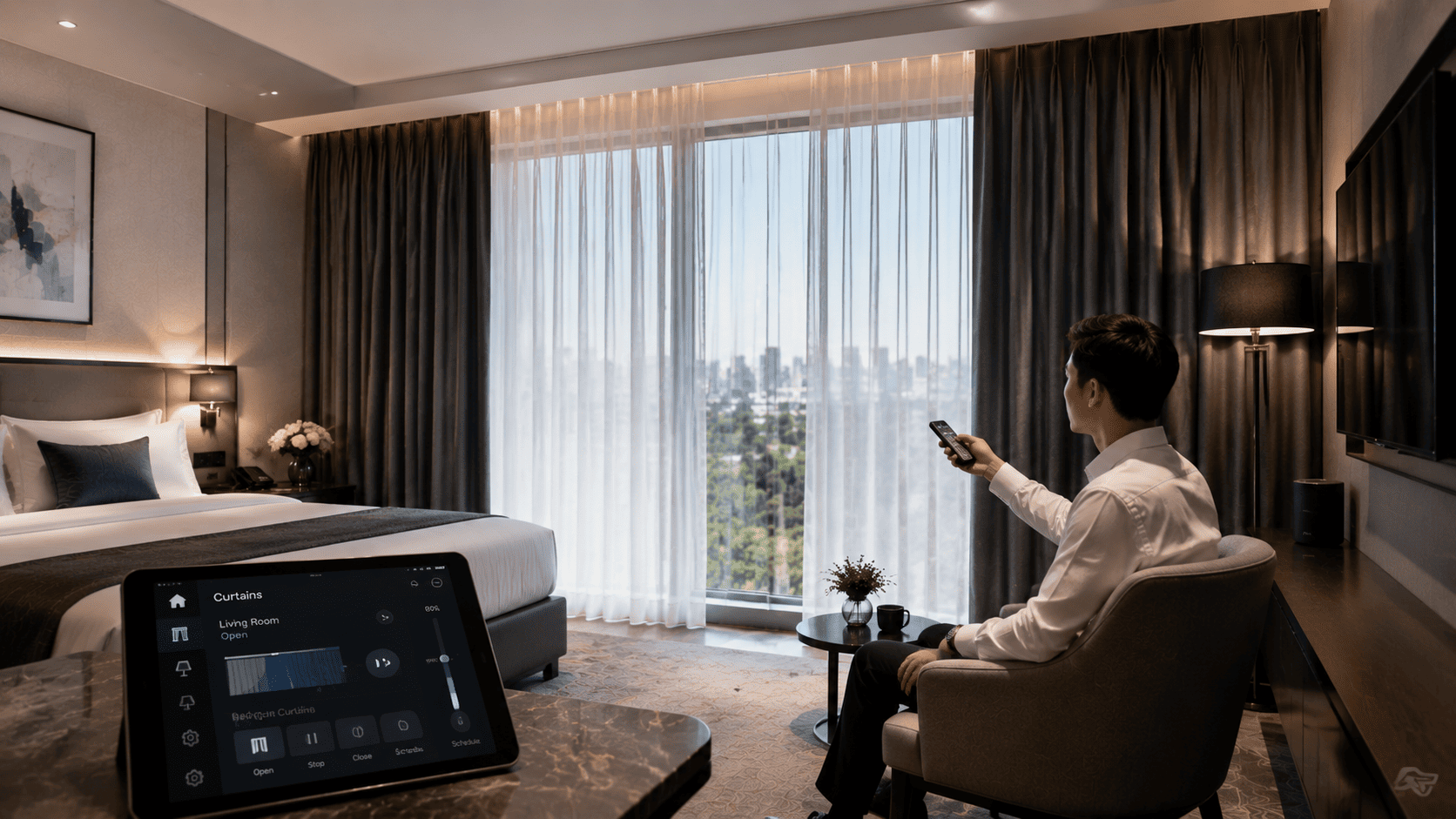
Motorized quotes need another layer. Define motor model or performance brief, power supply, voltage, plug, charger, battery, remote channels, wall controls, hubs, protocol, limits, commissioning scope, and required documents. ShadeCort’s motorization range can inform the discussion, but the final configuration should be fixed before suppliers are compared.
Attach drawings, a room schedule, photographs, or a controlled specification sheet. Give each revision a date or revision code. Otherwise, one supplier may quote the first brief while another quotes the latest.
Ask for quantity tiers and state the production basis
The buyer should request prices for realistic quantity tiers, not an imaginary high volume used only to force a low unit price.
Useful tiers might include:
- development sample;
- paid pre-production sample;
- pilot order;
- expected first order;
- repeat-order volume;
- project quantity by room, opening, or size group.
The correct tiers depend on the product. A made-to-measure hotel shade program should not be treated like 1,000 identical retail units. Size mix, fabric usage, cutting plans, motor combinations, project sorting, and carton variation all affect the work.
Also ask whether the quote is based on:
- existing stock;
- standard components with new assembly;
- fabric or component procurement;
- a new production run;
- custom color, tooling, firmware, packaging, or labeling.
A stock quote may have a short validity and limited repeatability. A new-production quote may involve component minimums, sample approval, material lead time, and color or batch tolerances. Neither basis is inherently better. The buyer needs to know which one is being offered.
Separate packaging and private-label costs
The product can be correct while the commercial quote is incomplete because packaging was treated as an afterthought.
Ask suppliers to separate:
- standard protective packaging;
- individual product cartons;
- internal supports for long shades, tracks, or valances;
- master cartons or pallets;
- accessory bags and installation kits;
- private-label printing, labels, barcodes, instructions, and inserts;
- project labels by building, floor, room, or opening;
- sample, plate, tooling, artwork, and setup charges;
- unused printed-material responsibility.
Our guide to custom window-treatment packaging in China covers this topic in detail. For quotation comparison, the important point is simple: define the approved pack-out and ask whether every packaging item is included.
Packed dimensions matter as much as product dimensions. A stronger carton, extra corner protection, or a different packing quantity can change cubic volume, handling, and delivery cost. Request the estimated package count, dimensions, net weight, gross weight, and total volume with the quotation, then update them after the final pack-out sample.
Build a landed-cost comparison instead of comparing unit prices
A landed-cost sheet brings each supplier quote to the same destination point. It should identify the amounts that are included, quoted separately, estimated by the buyer, or still unknown.
Depending on the term and destination, review:
- finished product and included accessories;
- sample, tooling, artwork, and development charges;
- packaging and private-label costs;
- China pickup, consolidation, export handling, and terminal charges;
- main freight and fuel or security surcharges;
- cargo insurance and coverage basis;
- destination terminal, documentation, inspection, storage, and brokerage charges;
- duties, taxes, and other import charges;
- inland delivery, appointment, unloading, and site handling;
- bank fees, currency exposure, and payment costs;
- expected replacement, spare, or damage allowance;
- costs created by a missed project date.
Customs classification should not be guessed from a marketing name. The World Customs Organization explains the Harmonized System as an international product nomenclature used as the basis for customs tariffs and other trade measures. Finished textile shades, curtain fabric, metal tracks, motors, controls, and spare parts may not all share one classification. Confirm the applicable codes and destination treatment with a qualified customs professional or the importing country’s customs authority.
Five quotation traps that deserve a second email
1. The Incoterm has no named place
“FOB price” does not tell you the port. “DAP warehouse” does not identify the warehouse. Ask for the exact named place and Incoterms 2020.
2. The quote mixes manual and motorized scope
A line may say “motorized option available” while the total covers a manual shade. Require a configuration matrix that connects each size or SKU to its motor, control, power, and accessory set.
3. Freight is based on provisional packaging
Early freight figures may use an assumed carton count. Mark them as estimates and require an update after the pack-out is approved.
4. Samples and bulk goods use different materials
Record the approved fabric code, hardware finish, motor, remote, bracket, label, and packaging. State whether the quotation covers the approved sample construction or a lower-cost alternative.
5. DDP is presented without an importer plan
A door-delivered price is not enough. Ask who clears the goods, who appears on the import record, which charges are included, and what documents the buyer receives.
A practical ShadeCort quotation process
ShadeCort can support a quotation review in five working stages.
- RFQ intake: The buyer provides product type, dimensions, quantity, destination, sales channel or project context, target timing, drawings, control needs, packaging, and requested Incoterm.
- Scope clarification: The team identifies missing choices such as fabric, hardware, motorization, accessories, project labels, or pack-out.
- Quotation basis: The quote states the product construction, quantity, currency, validity, sample or setup charges, production basis, exclusions, Incoterm, and named place.
- Sample and pack-out review: Product and packaging details are checked before the bulk basis is treated as final.
- Pre-shipment update: Package count, dimensions, weight, shipment plan, documents, and any approved variation are reconciled before dispatch.
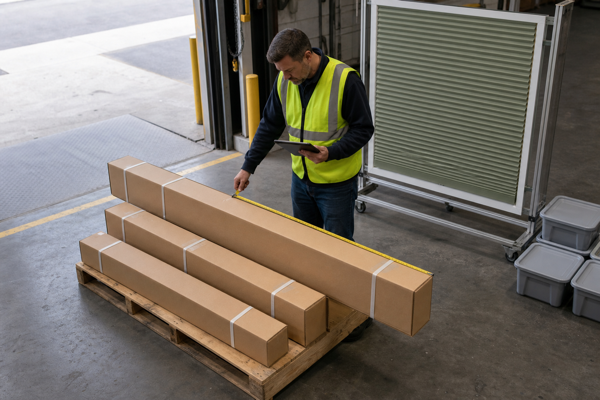
This process does not make every cost fixed from the first email. Freight, destination charges, duties, and taxes can change or require third-party confirmation. It does make the assumptions visible, so the buyer knows which figures are firm, provisional, or outside the supplier’s scope.
Buyers can also review ShadeCort’s compliance and export-documentation context while preparing an RFQ. Product and destination requirements still need confirmation for the exact construction and market.
Buyer checklist before accepting a quote
Confirm that the quotation states:
- supplier legal name and quotation date;
- product codes, drawings, and revision;
- finished dimensions and measurement method;
- fabric, color, lining, hardware, and finish;
- manual or motorized configuration;
- motors, controls, power parts, brackets, fasteners, and spares;
- quantity by product, size, room, or SKU;
- sample, tooling, setup, and artwork charges;
- packaging and private-label scope;
- packed dimensions, weight, volume, and package count, or a clearly marked estimate;
- currency, tax basis, validity period, and payment terms;
- production basis and expected approval sequence;
- Incoterm, exact named place, and Incoterms 2020;
- freight, insurance, customs, duties, taxes, unloading, and final-delivery inclusions;
- buyer and seller responsibilities for documents;
- exclusions, assumptions, and change-control method.
Send the same checklist to every shortlisted supplier. A clean comparison usually reveals more than another round of unit-price negotiation.
Request a comparable quotation
For a useful ShadeCort quotation, send the product type, dimensions or room schedule, quantity, manual or motorized operation, fabric or performance brief, accessories, packaging, destination, and preferred delivery basis.
Contact ShadeCort to request a quotation review, sample plan, or specification discussion. The team can help organize the product and pack-out scope before the final Incoterm and logistics arrangement are confirmed.
Sources and further reading
- International Chamber of Commerce: Incoterms 2020 practical wallchart
- International Chamber of Commerce: Incoterms 2020 checklist and flowcharts
- International Chamber of Commerce Academy: practical guide to C and D rules
- International Trade Administration: Know Your Incoterms
- World Customs Organization: What is the Harmonized System?
FAQ
Which Incoterm is best for importing blinds or shades from China?
There is no single best term. FCA may suit buyers with a forwarder and containerized or multimodal transport. DAP may suit buyers who want seller-arranged delivery but will handle import clearance. DDP requires the seller to manage import formalities and must be checked against destination-country realities. Choose based on transport mode, named place, importer capability, risk preference, and the complete cost comparison.
Is an FOB quote the same as a landed price?
No. FOB covers delivery on board at the named port of shipment under the rule. The buyer normally arranges and pays for main freight, insurance if desired, import clearance, destination charges, duties, taxes, and inland delivery. Always name the port and obtain the remaining cost from the parties responsible for the destination side.
Should I ask ShadeCort for EXW and DAP prices at the same time?
You can request more than one delivery basis when the shipment information is mature enough. An EXW or FCA figure can help separate the product and China-side scope. A DAP estimate can help with budgeting to a named destination. Make sure both quotations use the same product, quantity, packaging, package dimensions, currency, and validity period.
Does CIF include insurance against every type of damage?
Do not assume that it does. CIF requires the seller to arrange the rule’s required insurance, but the default cover is limited. Review the policy, insured value, exclusions, claim procedure, and risk period. Long tracks, motors, remotes, fabric damage, moisture, and poor packing may create losses that need specific attention.
Why does the final freight quote change after the sample?
Early freight estimates often use assumed carton dimensions, weight, and package count. The final product, protective inserts, accessory kits, and packing quantity can change those figures. Request an updated logistics quote after approving the complete pack-out and before shipment booking.
What should be included in a motorized shade quotation?
State the finished shade construction, size, fabric, tube or headrail, motor, power option, voltage, plug, charger, remote, wall control, hub, protocol, brackets, cables, limits, spare parts, labels, instructions, packaging, and required documentation. Tie every component to a SKU, room, or configuration so the total cannot be mistaken for a manual-product price.
Do Incoterms decide when I pay the supplier?
No. Incoterms allocate defined delivery, transport, cost, and risk responsibilities. They do not set the price, deposit, balance timing, payment method, ownership transfer, warranty, or sample approval. Put those points in the quotation, purchase order, or sales contract.
What information should I send to get a faster ShadeCort quote?
Send the product type, drawings or finished dimensions, quantity, fabric or performance brief, manual or motorized operation, control requirements, accessories, packaging, private-label needs, destination, requested Incoterm and named place, target timing, and any project or marketplace documents. A complete brief reduces assumptions and makes revisions easier to track.