Quick Answer
A custom curtain minimum order is the smallest quantity or order value a seller will accept for a particular specification. For a home in the United States or Canada, first ask whether that minimum applies to finished panels, pairs, fabric, or each color. Then compare made-to-measure curtains using an available fabric with a request for a newly developed material or color. Do not buy unwanted curtains simply to reach a lower unit price. Ask for the exact configuration, quantity, and delivered-cost scope in writing before deciding which route fits your room.

Custom Curtain Minimum Order: What Does the Number Count?
Clarify the unit before changing your order. A minimum for fabric is not the same purchase as a minimum for finished curtains, and a price per panel may not describe everything needed for a window.
If a quotation says only “minimum order applies,” send back these questions:
- Does one unit mean a single panel, a pair, or a complete window set?
- Is the minimum for the whole order or separately for each fabric and color?
- Are lining, heading, hooks, and track included, optional, or quoted separately?
- Does the stated width describe the opening, the coverage, or the finished curtain?
- If material must be purchased beyond my finished order, who pays for it and who keeps it?
Ask the seller to put the answer beside the quantity and price. “A pair for the bedroom” still leaves room for confusion if the two sides have different widths or if the track is missing from the quote.
For a small home order, the useful number is the quantity that completes your actual windows. Start there. A larger quantity only helps if you have a real use for it.

Custom Size Is Not the Same as Custom Material
Ask whether your request changes the finished dimensions or requires a separate material run. These are different conversations.
If you like an existing fabric and color but need a different drop, request a made-to-measure option from that material. If you want an exact new shade, a different backing, or a specially developed weave, ask which upstream material minimum would apply. Do not assume the same terms cover both requests.
Separate what is essential from what is flexible. You might need bedroom light control and a specific finished length, while a close alternative from an available color range would still work. Or the color may be the whole reason for the order, in which case changing it is not a useful saving.
Our curtain fabric selection guide covers appearance, lining, and light-control choices in more detail. Here, the question is narrower: can the selected material be supplied in a quantity that makes sense for your home?
Compare Three Routes for a Small Home Order
Compare the order route before negotiating the quantity. Use this table to ask about options; it does not promise that every seller offers every route.
| Order route | What you keep or change | Ask the seller | When to consider it |
|---|---|---|---|
| Ready-made curtains | Choose from offered sizes and constructions | How many panels are in the pack, and will they cover the planned opening? | The listed dimensions and appearance already suit the room |
| Made-to-measure from available fabric | Keep an offered fabric and color; request your finished dimensions and details | Is enough material available, and what minimum applies to this exact order? | Fit matters, but you do not need a newly developed textile |
| New color or specially developed material | Request a material outside the available selection | What material quantity, development charge, approval sample, and unused balance are involved? | The particular material is essential and the total commitment is acceptable |
There is no need to treat the most customized route as the best route. If an available fabric meets the room’s needs, a separate textile-development project may add work without improving the result you want.
Conversely, do not approve an unsuitable fabric just to avoid a minimum. Ask for an alternative quotation with the changed specification clearly identified. You can then decide whether the difference is worth it.

Compare the Total for Windows You Will Actually Cover
Compare the cost of a completed room, not just a curtain’s unit price. The FTC’s online-shopping guidance advises shoppers to check the full cost and keep records of the order and seller promises.
Use this simple comparison:
Agreed order cost, plus identified extras, divided by the windows actually supplied as specified.
Keep estimates visibly separate from confirmed charges. Include the selected panels, lining, hardware, sample or development charges, shipping, and installation if needed. Mark each item as included, excluded, estimated, or not required. The result is a planning tool, not a guaranteed final invoice.
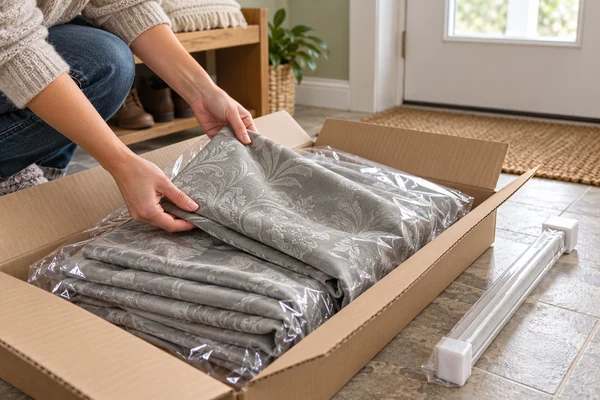
Packaging also deserves a question. FedEx explains dimensional weight: shipment charges can use package volume rather than actual weight when the dimensional weight is greater. Ask for a quote based on the proposed packed order, not an assumption that a small panel count means a small shipping bill.
For a Canadian delivery, the CBSA determines whether duty or taxes apply to imported goods. Do not assume a product price includes them. For either a U.S. or Canadian address, ask the seller to identify who handles any import-related charges and which items remain payable by you. This guide does not estimate tariffs or tax rates.
Finally, compare the excess quantity. If you cannot use the extra panels, a lower price per panel may still be the more expensive choice for your room.
Measure Before You Ask for the Final Quote
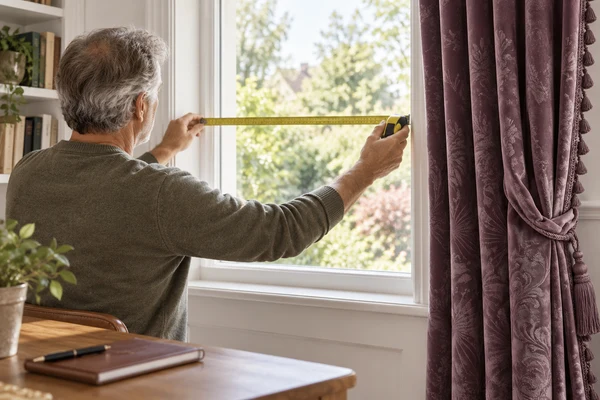
Give the seller the window information needed to check your actual order, not just a photograph of curtains you like. Label each opening, record the units used, and distinguish your site measurements from the final size you want the seller to make.
Use the measuring video below as a starting point, then follow the instructions for the exact curtain or shade system being quoted. Different products need different measurement details; do not apply a shade deduction to drapery by guesswork.
Keep the opening photos, selected fabric code, intended operation, and any hardware you already own together. That gives the supplier a clearer basis for confirming both the configuration and its minimum order.
Open the ShadeCort measuring guide on YouTube if the player is unavailable.
Before You Approve the Order
Approve a written order you can check later. A friendly message that says “yes, we can do it” is not a complete manufacturing instruction.
- Match every room label to its panel quantity and finished dimensions.
- Confirm the fabric and color code, lining, heading, and included hardware.
- Ask whether the quoted material is available now or needs a separate order.
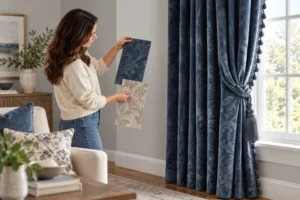
- Review a physical sample where appearance is important; agree what the sample does and does not approve.
- Record the dispatch estimate, delivery scope, and any charges still to be confirmed.
- Read the change, cancellation, return, and defect-reporting terms before paying.
- Keep the final approved version rather than relying on several conflicting messages.
If your home order also includes shades, our sample approval guide explains what to check beyond color. Do not treat a fabric swatch as approval of a complete operating product.
Where ShadeCort Fits a Small Home Order
ShadeCort Resources combines a manufacturing business with a consumer-facing retail channel, so a homeowner can ask about the order route rather than assuming that factory supply always means a wholesale run. Our manufacturing and retail overview describes both roles.
There are also concrete construction details to discuss. The custom fabric drapery page lists double-turned hems, mitered corners, sewn-in liners, and bottom weights. Ask which of those details belong in your selected order. A useful factory conversation connects the fabric choice to the finished curtain, not just to a color photograph.
Availability, order minimums, sample costs, and timing still need confirmation for your chosen material and destination. A retail channel does not mean that every special fabric or color is available without a minimum.
Discuss your custom curtain minimum order with ShadeCort.
Send your room or window count, approximate dimensions, preferred fabric or reference image, and U.S. or Canadian delivery location. Ask which available-material option and order quantity fit your plan. The contact form is an alternative for the same inquiry.
Sources and further reading
- Federal Trade Commission: online-shopping comparison, full costs, and purchase records, linked beside the cost guidance above.
- FedEx Canada: dimensional-weight explanation, linked beside the packaging-cost question above. Actual service terms govern a shipment.
- Canada Border Services Agency: import duty and tax assessment, linked beside the Canadian delivery guidance above.
- ShadeCort Resources: current manufacturer, retail, and drapery-construction pages, linked beside the company statements above. They do not establish a universal minimum for every configuration.
FAQ
Can different window sizes share the same order minimum?
Ask the seller to confirm this for the chosen material and construction. Do not assume that identical fabric automatically lets every size share a minimum, or that every size needs a separate run. Send a room-by-room quantity list and request a written answer showing which items can be grouped.
Does a sample payment count toward the final order?
Only if that arrangement appears in the agreed quotation or order terms. Ask whether the charge covers a swatch, finished sample, development work, shipping, or some combination of those items. Also clarify whether any credit has conditions. Keep that answer with your approved order rather than relying on an informal assumption.
Should I include another room just to meet a minimum?
Only when you already want curtains for that room and can approve its measurements and specification. Otherwise, compare the extra purchase with an available-material alternative or another order route. Filling a minimum is not a saving if the additional curtains do not solve a real need in your home.
Can a later curtain reorder match the first order?
Treat a later order as a new confirmation, not an automatic match. Keep the fabric code and original approval record, then ask the supplier to check current material availability and provide an appropriate comparison sample. If matching adjacent windows is essential, explain that before placing the first order and agree how future matching will be assessed.